
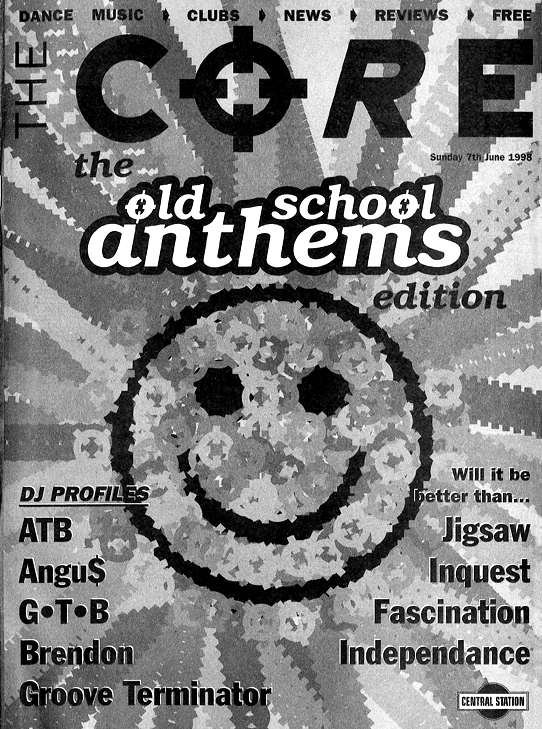
This article provides a comprehensive look into Adelaide’s vibrant dance music culture of the early 1990s, a foundational period of innovation and community. Our lens is a special “Old School Anthems” edition of The Core magazine, published on June 7, 1998, which meticulously revisited the DJs, music, and venues that defined the era for a new generation.
Back to the Old School: Revisiting a Seminal Era
The June 1998 “Old School Anthems” edition of The Core was a deliberate and nostalgic look back at the genesis of Adelaide’s rave scene. The publication served as a time capsule, designed to capture the raw energy of the scene’s formative years for both the veterans who lived it and a newer audience curious about its roots. Its purpose was to rekindle memories and provide historical context for what had become a thriving culture.
To achieve this, the magazine reprinted a curated selection of its own archival content, offering a direct window into the scene as it existed between 1991 and 1993. This included original DJ profiles, club charts, party reports, and even letters to the editor from the period. For those who were there, it was a chance to “relive the memories of the early 90’s”; for those who weren’t, it was an education on the techno-flex and raw excitement that laid the groundwork for the future. The reprinted material stands as an unfiltered document of the people, sounds, and attitudes of the time.
This journey back in time begins with the physical spaces—the clubs and parties—that served as the crucibles for this emerging culture.
The Epicentre of the Scene: Key Parties, Clubs, and Acts
The foundation of Adelaide’s electronic music community was built within the walls of its clubs and at its groundbreaking parties. These venues were the essential infrastructure that allowed the culture to take root and flourish, while visiting international artists provided a crucial link to the burgeoning global scene. The Core‘s retrospective polling from the era highlights the specific places and performers that held legendary status among Adelaide’s ravers.
Landmark Parties, Raves, and Clubs
Based on votes collated by The Core, the following lists represent the most influential events and venues of 1992 and 1993.
- 1992 Top 5 Parties/Raves
- Fascination
- Origin
- Kinetic Energy
- Vision
- Go!
- 1992 Top 5 Clubs
- UR
- The Zoo
- Control
- Metro
- Underworld
- Grooverider (Note: The source publication listed six venues under its “Top 5” heading.)
- 1993 Top 5 Clubs
- Disco
- The Ark
- Hell
- Heaven
- Le Rox
Top International Acts of 1992
The scene was also defined by the international talent that promoters brought to the city. The top five visiting acts of 1992 were:
- Underworld
- Resistance
- Sasha
- DJ Z1200
- Joey Beltram
While international stars brought a global perspective, the heart and soul of the scene was its roster of dedicated local DJs. These pioneers were instrumental in translating global sounds for a local audience, building a consistent week-to-week identity for the clubs and shaping the city’s unique sonic signature.
The Pioneers Behind the Decks: DJ Profiles
The DJ profiles reprinted in The Core are remarkable historical snapshots, capturing Adelaide’s most influential figures in their formative years. These interviews, conducted between 1991 and 1992, offer an authentic glimpse into their early career ambitions, musical philosophies, and personal reflections before they became established icons of the scene.
Angu$
Profiled on July 1, 1992, Angu was a 26-year-old Adelaide native who had already been DJing for five years. He was a fixture at a wide array of notable clubs, including **Planet, Heaven, Le Rox, Metro, Base, Galaxy, Le Fox, and McMahon’s**. Angu articulated a deeply committed approach to his craft, drawing a sharp distinction between DJs who simply “play records” and his own philosophy of working to earn a crowd’s response. “You have to put your heart and soul into the music, something of yourself. It’s hard work,” he stated. He described his preferred musical style as “structured, soulful and forgettable a lot of the time,” pointing to a desire to create an immersive, transient experience on the dancefloor.
Choice of 1992:
- Amnesie – Liason D
- Panic – Artistic Development
- Strings of Life – Future Sound of London
- The Terminator EP – Mental Overdrive
- Can You Dig It? – Jamn’ It?
- Political Freedom – Underground Resistance
- Selected Ambient Works – Various Artists
- Space Trax Volume 4 EP
- Panic Earth – Westbam
- 10 Revolutions for Change EP – Underground Resistance
ATB (Brenton Eckersley)
At just 20 years old when his profile appeared on February 12, 1992, Brenton Eckersley, known as ATB, represented the scene’s fresh energy. His journey began with practicing on home equipment and producing his own tracks before he got his break from Jeff Ovens of The Arkaba. His musical tastes were eclectic, spanning rave, techno, Ultraworld, Energy Mc2Hop, and hip hop. For ATB, the ultimate reward of DJing was seeing the impact on the crowd, stating the best part was “to see the crowd have a good time and have it all happening.” At the time, he held a formidable residency at The Ark Club on Thursdays, Fridays, and Saturdays.
Choice of 1992:
- Heaven – ITS
- Far Out – A Long Cool Look
- I Need U – Edge Records
- Comedone – Concord
- It’s a Feeling – Fargetta
Brendon
Inspired by watching James Ingram at the Old Lion Underground around 1989, a 22-year-old Brendon began his own DJ career after winning a DJ competition in 1990. This led to work at Transformers, Club Colosseum, and eventually a residency at The Ark. While his primary musical style was rooted in hip hop, he appreciated a wide range of music and noted his sound was moving towards “more techno and stuff.” His favorite track at the time of the profile was “Marsh” by Guesch Patti (remixed by Ian B of Fenslaw). Brendon was a weekend mainstay at The Ark Dance Club, playing both Friday and Saturday nights, making the club a clear launchpad for emerging talent alongside fellow resident ATB.
Choice of 1992:
- Papua New Guinea – Future Sound of London
- Persuasion – Fix
- Lock Up – Zero B
- Jupiter Jazz – Underground Resistance
- Passion – Gat Decor
- Positive Feedback – Circuit
- Saratoga – Unit 2
- Edge 1 EP – Edge Records
- I Need U – Luvspotted by FPI Project
- Make It Right – S’Express
G•T•B (George Danis)
George Danis, better known as G•T•B, was 22 when his profile ran on December 23, 1992. The moniker stood for “George The Boss,” a project started with a friend. By this point, he was already a veteran, having DJed since 1987 at venues like Magnet’s, Resurex, The Hindley Asylum, and Arena, and at parties such as Night Train and The Realm. His style was primarily house music, but he fluidly incorporated dance, techno, and even rock-infused tracks from artists like the Red Hot Chilli Peppers. G•T•B’s performance philosophy was centered on crowd interaction and energy, explaining his goal was to tease the audience and make the room “pump.” His upcoming gigs at the time included Jammers at the Currie Street Tavern and the Liquid New Year’s Eve party.
Choice of 1992:
- Hallelujah – Ideala
- It’s Just a Feeling – Terrorize
- Unfinished Sympathy – Massive Attack
- Hardcore Heaven – DJ Seduction
- Edge 1 EP – Edge Records
- Digital Domain – Circuit
- Happy Trax No 1 EP
- I Want You Forever – Fargetta
- The Feeling – Santonio Project
- I Know – Dave Charlesworth
Groove Terminator
Profiled on February 11, 1992, the 22-year-old Groove Terminator was presented with a persona of professional focus combined with a “no clothes nakedness” attitude. Citing “The Lads” (A Guy Called Gerald and 808 State) as key influences, he offered a sharp critique of the local scene, observing that it had “a really selfish attitude.” He was already a seasoned performer, having started DJing at age 17 and working in clubs since 1987, including stints in radio in both Sydney and Adelaide. Rather than a current chart, his profile featured his essential classics from two years prior.
Classics of 1990:
- Voodoo Ray – A Guy Called Gerald
- Jump Around – House of Pain
- What Is Love? – Deee-Lite
- Sunshine – Rockers Revenge
- EFX – Radiate
- Dreamer G – Brothers In Rhythm
- Don King – Dee Jay Doc
- Pacific State – 808 State
- Your Love – Frankie Knuckles
- Brothers Gonna Work It Out – Public Enemy
Of course, the DJ was only one half of the equation; working alongside them were the MCs, providing the essential live vocal energy.
Masters of Ceremony: The Voice of the Party
In the early rave scene, the Master of Ceremony, or MC, was a pivotal figure. Their role was to energize the dancefloor, acting as a live conduit between the DJ’s music and the crowd’s energy, hyping the room and ensuring the party atmosphere remained at its peak.
Among Adelaide’s most recognized vocal talents were “The MCS,” a duo composed of MC Maestro D (from Dinjerra) and DJ Raw (from I.P.), who were best known for their residency at The Ark Dance Club, further cementing that venue’s central role in the scene. The 1998 “Old School Anthems” event also heralded the special return of MC Scott T, a prominent voice who had appeared at many of Adelaide’s earliest parties and raves, bringing an authentic and nostalgic presence back to the microphone.
These performers were the live narrators for the true star of the show: the music itself.
The Anthems: Charting the Sound of the Early 90s
More than any other element, the sound defined the era. The syncopated breakbeats, hypnotic acid lines, and euphoric piano riffs echoing through warehouses and clubs were the true anthems of the early 90s. The Core‘s reprinted charts and DJ lists serve as a definitive historical record of the tracks that moved Adelaide’s dancefloors and became revered classics.
The Perfect Lists of 1990 & 1991
Compiled based on votes from Adelaide’s club scene promoters and key performers, these lists represent the consensus classics that laid the scene’s sonic foundation.
Perfect List 1990
- Sueno Latino – Sueno Latino
- Space Talk – Asha
- Naked in the Rain – Blue Pearl
- The Art of Stalking – Liasons D
- Welcome – Gino Latino
- Dirty Cash – Adventures of Stevie V
- LFO – LFO
- Cabaret Voltaire – Yello
- The Theme – Unique 3
- Last Rhythm – Last Rhythm
Perfect List 1991
- Ring Ring Ring – De La Soul
- Playing With Knives – Bizarre Inc
- Last Train to Trancentral – The KLF
- Sadness – Enigma
- Faith – Rozalla
- Gypsy Woman – Crystal Waters
- Set Adrift on Memory Bliss – PM Dawn
- Move Any Mountain – The Shamen
- Such a Good Feeling – Brothers in Rhythm
- Peace – Sabrina Johnston
Central Station Top Charts (1991-1993)
In its retrospective, The Core compiled the top five tracks from every single issue it published between 1991 and 1993. This exhaustive list documents the week-to-week evolution of the scene’s sound. While too long to reprint in its entirety, the charts show a clear progression of styles and feature a roster of legendary artists who scored number one hits, including Human Resource, The Prodigy, SL2, Moby, Jam & Spoon, and The Shamen.
These charts provide the official record, but the personal reflections of the community offer a more intimate perspective on what this music meant.
Voices from the Dancefloor: Community Correspondence
The reprinted reader correspondence provides a fascinating ground-level perspective on the scene, capturing the passion, debates, and powerful nostalgia felt by the community members themselves. These letters reveal a scene that was not just a collection of consumers, but an active, engaged, and often opinionated culture.
A recurring theme is a strong sense of nostalgia for the “good old days” and the “old faces” that populated the early parties. Writers looked back fondly on the sense of unity and discovery that characterized the scene’s beginnings. This nostalgia was often framed in contrast to the scene’s evolution. Several letters debate the merits of newer musical styles like trance, hardcore, and jungle compared to the original house and rave sounds, with some lamenting a shift towards more polished and less soulful productions.
The magazine actively fostered this community dialogue, most notably through its “Rave Anthems” competition. This initiative invited readers to send in their all-time favorite tracks and DJs, giving them a direct voice in celebrating the music and artists that mattered most to them.
This collective desire to relive the past and celebrate the scene’s foundations found its ultimate expression in the reunion event organized alongside the magazine.
The Reunion: The Heaven II ‘Old School Anthems’ Event
The “Old School Anthems” party was the physical culmination of the magazine’s retrospective project. Held on June 7, 1998, the event was meticulously designed to bring the music, DJs, and spirit of the early 90s roaring back to life for one unforgettable night, uniting veterans and newcomers on a single dancefloor.
- Event Name: Old School Anthems
- Date: Sunday, June 7 (Queen’s Birthday long weekend)
- Venue: Heaven II, 7 West Terrace, Adelaide
- Time: 9pm until sunrise
- Featured DJs: Groove Terminator, Brendon, George The Boss, Andy J, Angu$, ATB
- Featured MCs: Scott T, Tim, and Maestro D
- Ticket Information: Tickets were available for $15 plus booking fee from Central Station Records and Venutix, or $20 at the door. Pre-sold tickets were limited to 1,000, so it was best to “be early to avoid disappointment.”
Leave a Reply