
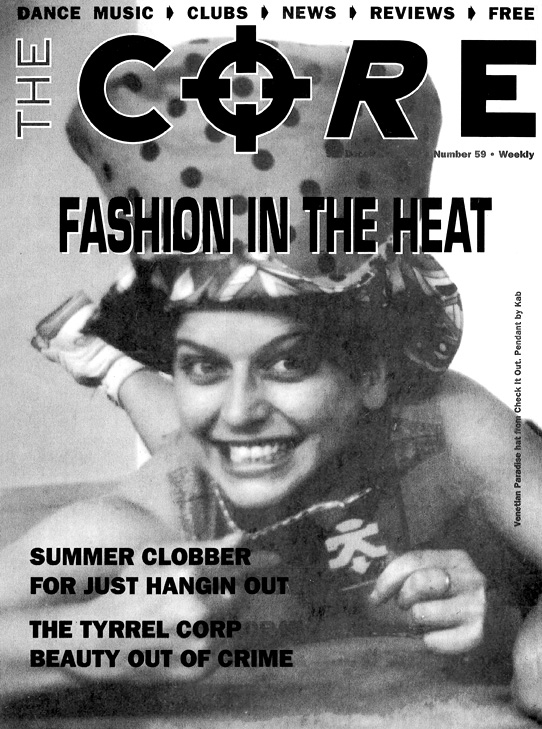
In the sweltering Adelaide summer of December 1992, the city’s pulse was found not on the beaches, but in the darkened clubs, bustling record stores, and independent fashion boutiques. A snapshot from issue 59 of “The Core” magazine reveals a scene at its peak, defined by a potent mix of soulful international sounds, a thriving local club circuit, and a distinct summer street style.
In Focus: The Tyrrel Corporation’s Northern Soul
In a deep dive into the artists shaping the era’s sound, the magazine featured an extensive interview with Joe Watson of The Tyrrel Corporation. This profile moves beyond a simple review, exploring the band’s identity, influences, and creative philosophy, offering a clear window into the minds behind the music.
Artist Profile: The Tyrrel Corporation
The Tyrrel Corporation’s sound is self-described as a form of “English soul,” a style that acknowledges the influence of Chicago house music but remains fundamentally rooted in its own distinct identity. The band is a creative duo, with Joe Watson writing the lyrics and Tony Barry writing the music. Their debut album, “North Of Eden,” showcases this unique blend, which Watson explains is a direct product of their upbringing and musical heritage.
Core Influences The band’s sonic DNA is steeped in classic soul. Watson is explicit about their inspirations, rejecting contemporary labels in favor of foundational artists. “We were brought up in the 70s when it was sounds like Philadelphia Soul, Marvin Gaye, Curtis Mayfield,” he states, grounding their work in a rich musical tradition that predates the modern dance floor.
Lyrical Themes The lyrical content of “North Of Eden” deliberately avoids fleeting club-centric themes, opting for a more profound and enduring message. “The message of the album is about the human spirit,” Watson explains. The songs delve into the complexities of relationships and human experience, aiming for a timeless quality that resonates beyond a single night out.
Band Origins and History The group’s story began when Joe Watson and Tony Barry met in Middlesbrough. Watson later moved to London, and after a few years, the two reconnected to form the band. Their first major release, “Club Escapade,” emerged two and a half years prior on Jaffa’s label, a record Watson notes was a simple, soulful body jam that laid the groundwork for their future direction.
Creative Evolution The Tyrrel Corporation is not static. Their musical evolution includes a reference to the cut-and-paste artistry of Steinski, signaling a sophisticated approach to production. As they work on their second EP, Watson hints at a dynamic shift in their sound, promising that the “hard tracks are going to be harder.” This commitment to growth suggests a band determined to explore the full spectrum of their musical capabilities.
While The Tyrrel Corporation’s English soul provided a sophisticated, international flavor, the day-to-day soundtrack of Adelaide was shaped by a wider mix of global trends, controversies, and a flood of new vinyl hitting local shops.
The Pulse of the Music Scene
This section provides an overview of the musical landscape impacting Adelaide, from international news and chart-topping controversies to the essential new records arriving in local stores. It captures the sounds and stories that formed the soundtrack for the city’s club-goers and music enthusiasts.
Global Music News
- Jazzy Hip Hop on Blue Note: The legendary Blue Note label released a new compilation celebrating the burgeoning Jazzy Hip Hop scene. The record featured prominent artists like Guru and Ronny Jordan and integrated classics from jazz icons such as Herbie Hancock, whose track “Cantaloupe Island” was included, bridging the gap between generations of black music.
- Brother for Charity: A significant charity project was organized by Steve Curfew and Gilles Peterson to raise funds for sickle cell anemia research. The effort brought together a supergroup of talent from the UK’s soul and acid jazz scene, including Carleen Anderson, Galliano, Omar, and members of The Brand New Heavies.
- The Shamen Controversy: Scottish electronic group The Shamen found themselves in a high-profile conflict with the BBC over their hit song “Ebeneezer Goode.” The broadcasting corporation took issue with the track’s perceived pro-drug message. The BBC defended its censorship, stating, “it is not acceptable to show that sort of ambivalence towards drugs,” despite the band’s arguments to the contrary.
- Rap Movie “Juice”: On the cinematic front, the film “Juice” captured the zeitgeist of black American youth culture. Its accompanying soundtrack was a powerful showcase of contemporary hip hop, featuring tracks from heavyweights like Eric B & Rakim, Naughty By Nature, and Too $hort.
New Releases
The shelves of Adelaide’s record stores were stocked with a fresh mix of local and international dance music.
- Local Releases:
- Adéva – I’m The One For You
- The Prodigy – Experience
- Grace Under Pressure – 2 Hot To Hold
- The Beloved – The Sun Rising
- KWS – Please Don’t Go
- Kylie Minogue – Celebration
- Mary J Blige – What’s the 411?
- Neneh Cherry – Homebrew
- Prince Markie Dee – Trippin’ Out
- Import Releases:
- Leftfield – Release The Pressure
- Stonegroove & Co – Movin’ On
- Mojo ft. Mello – Dance Your Cares Away
- Urban Hype – Living in a Fantasy
- The Shamen – The Shamen
- Sounds Of Blackness – The Night Before Christmas
Record Reviews
Among the flood of new music, several tracks stood out. The Deep Skies track of the same name was praised for its “Breaks, pianos, and chipmunk vocals at 142 bpm.” Chez Damier’s “Can You Feel It” was lauded as “Soulful garage straight outta Detroit.” The review for Urban Hype’s “Living in a Fantasy” was effusive, celebrating its blend of six influences into a “stronger, more purposeful track.” In contrast, the second part of the Reese Project’s “I Believe” was dismissed as “unimaginative” and a prime example of “stupidly UK house,” a critique aimed at what the reviewer saw as a generic and uninspired take on the genre.
These records weren’t just for home listening; they were the fuel for Adelaide’s energetic and varied nightlife, which pulsed with activity across the city.
Adelaide Nightlife: A Guide to Events
This section serves as a comprehensive guide to the city’s nightlife for mid-December 1992. By consolidating weekly club listings, advertisements for major parties, and reviews of recent events, it paints a vivid picture of the options available to Adelaide’s partygoers, from intimate weekly gatherings to massive, one-off spectacles.
The Weekly Club Roster
- Le Rox: A hub of activity, Le Rox hosted DJs Groove Terminator and Angus on Thursdays. Friday nights were for “Conga” with DJ Jason, while Saturdays featured a lineup including DJs Huggy and K-Tel.
- The Zoo: The Zoo’s flagship night was “Bounce” on Saturdays, with a powerful resident team of DJs HMC, HuggyZ, Anthony, and Pauly. The venue also offered “Le Vision” on Wednesdays with HMC and Anthony on the decks.
- Cargo: This venue’s weekly “Wad’sappen’in!!” lineup included the “Skunk Hour!” on Fridays, the “Reggae On!” night on Saturdays, and a “Re-birth” event on Wednesdays.
- The Arkaba: Friday nights at The Arkaba featured a DJ roster of Adam, Angel, and The Annihilator.
- Other Venues: The city’s nightlife was further enriched by regular nights at venues like The Planet, The Firm, The Old Queen’s Arms, and Lennies, which hosted the “Contagious” club on Thursdays.
A clear trend emerges from the event calendar: a move towards multi-sensory and large-scale experiences. Parties like ‘Visual Ecstasy’ integrated visual art and fashion into the club night, while the massive, multi-room New Year’s Eve events at Metro and Le Rox signaled a growing ambition and scale within the city’s dance music scene.
Special Events and Parties
Beyond the regular weekly schedule, several major events were on the horizon, promising unique experiences for the city’s clubbers.
- Visual Ecstasy at Illusion: Scheduled for Saturday, December 19th, at the Lion Arts Centre, this event promised a multi-sensory experience. It was set to feature a “panel” of visual artists, computer graphics, two large-screen projections, and a techno-fashion parade, all soundtracked by DJs Hugh-Z, The System AD/D, and Brendon.
- 8 Hrs ‘Non-Stop’ Dance Music: Also on Saturday, December 19th, Proscenium was hosting an all-night affair from 9pm to 5am. With a focus on Techno, House, and Dance music, the event featured DJs Ph.D. and Brendon, along with MC Scott T. Tickets were priced at $10.00, or just $5.00 for members.
- New Year’s Eve at Metro: Metro’s “92-93 New Years Eve” party boasted an extensive lineup across two distinct spaces. The “major-main room” and “driller-lush lounge” were set to feature h.m.c., groove terminator, mitzi, yako, and sym choon, among others.
- New Year’s Eve at Liquid: Le Rox was transforming for its “Liquid Labyrinth” New Year’s Eve event, a massive six-room party. Each room offered a different theme, including a Laser Chamber, Room of Intelligence, Dream Room, and a Hip-Hop Sound Lounge. The sprawling DJ list included Groove Terminator, HMC, Angus, Ph.D., and many more, with tickets priced at $25.
Scene Reports
Reviews of recent events provided feedback on what was resonating with the local crowd.
- Dreamscape 88: This 80s retro night at Proscenium was reviewed favorably as a “nostalgic 80s interpretation of the 80s.” The reviewer appreciated the carefully selected tunes that avoided obvious clichés, concluding it was “A good job, good time and a good night.”
- Magic Mountain (Unlicensed): This party was noted for its “underground, less commercial” atmosphere. Contrasting it with another event called “Skycycle,” the reviewer found it more intimate and less pretentious, observing that while it may not have been a packed “Pulse” party, it was “more like a Magic Mountain Lookin’ in.”
The atmosphere of these clubs was defined not just by the music and the space, but by the style of the people within them, creating a distinct visual language on the dance floor.
Summer Style: Fashion on the Streets
This section explores the summer fashion trends defining Adelaide’s visual identity in 1992. It highlights the local designers, independent boutiques, and streetwear brands that were clothing the city’s youth and shaping the look of the dance floor and the street.
The prevailing aesthetic was a clear fusion of international skate and surf culture with the city’s burgeoning rave scene, as evidenced by the mix of graphic tees, baggy streetwear, and essential footwear.
Local Designers and Retailers
Adelaide’s fashion scene was driven by a host of creative local labels and forward-thinking retailers.
Scarab Design launched its new “cody clobber label” with a store opening at 84 Melbourne Street, North Adelaide. The brand’s aesthetic was defined by the use of “new textured fabrics” along with “bold colours, panels and top stitching.”
A new label named FluoresS, created by designer Brett, also emerged, presenting a “range of hollow dance wear and club wear.” The label planned its official launch party as part of the Illusion “Visual Ecstasy” event, integrating fashion directly into the clubbing experience.
Other key retailers shaping the city’s style included:
- Urban Streetwear Clothing Co. (235a Rundle St)
- Check It Out (Promenade Level, Myer Centre)
- Tuff for Men (Hyde Park), a stockist of John Cavill clothing and Airwalk Shoes.
- Ocean Graffix (Noarlunga), a surf and skate centre.
- Swerve
- Surfside Six
Featured Apparel and Accessories
Photo spreads showcased the specific items that were popular for the summer season, reflecting a blend of skate, surf, and club culture.
- T-Shirts: A wide range of graphic tees were featured, with designs from brands like Anarchic, Renegade, Ra-burn by Kab (TDC), 26 Red from Urban Streetwear, and a design by Mitzi from Sym Choon.
- Footwear: On-trend sneakers were essential, with featured styles including Vision sneakers and NTS Airwalks.
- Other Items: The summer look was completed with accessories and specialty items like the Venetian Paradise t-shirt, the Think evenstick deck skate deck, and Headworx sandals from Oceangraffix.
This vibrant street culture and club scene existed alongside other forms of popular entertainment, including the latest films hitting local cinemas.
On Screen: Film Reviews
Providing a final piece of the cultural puzzle, this section offers a glimpse into the movies being watched and discussed in Adelaide at the time. The films reviewed covered a diverse range of genres, from homegrown Australian productions to international award-winners and Hollywood comedies.
Movie Summaries
- Secrets: An Australian film starring a young Dannii Minogue, Secrets tells the story of five girls who win a “Beatles for a Day” competition and hide out in a hotel basement. However, the review was critical, noting that the central premise of the girls’ secrets was “overly and slowly and painfully contrived.”
- Mediterraneo: This Oscar-winning Italian film from director Gabriele Salvatores follows a group of Italian soldiers sent to a remote Greek island during World War II. The review was positive, highlighting the charming and life-affirming story that unfolds as the soldiers become part of the island community.
- Mo’ Money: A comedy vehicle for brothers Damon and Marlon Wayans, who star as con-men trying to go straight. The review pointed to the film’s “grace,” which it attributed to the well-drawn central characters and their believable motivations.
- ABBA – The Movie: This was a re-release of the classic 1977 film documenting the Swedish pop group’s tour of Australia. Directed by Lasse Halstrom, the film was celebrated for its “wonderfully nostalgic footage” and its mix of pure nostalgia and classic concert performances.
From the soulful sounds of The Tyrrel Corporation to the energetic pulse of the city’s nightclubs and the distinct look of its summer fashion, Adelaide in December 1992 was a city brimming with creative energy and a diverse, thriving cultural scene.
Leave a Reply