
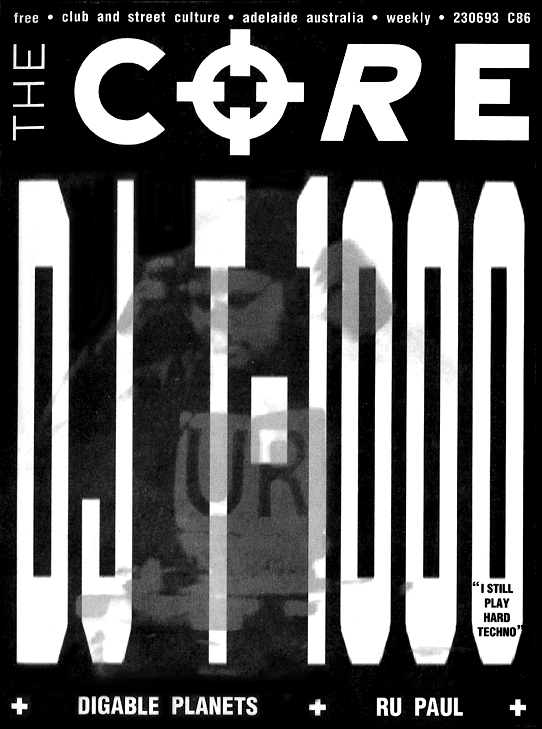
In the winter of 1993, Adelaide’s club and street culture pulsed with a dynamic energy, a vibrant intersection of global trends and fierce local talent. The 23rd of June issue of THE CORE, a weekly guide to the city’s scene, captures a moment defined by the influence of international headliners, a flourishing live music circuit, and a nightlife ecosystem that provided a constant beat for its youth.
International Headliners in the Spotlight
The presence of major international artists in Adelaide, prominently featured in local publications, served as a crucial bridge connecting the city’s scene to the global cultural pulse. These features not only provided local audiences with insight into the minds of touring performers but also validated Adelaide’s growing reputation as a key destination for influential music. The artists highlighted in this issue—spanning drag-infused house, jazz-centric hip hop, and hard Detroit techno—reflect the diverse and sophisticated tastes of the city’s music enthusiasts.
Ru Paul: Supermodel of the World
Standing over six feet seven inches tall, Ru Paul arrived on the international scene as far more than a musician or a drag queen; he presented a complete artistic and social philosophy. Signed to the respected hip hop label Tommy Boy Records, his career was a testament to a long-held vision. He saw drag not as an imitation of womanhood but as a powerful form of self-expression and social commentary, stating, “Drag is Drag in its draggiest. It’s the best to be had, as well as the point of view.”
His perspective was honed over nearly two decades, with a career built on a foundation of positivity and self-belief. This philosophy is the driving force behind his album, Supermodel Of The World, which he describes as deeply personal and reflective of his worldview.
My music and also my philosophy about how to drag ‘coz it’s part biographical and my philosophy about how to drag life… and it doesn’t mean you have to put on a wig and high heels. Drag is just getting through life…
Ru Paul’s work also carried a significant social impact. He was actively involved in AIDS fundraisers like the “Anything for a friend is not an act of charity dance hits benefit” and saw his rising prominence as an opportunity to promote a message of love and acceptance. This ethos, combined with his unique musical style, positioned him as a transformative figure in mainstream culture.
Digable Planets: Jazz-Infused Hip Hop
Emerging from New York, the trio Digable Planets—comprised of Butterfly, Doodlebug, and Ladybug—offered a fresh perspective on hip hop with their debut album Reachin' (A New Refutation Of Time And Space). Their distinct sound, which seamlessly fused the improvisational spirit of jazz with the rhythmic cadence of hip hop, was a direct reflection of their upbringing and artistic sensibilities. As Doodlebug explained, their parents introduced them to jazz, and they “really dug into it.”
The group’s formation was serendipitous, with members from different cities converging in New York. Their music was a conscious effort to channel their experiences and heritage into their art, viewing hip hop as a vital cultural force.
Anyone who’s growing up between the ages of 10 and 25 and is African American is a part of hip hop culture.
Digable Planets were critical of the genre’s commercialization and the tendency for media to create narrow categories for artists. They saw hip hop as a broad, evolving culture, not a static product. Ladybug expressed a nuanced frustration with being pigeonholed into a “jazz-rap” box, feeling it limited the perception of their art.
I think it’s cool that they’re giving us a category just for us. It’s really funny to me. … But it’s really like ‘Yo! That’s not all it is!’
Their approach was organic, building songs from shared ideas and inspirations, ensuring their music remained an authentic representation of their collective identity.
DJ-T-1000: Detroit’s Techno Ambassador
Representing the legendary Detroit collective Underground Resistance, DJ-T-1000 (Alan D. Oldham) held a special affinity for Adelaide, a city he unequivocally called the “techno capital of Australia.” His connection was forged during a previous tour, and his return was highly anticipated. A multi-talented artist, Oldham’s creative output spanned roles as a DJ, producer, radio presenter, and graphic artist, notably designing for Derrick May’s iconic Transmat label.
His experiences in Adelaide left a lasting impression, which he recounted with genuine enthusiasm.
Adelaide is just so cool. You guys got the most gorgeous women, the best beer, the fuckin’ best weather… You guys got a real scene here… It’s international. You’ve got people who want to fuckin’ kill you all the time!
Oldham’s musical philosophy was rooted in the raw, hard-edged techno sound of his hometown. His visit was timed for a headlining set at the major Independence 2 event on Saturday, July 3rd, where he promised to “play hard techno.” His upcoming releases included the ‘Burning’ 12-inch on the Signal to Noise Ratio EP and the ’20 Hours To Paradise EP’ on Generator. As a guide to his sound, he provided a readout of ten essential tracks defining the techno landscape.
DJ-T-1000’s TECHNO READOUT:
- Dreaming by Sub-Stance
- Planet E by Phuture
- Krafwerk by ESP
- Acid Rain II by Marco Jefferies/Robert Armani (NCV)
- K313 by Generator
- Sea Quake by Drexciya
- Happy Go Lucky by Ron Trent
- Mindpower by Millsart (Axis)
- Gravitational Arch Of 10 by Vapour Space (LB Bad)
- Acid Rain II by Underground Resistance (UR)
The powerful influence of these international artists was reflected directly in the energy and ambition of Adelaide’s homegrown talent.
The Pulse of Adelaide’s Live Scene
Adelaide’s local music scene in mid-1993 was a hotbed of creativity, showcasing a remarkable diversity of styles. From the sophisticated funk and hip hop of acts securing record deals to the innovative live dance sounds inspired by London, the city’s stages were alive with original music. This vibrant ecosystem demonstrated a community that was not just consuming global trends but actively contributing to them.
Local Funk and Hip Hop Acts
The funk and hip hop contingent was particularly strong, with several groups making their mark.
- Home Grown was lauded as the “hottest N.W.A’s u.s. wet in Australia,” a seven-piece funk and hip hop combination. Featuring MC Dee supplying the lyrics and a powerful brass section, the group held a residency at The Arena and was actively working on securing a record deal.
- Groove Terminator was another key player, a live hip hop outfit that combined the skills of MCs (Huf, Juice, and Madcap) with a full band, plus a team of fashion designers and dancers. Beyond the stage show, DJ Groove Terminator held down weekly DJ residencies, spinning at Colosseum on Thursdays and Caos on Wednesdays.
- The Nature of A Finger Lickin’ Good was a quartet blending beats, rhyming, and scratching with a “madcap and quirky style.” They were known for their stage presence and had shared bills with The Underground and Hypnotical Clangers in Sydney.
- Red Eyed Peez, a duo with a five-year history, drew from influences like Total Effect, Jah, and United II. They were focused on developing original music that fused elements of funk, hip hop, acid jazz, soul, and pop, with plans for a two-track EP.
Emerging Dance and Live Bands
Beyond hip hop, the live scene was also experimenting with electronic and rock sounds.
- Factory was a notable live dance act, inspired by the emerging “bass and percussion based dance music” of London. Acts such as the Young Disciples, Brand New Heavies, and Galliano prompted the band’s innovative sound, which featured a strong focus on drums, bass, and vocals.
- dB Gun, recent winners of the Yamaha Rock Contest, were set to return to the stage. Described as having an “80s electropop” sound with a “90s industrial” attitude, the trio featured Jeff Sinfield on vocals, Mark Moffat on bass, and Paul Rees on keyboards. They had upcoming gigs scheduled at Night Train 2000 (1216 Bower St, Port Adelaide) and the Britannia Hotel in Norwood.
These artists found their audiences in the city’s numerous clubs and special events, the very backbone of Adelaide’s nightlife.
Clubland and Major Events
From unlicensed all-nighters and grand-scale raves to intimate hotel residencies, the city’s network of clubs and one-off events was the central nervous system of its youth culture. These venues were the proving grounds for local talent and the primary stages for touring international acts, fostering a community built around shared musical passions. The weekly calendar was packed with options catering to a wide array of tastes.
Guide to Upcoming Events
The final weeks of June and the beginning of July 1993 were marked by several significant events:
- Stonewall ’93: Commemorating the 1969 Stonewall riots in Greenwich Village, this event on Saturday, 26th June at Le Rox was a celebration of the modern international gay liberation movement. The night featured DJs playing dance music from 9pm ’til dawn, with all proceeds going to lesbian and gay Community Action.
- Pulse Opening: A new, large-scale unlicensed club named Pulse was set to open its doors at The Ark on Wednesday, July 7th. Following major renovations to lighting and sound, the venue would feature two arenas. Arena 1 would host DJs ATB, Uzi, E, and DJ Madcap with MC Tim, while Arena 2 was dedicated to Urban Streetwear and the PMD Dancers. Tickets were $7 at Central Station and Urban Streetwear, or $9 at the door.
- The Core EP Launch: The magazine itself was launching an EP titled “We Are The Future” at an event scheduled for Saturday, July 24th at The Ark.
- S•KAL•8!: A special event at McMahon’s Salisbury on Friday, July 2nd, featuring guest DJs Jason and Gary. The night promised a 15k sound system and “intelligent lighting vision.” Entry was free for Clubcard members before 10pm, and $4 after.
Weekly Club Night Directory
The city’s weekly club schedule offered something for nearly every night of the week.
- Thursday 24th
- The Ark: Island with DJs plus Joy.
- Boltz: Joy with DJ Mark D and MC Juice.
- Britannia Hotel: DJ Gladis.
- Colosseum: Backstage with DJs Groove Terminator, Steve Ingrain, and Steve Hopper.
- Criterion Hotel: Club Cargo.
- Hill of the Graceful Tunnel: DJs Anthony and Chris.
- McMurphy’s (Morphett Vale Tavern): DJ Konrad and Simon.
- Sixty Nine Light Square: Discovery with DJs Brendon, MPK, Anthony & Noddy, and MCs Maestro D & Tim.
- 151 Millbourne Street: Higher Ground with DJs PhD and EZEE+C.
- Synagogue: Underground Solution with DJs HMC, Uzi, and guests.
- Friday 25th
- The Ark: DJs ATB, Brendon, and PhD.
- Astor Hotel: Phunky Phresh US3 Promo with DJ Nigel and Mc Quromystix.
- The Big Ticket: DJs Sanchez, HMC, and Corey.
- Cargo Club: Back On Ya Own with DJs Jason and Damon.
- Heaven: The Club with DJs Chill, Steve Ingrain, and Steve Hopper.
- Hyde St: Tonics with DJ CHC.
- McMahon’s (Salisbury): DJs Nigel, Jason, and Gary.
- 151 Millbourne Street: DJ Mark Herdon.
- Saturday 26th
- The Ark: DJs ATB & Madness.
- The Big Ticket: DJ Corey.
- Botanic Hotel: The new Comin’ Correct night launches, playing hip hop, funk, and reggae with DJs Code One and pRoy.
- Colosseum: Back Night with DJ Steve Chwell.
- Heaven: The Club with DJs Chill, Steve Ingrain, and Steve Hopper.
- Le Rox: Stonewall ’93 with DJs Brendon, HMC, and more.
- Proscenium: Primary with DJ EZE+C.
- Synagogue: Unity (Unlicensed) with DJs Brendon, Angus, and guests.
- Thebarton Theatre: DJs Johnnie and Johnny.
- Sunday 27th
- Heaven: Slammin’ On Sunday (Unlicensed) from noon with DJs HMC, Maestro-D, and Noddy.
- Le Rox: Retro with DJ Mark Andrew.
- Proscenium: Sunday Session with DJs MPK, Maestro D, and Noddy.
- Monday 28th
- Astor Hotel: Industry Night with DJ Mattrix.
- Tuesday 29th
- Astor Hotel: Tuned with DJs Triad and Track.
- Wednesday 30th
- Astor Hotel: Beyond with DJs T, Scott, and Swift DJ B.
- Caos: DJs Cool Matt, MC Scott, and DJ Groove Terminator.
- Hart Hotel: DJs T, DMC, and more.
Recent Club Night Reviews
- Journey to Atlantis: Held at The Ark, this event was praised for its good theme, decor, and visuals. However, it was noted that the small crowd and a few technical issues prevented it from reaching its full potential.
- DEF FX: This show at Heaven was impacted by an electrical fire scare, which forced an evacuation. While the band eventually played, many of the 200 disappointed attendees had already gone home.
- Aquila: This session at Pro Scene featured Fiona Horne’s new band. Despite her reputation with The Mothers, the performance was described as “powerless” and “innocuous,” though her powerful voice was still evident.
The clubs and gigs were the lifeblood of the scene, but it was the surrounding media landscape that documented, critiqued, and ultimately shaped its direction.
Music and Media Landscape
Adelaide’s music community was supported by a robust ecosystem of local and global media. Radio shows, magazines, and new record labels played an essential role in curating the sounds of the scene, introducing new artists, and providing a platform for critical discourse that helped audiences navigate the ever-shifting cultural terrain.
Global Music News and Trends
Key developments from the wider music world included:
- The Spiritualist, formerly of Melbourne’s Vertigo Hypo, was set to release a solo EP of “European trance-influenced, i sup-pose, ‘trance bits of house music.’”
- In Holland, hard-edged gabba house sounds were dominating the scene. DJ Paul Elstak of Holy Noise and the Amsterdam-based Mokum Records were cited as key players in this trend.
- Adelaide welcomed a new record company, Outlaw Records, which aimed to find and develop young Australian talent across hip hop and R&B. The label was founded by Colin Daniels, who had previously worked with major labels.
New Release Reviews
The “Global Music Reviews” section provided a snapshot of current releases, with ratings reflecting a discerning critical standard. The featured reviews covered a wide spectrum of genres. Ru Paul’s “Back To My Roots” received a perfect 5-star PhD rating for its “funky, cool N.Y. strong vocal style.” Other notable reviews included the collaboration between Fu-Schnickens and Shaquille O’Neal, David Bowie’s experimental single “Buddha Of Suburbia,” a four-track sampler from The Deep on the new French label Basenotic, and a new 12-inch from The Lab. The ratings demonstrated a high bar for quality, with many releases receiving solid but not stellar scores, indicating a critical but open-minded approach to new music.
Local Media and Community Hubs
Several local entities served as vital resources for the community:
- Zest Magazine: An Australian publication dedicated to hip hop culture, Zest focused on showcasing local talent. Its first issue featured Sydney’s Urban Poets, reports from Adelaide by graffiti artist Orson, and a comprehensive look at the national scene.
- Coast FM: The community radio station celebrated its first birthday with parties at the Tonsley Hotel on Friday 25th and Saturday 26th, featuring acts like Chunky Custard and the D&A/Party posse.
- Access Breakthrough: For dedicated dance music fans, this service offered a 24-hour dance radio broadcast on VHF Hi-Band, requiring a special multiband receiver to access.
- Big Star Records: Located on Rundle Street, this record store was a key hub for the scene, selling new and used records and serving as a meeting point for enthusiasts looking for the latest vinyl.
This cultural ecosystem extended beyond music, embracing other art forms like film that resonated with the magazine’s readership.
Film and Cultural Commentary
Broadening its scope beyond music, THE CORE also provided commentary on other cultural touchstones, primarily film. The magazine’s film reviews and its correspondence section offered a more complete portrait of the community’s interests, values, and concerns, reflecting a readership engaged with a wide spectrum of creative expression and social issues.
On Screen: A Review of Current Films
The film reviews covered a mix of horror, comedy, and drama, offering concise and pointed critiques.
Braindead: Peter Jackson’s zombie film was lauded as a masterpiece of gore and comedy, praised for its “hilarious and clever sight gags” and deemed “a truly disgusting fun experience.”Heartbreak Kid: An Australian film about a schoolteacher’s affair with a student, this movie was commended for its excellent performances and for tackling a sensitive subject with nuance, though it was criticized for an “overwhelming saccharine” score.Romper Stomper: This controversial Australian film about neo-Nazi skinheads was acknowledged as a “brave” and “adult” piece of cinema, though its themes were noted to be deeply sensitive and potentially alienating for some viewers.Made in America: A comedy starring Whoopi Goldberg, Ted Danson, and Nia Long, the film was described as a “light-hearted” but “silly” affair, with a predictable plot and mediocre acting.Clancy: This film was dismissed as a “complete and utter bore,” a slow-moving story that was “purely and simply, a waste of an hour and a half.”
Community Voice: Letters to the Editor
The “Correspondence” section provided a direct line to the readership, revealing a passionate and opinionated community. Readers wrote in to debate the magazine’s new format, with some praising its improved readability while others missed the old style. The letters also served as a forum for discussing the state of the club scene, with one writer lamenting the “degradation and obliteration of the current club scene.” This feedback loop highlights an active and invested audience, deeply concerned with the health and direction of their culture.
Leave a Reply