
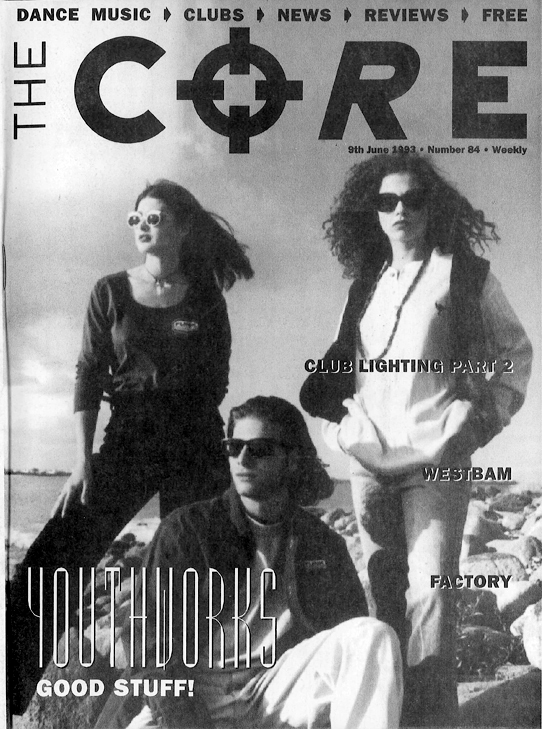
In the winter of 1993, Adelaide’s dance music scene was a thriving ecosystem of sound, light, and culture. The 84th issue of The Core magazine, dated June 9, serves as a time capsule, capturing a cross-section of a scene at a crucial moment of maturation, where a fierce local identity was being forged in the crucible of global trends. This archival report explores the key artists, events, technological innovations, and cultural currents that defined this vibrant era.
Artist Spotlights: Defining the Sound
The scene’s momentum was driven by a diverse roster of artists, from international techno titans headlining major tours to burgeoning local collectives carving out their unique sonic identities. The soundscape of Adelaide in mid-1993 was a rich tapestry, weaving together threads of techno, acid jazz, funk, and hip hop, reflecting a community both in touch with global movements and committed to developing its own distinct voice.
Westbam: The German Techno Influence
At the forefront of the international sound was German DJ Westbam (Maximillian Lenz), a pivotal figure in the European techno movement. At 28, Westbam had been a professional DJ since the age of 17, founding the influential label Low Spirit Recordings and releasing his first record in 1985—a B-side to a track about tennis star Boris Becker. He viewed techno as the definitive “sound of northern Europe,” a raw and energetic departure from the house music of the time.
His musical philosophy was eclectic, describing his evolving sound as moving from “basically hardcore-European rave stuff to some house stuff” and embracing “a little bit of house, some bits of club things, and hardcore techno.” He cited a wide range of influences, from the expected house and hardcore to iconic acts like Depeche Mode. Reflecting on the Berlin scene after the fall of the Wall, Westbam noted the proliferation of parties and a more mainstream appreciation for the music. His upcoming Australian tour with L.U.P.O. was highly anticipated, promising to bring his signature sound directly to Adelaide’s dancefloors.
Factory: Adelaide’s Live Funk and Groove Collective
Representing the burgeoning local live scene was Factory, an Adelaide-based band inspired by the acid jazz movement emerging from London. Their music was a potent blend of funk, groove, and rap, designed to be both musically sophisticated and irresistibly danceable. Formed by Damir and Too Strong, the group expanded to include a live saxophonist and the scratching and sampling talents of DJ Gacia.
“Helping that many people on stage is great,” explained Damir, highlighting the band’s collaborative and dynamic live performances. Their goal was to create a “professional” sound that moved beyond simple cover songs to develop unique interpretations. By integrating live instrumentation, Factory brought a tangible, organic energy to the club environment. Their upcoming performance was scheduled for Friday, June 11th, at Bliss on Melbourne Street.
Pryzm: Charting the Course for Adelaide Hip Hop
Adelaide’s hip hop scene was also gaining traction, with the group Pryzm at its core. With a five-year history, the collective of DJ Addiction, Unit, Madcap, and Shifty was a dedicated force in a developing community. They spoke candidly about the challenges facing local hip hop acts, including limited access to equipment and an overwhelming influence from American artists. “I mean there are groups in Adelaide,” one member noted, “but they copy American styles, they can sound good but they ain’t got the real feeling.” This American benchmark was evident in the issue’s own record reviews, where releases like Dr. Dre’s Death Row were held up as the standard for authentic, complex production.
Pryzm’s creative process was rooted in authenticity, focusing on lyrics, rhymes, and beats that reflected their own “freestyle and things.” Fresh off an interview on Radio Adelaide, the group was a testament to the perseverance and distinct identity of Adelaide’s hip hop underground.
This creative output from the artists found its home on the city’s dancefloors, which were animated by a packed schedule of weekly club nights and major one-off events.
The Pulse of the City: Club Nights and Major Events
The lifeblood of Adelaide’s dance culture was its network of club nights and special events. These gatherings were more than just parties; they were strategic hubs that fostered community, showcased new sounds, and brought international talent to local audiences. In June and July 1993, club-goers had an abundance of options, from intimate weekly residencies to large-scale, one-off international tours.
Featured Upcoming Events
- Westbam & L.U.P.O. (Mayday, The Roof Is On Fire): An international techno showcase featuring the German headliners supported by local stalwarts DJs ATB, Brendon, MPK, and MC Tim.
- We Are The Future EP Launch: A massive dance party celebrating a local release on Saturday, July 3rd. The event featured live performances from DAMC, Aquila, and Maas, with an extensive DJ lineup including Brendon, HMC, Angus, MPK, and PMA.
- S.T.A.T.E. Presents Recovery: The public opening of this new event, held at the Richmond Hotel on Saturday, June 12th.
- Dance 100 “International Club Date” Launch: The official launch party for the new radio station, taking place Saturday, June 19th, at the Richmond Hotel.
- Journey to Atlantis: A major upcoming event scheduled for Saturday, July 16th, featuring The System AD.
- The Ark Invaded by Germans: A monumental international event on Friday, June 11th, at The Ark. The lineup was a who’s who of global talent, featuring Carl Cox, Frank De Wulf, Lenny Dee, and Westbam.
- Underground Hip Hop Live: A showcase for local hip hop at The Ark on Wednesday, June 9th, with performances by Madcap, Shazé Shay, and an open mic session for aspiring artists.
Weekly Club Guide: June 10th – 16th
Thursday 10th June
- Astor Hotel: Phunky Pharesh with Young Black Teenagers, plus DJs Nigel & MC Quoromystix.
- Discovery: DJs Brendon, MPK, Angus, Rem-E-D, and MC Angel.
- Le Rox: DJs Mark D and Dylb.
- Proscenium: Flava (Hip Hop & Reggae) with DJs Madcap and Lennie Dread.
- Underground Solution: DJs Mark D and Mad Mike.
Friday 11th June
- The Ark: International lineup featuring Westbam.
- Bliss (151 Melbourne St): Live performance from Factory.
- New Jack City: DJs Throb and Diamond.
- Proscenium: DJs Flier, Finger Lickin’ Goodfellas, DJ O+B, and PhD.
- Transformers: DJ Steve Chiswell and Josh.
Saturday 12th June
- The Richmond Hotel: S.T.A.T.E. Presents Recovery with DJs Uzi and Nigel Brooks.
- Union Hotel: Dance night with DJs Groove Terminator, DJ Groove, and Martin.
- Disco @ Sixty-nine: DJs HMC, Groove Terminator, and MC Scott T.
- New Jack City: To Basics night with DJs Throb and Diamond.
Sunday 13th June
- Proscenium (Blyth St): The “Sunday Session” featuring live sets from PMA and Brown Goldfish, alongside DJs Brendon, MPK, and Maestro D.
- Disco @ Sixty-nine: Mistress Sirena’s Fetish & Fantasy with live set by HMC and Groove Terminator ft MC Scott T.
- Astor Hotel: With DJ Mark Astor.
Monday 14th June
- Astor Hotel: Nasty Night with DJ Mark D.
Tuesday 15th June
- Astor Hotel: Mad night with DJ Mad Mike.
Wednesday 16th June
- Astor Hotel: Beyond with DJs Trial and Diamond.
Venue Highlights
Several venues served as anchors for the scene. Synagogue introduced its new “Funkensknunk” night, a showcase of acid jazz, ragga, and hip hop with DJs Madcap and Johnny. New Jack City, located at 171 Hindley St, proudly positioned itself as Adelaide’s “sole new jack club,” open every Friday and Saturday. Meanwhile, Proscenium on Blyth St established a loyal following with its “Sunday Session,” providing a perfect close to the clubbing weekend.
The experience of being in these clubs was shaped not just by the DJs and the crowd, but by the news, reviews, and industry developments happening beyond the dancefloor.
Industry News and Music Reviews
The global and local music industries were in constant flux, with new record deals, artist projects, and radio shows directly influencing the sounds heard in Adelaide’s clubs. The pages of The Core provided a crucial link between the local scene and the wider world of dance music.
Global Music News
- Moby: The influential techno-maker signed new deals with Elektra for North America and Mute Records for the rest of the world, with a new album scheduled for release in August.
- Fierce Ruling Diva: The Dutch techno duo, Jeroen Flamman and Jeff Porter, were arrested and charged after a police raid on a club they were playing in the Netherlands.
- Altern 8: The release of the UK rave act’s new album was delayed. Member Mark Archer commented, “I’ve been putting off releasing the album in the hope that it will all go away.”
- DJ T-1000: A postcard from the Detroit artist simply read: “LIQUID METAL MELTDOWN.”
From The Nation: Australian Scene Updates
- FSOM (Future Sound of Melbourne): The group was planning to launch its own magazine and release live recordings.
- Itch-E and Scratch-E: Paul Mac was reportedly working on new remixes for the duo.
- Adelaide Radio: A new hip hop radio show, Rhymetime, was announced for Adelaide.
- Other notable acts included The Funtops, who were working on their debut album, and Urban Disturbance and The Fonke Knomaads, both preparing new releases.
Record Reviews
Import Reviews
- The Housewrecker – The World EP: Described as “fuckin’ hip hop noise” with four tracks of “straight out of Chicago house.”
- Sparkle – A Safe Place…: A progressive house track praised for being “built for clubbin’.”
- Dr Dre – Death Row: Assessed as the “real shit,” this track from the creator of NWA was lauded for its “original break beats” and complex session-style production.
Local Reviews
- Return Of The Body Snatch – Ministry Of Sound: A local effort described as a move toward a “dance pop feel.” The release featured four mixes of the title track, while the B-side, titled “The Revenge Of The Goldfish Tour,” was noted as a “bizarre” cover of a Pet Shop Boys track.
This constant flow of new music was delivered to audiences through increasingly sophisticated technological means, with club lighting playing a key role in the experience.
Behind the Scenes: The Technology of Club Lighting
Beyond the music, the immersive atmosphere of Adelaide’s premier clubs owed much to the evolution of intelligent lighting. This was a period of rapid technological democratization, where the tools for creating sensory experiences, once reserved for stadium concerts, were becoming integral to the weekly club night.
These intelligent lights offered operators precise control over movement, colour, and patterns. Unlike older systems, they used dichroic filters for vibrant, non-fading colour and gobo wheels to project patterns and logos. The shift from halogen to discharge lamps was also significant; while taking longer to warm up, discharge lamps offered a much longer lifespan (2000 hours compared to 200) and greater efficiency.
Adelaide’s clubs were equipped with a range of popular and cutting-edge models:
- Clay Paky Miniscan: An early model that found a home at the Le Rox club.
- Intellibeam 700 HX: Considered a robust and reliable workhorse, this model featured a rotating gobo wheel and was praised for its durability.
- The Ark’s System: The popular venue utilized a comprehensive setup of four Golden Scans, a Trackspot, and twelve “shiny” Par cans for a powerful visual effect.
- Ultra Scan: A top-tier fixture used at Synagogue, the Ultra Scan boasted advanced features like ten dichroic colours, a rotating gobo wheel, and extremely precise positioning capabilities.
- Roboscan: A popular brand often seen at smaller events and parties, though generally considered less powerful than the higher-end models.
This technology was supplied and maintained by local experts, including Matt at BSG Light and Sound, Glen Gilham of Quantum FX, and Osmond at Wheatsound, who were crucial in equipping the city’s venues. The combination of sound and light created a space for a unique culture and community to flourish.
Culture, Community, and On the Air
The dance music scene was more than just clubs and records; it was a subculture with its own distinct fashion, community dialogues, and dedicated media platforms. These elements provided the connective tissue that transformed a collection of individuals into a cohesive community.
Youth Culture and Fashion
A key retail hub for this culture was Youthworks, located in Shop 27 of the Regent Arcade. The store catered to the scene’s aesthetic, offering items like talismans and unique jewellery. The fashion of the time, as seen in the magazine’s photo spreads, featured brands like D-London, Mooks, and Frank Essentials, with accessories like belts explicitly credited to Youthworks, cementing its role as a central outfitter for Adelaide’s youth.
A Survey of Adelaide Clubbers
Insight into the community’s habits and opinions came from a university survey detailed in the magazine’s “Correspondence” section. The findings painted a picture of a dedicated and opinionated scene:
- 73.5% of respondents identified as regular club-goers.
- 58.1% spent more than $80 a month on clubbing and related activities.
- 79.2% believed the scene was “suited to the drug culture,” a candid reflection on the rave environment.
- 66.0% felt that raves were being advertised less, suggesting a potential shift in the scene’s dynamics.
- Respondents also expressed frustration with the “line-up of non-rave music” at some events and a strong desire for a “local music-mag with enough techno scene” content—a need that this very issue of The Core was actively working to fulfill.
On the Airwaves
Supporting and shaping the scene were the city’s radio waves. The most significant development was the imminent arrival of Dance 100, Adelaide’s first 24-hour dance radio station. Its planned programming included the American hip hop show “New York Underground” and a local show hosted by scene stalwarts DJs HMC and Anglais, promising to provide a constant soundtrack for the community. In other radio news, Coast FM was celebrating its first birthday, marking another milestone for independent music broadcasting in the region.
Leave a Reply