
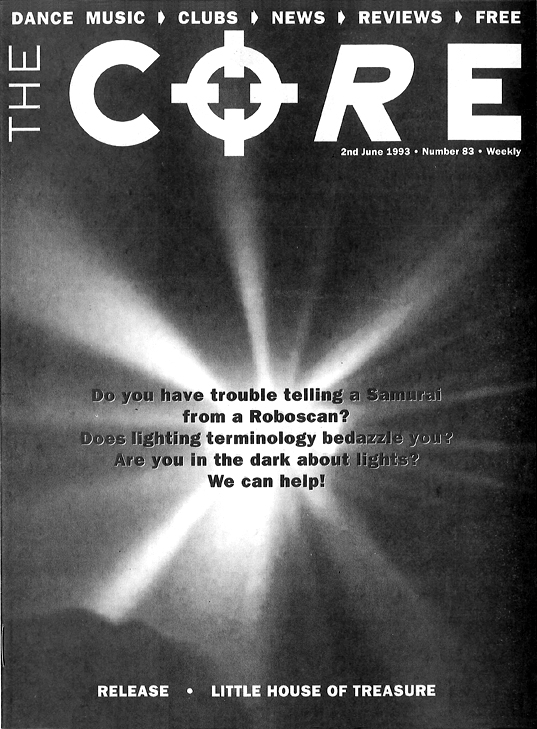
In the early winter of 1993, Adelaide’s cultural landscape was defined by a thriving and energetic music scene, meticulously chronicled in the pages of the weekly magazine The Core. The city’s nightlife was a dynamic blend of pulsating dance clubs, a burgeoning hip hop movement carving out its own identity, and a constant influx of new music shaping the sonic backdrop for a generation. This document provides a snapshot of that vibrant world as it stood in the first weeks of June 1993.
The Adelaide Club Scene: A Week-by-Week Guide
Adelaide’s bustling nightlife was the beating heart of its youth culture in June 1993. Clubs, bars, and special event nights served as the central hubs where new sounds were broken, styles were showcased, and a dedicated community of dancers and music lovers converged. The weekly gig guide was an essential map for navigating this landscape, from established institutions to the launch of exciting new ventures.
S.T.A.T.E. of Dance: A New Club’s Official Launch
A major new contender for Adelaide’s Saturday night crown emerged with the launch of S.T.A.T.E., located at the Richmond Hotel, 128 Rundle Mall. The management team, finalized by the experienced DJs Uzi and Nigel, brought together “well known faces” from the Adelaide scene for “pre-season training,” ensuring a high-quality experience from the outset.
The club’s official opening was a major event scheduled for Saturday, 5th June, from 10pm. In a unique promotional move, the launch featured a live-to-air recording by Dance 100, billed as Australia’s first and only 24-hour dance music station. Following this exclusive preview, the public opening was set for the next Saturday, 12th June. S.T.A.T.E. quickly established its regular Saturday night event, “S.T.A.T.E. of dance,” on Level 1 of the hotel, with a resident DJ lineup of ATB, Brendon, and MPK.
The Weekly Gig Guide
The first weeks of June offered a dense schedule of recurring nights and special events, catering to a wide array of musical tastes across the city.
Thursdays
- Discovery: Held at Angels Bar & Grill, featuring a formidable lineup of DJs Brendon, MPK, ATB, and Nigel.
- The Ark: A night dedicated to ’80s retro sounds with DJs Jock and Jacki.
- Synagogue: The “Underground Solution” night offered a deeper dive into electronic music with resident DJ HMC and Pvoy/PhD, running from 10pm till late with a $5 entry fee.
- Le Rox: The DJ roster expanded with Madcap joining Leenie D and Procenison.
- Hell: Located at 25 Grenfell St. City, this night offered free entry for all patrons.
Fridays
- Dance (ar) Club: A popular weekly spot featuring DJs ATB, Brendon, Nigel, and Uzi, hosted by MC Tim. Drink specials included $1 beer and champagne from 9-11pm.
- Heaven: Featured a packed DJ booth with The Groover (Fermintation), Jag, James, and Steve Hooper, alongside MCs Russell and The Saint.
- Le Rox: Presented “Higher Ground,” a recurring night helmed by DJs Dr Ph.D and DJ H.
- New Jack City: Adelaide’s dedicated New Jack club at 171 Hindley St opened its doors from 9pm till late.
- Special Event (Friday, 4th June): The Ark hosted an international guest, Berlin’s DJ Westbam, supported by local favorites ATB, Brendon, and Nigel. Entry was $1, which included free beer and champagne from 9-11pm.
- Special Event (Friday, 4th June): The Astor Hotel launched “Phunky Presh,” a new night featuring DJs Redman and Nigel with MC Quromystix.
Saturdays
- Dance (ar) Club: Continued the party with DJs ATB and Madness. Specials included $1 beer and champagne and $2 base spirits between 11pm-12am and 1am-2am, with free entry before 10pm.
- S.T.A.T.E.: The new flagship Saturday night with resident DJs ATB, Brendon, and MPK.
- New Jack City: Open again from 9pm till late for fans of the funk and R&B-infused genre.
- Special Event (Saturday, 5th June): The Ark hosted “The Big Treat,” a one-off party with DJ Busy and DJ Steve Chisell on the decks.
Sundays
- Shine on Sunday: An unlicensed all-ages dance club held at Toons on Fenn Place from 1pm to 6pm. For a $5 entry fee, attendees could hear DJs OHC and Aaron and win prize giveaways.
- Sunday Session at The Botanic: A regular Sunday gathering featuring a diverse lineup including DJs Proscenison, The Core EP (with a live performance from Aquila), and DJs Brendon, MPK, and Maestro D.
- Special Event (Long Weekend): Hell hosted a “Sunday Session” with DJs Brendon, MPK, Maestro D, and Aquila. The event started at 10pm with a $5 entry.
While the city’s main rooms pulsed with house and rave, a parallel movement was cementing its place. The emergence of promoter-driven, dedicated hip hop nights signaled a significant shift, proving the genre was no longer a niche interest but a powerful cultural force in its own right.
The Rise of Hip Hop
The emergence of dedicated hip hop nights and prominent news coverage signaled the genre’s growing influence within Adelaide’s broader music culture. Promoters and venues began catering specifically to this audience, providing a platform for local talent and a space for fans to connect.
“YES Y’ALL”: A Showcase of Hardcore Hip Hop
Alladat Productions presented a major hip hop event titled “YES Y’ALL” on Wednesday, 9th June 1993. Held at 145 Hindley Street from 9pm, the night was a celebration of hardcore hip hop, featuring a lineup that bridged interstate talent with local acts. The headline performers were Melbourne’s Intense Quality and Adelaide’s own Finger Lickin’ Good. The turntables were managed by a trio of respected DJs: Reason (IQ), Madcap, and Shazy Shae. In a move to foster community participation, the event also included an “Open Mic Session.”
“Straight-up Hip Hop” at Le Rox
In a curious and ambitious move, the same promoter, Alladat Productions, scheduled another event for the very same night: Wednesday, 9th June. “Straight-up Hip Hop” at Le Rox (345 Hindley Street) showcased performers from “The Underground.” For a $6 entry fee, patrons could hear the exact same DJ lineup—Reason (IQ), Madcap, and Shazy Shae—spin a mix of old school and new school hip hop from 9pm. Whether this double-booking was a strategic attempt to dominate the Wednesday night scene or an indicator of the genre’s explosive growth requiring multiple venues remains a fascinating footnote of the era.
Hip Hop News from Abroad
The local scene’s interest was reflected in the magazine’s coverage of news from the genre’s epicenter in the United States.
- A story circulated about Kiley, a female writer for Melbourne’s Megabass magazine, who claimed to have been arrested in Los Angeles alongside the rap duo Kris Kross and their protege Da Brat. The claim was later firmly denied by Kris Kross’s publicist.
- In more serious news, Rap-A-Lot Records owner James Smith was reportedly arrested.
- An incident of violence was reported where the Gato Boys were shot in the leg after a show.
- On the entertainment front, the film Who’s the Man? starring hip hop personalities Ed Lover and Dr. Dre was in the spotlight.
- A sobering statistic was shared, noting that fewer than 53 rappers had managed to achieve a status worthy of a “serious kind of who’s who of hip hop.”
This blend of local events and international news kept the Adelaide scene connected to the global pulse of music, a pulse that was constantly being renewed by a steady stream of new releases.
New Music: Releases and Reviews
The sound of Adelaide’s dance floors in mid-1993 was directly shaped by the latest vinyl and CD releases. New tracks from pioneering international artists and breakout local talent provided DJs with fresh material, continually evolving the clubbing experience.
International Spotlight: Aphex Twin’s “Hardest Ever” EP
A highly anticipated release came from the enigmatic and influential producer Aphex Twin. Titled “Hardest Ever,” the new EP was initially released as a 1,000-copy limited edition picture disc, with a standard black vinyl pressing to follow. In his typical fashion, Richard James (Aphex Twin) offered a cryptic description of the music: “The tracks don’t have titles, ‘cos I didn’t want ’em to have any… the music was beamed down from Mars.”
At the time, Aphex Twin was part of the Midi Circus live tour. Also on the tour was an act named Rephex, a collaboration between Mike Dred (aka The Kosmik Kommando), Mike Paradinas, and Grant from The Fairly Stable. Rephex was reportedly set to release a live double album of “basic, hard as progression acid.” Meanwhile, James was also collaborating with Tom Middleton on their new “‘Twist’ project.” Middleton described their sound as an effort in “exploring the possibilities of sound.” This flurry of activity added to the legacy of an artist who had already released influential material under the names Rephlex, R&S, and Uak since late 1991.
Local and International Track Reviews
A cross-section of reviews from the period reveals the eclectic tastes of the time:
- D+Note – The More I See: Praised as a “slick, jazzy track with a nice smooth rap.”
- Who’s The Man? – “Pain”: Described as a “thumping, ‘to da bone’ stomper.”
- Utah Saints – Believe In Me: The group was noted for their “slick sample” work, managing to be “a huge sample ac.”
- House of The Rising Sun: Dismissed with the short critique of having “gay verses.”
- Peter Andre – Funky/Pop/Complete: Received a scathing review, earning a rating of just 1/2 a star.
- Paperboy – Ditty: Recognized as a “crossover success” with “catchy hooks.”
- The Flavor Unit MCs – Roll Wit Tha Flava: Acknowledged as a “hip hop all star” collaboration.
- Various Artists – Dub House Disco 2000: A compilation from Guerilla records, lauded for its “progressive, housey grooves.”
- Various Artists – The Ultimate Rave LP: A major label compilation featuring prominent rave acts like Felix and Altern 8.
Quench’s UK Success
Adelaide’s own Quench achieved significant international recognition with their single “Feel My Love.” Released on vinyl via Sirius, the track was picked up by UK label Faze 2 and, after just two weeks, reached number 23 on the national dance chart in the UK. The track was praised for its “distinctive, instantly recognizable Pan Pipe hook” and described as a “fairly potent, dark raven-esque, second phase rave track.”
This success highlighted the quality of local production, while back home, the presentation of this music was being enhanced by increasingly sophisticated technology.
Behind the Scenes: The Technology of Club Lighting
In an era before stadium-style LED screens, the art of club atmosphere was a hands-on affair. The alchemy of smoke, mirrors, and meticulously programmed lamps was what separated a forgettable night from a transcendent experience. Understanding the technology of the time reveals the true craft behind the spectacle.
The Basics of Club Illumination
The foundation of most club lighting systems in 1993 was built on several key components:
- Fixed Projections: The most basic effect, where a lamp is simply turned on and off, projecting light through a colored gel or piece of glass. The classic Traffic Light effect, often used in banks, is a prime example.
- Chasers: These controllers sequence a series of lights on and off in a pattern, creating the illusion of movement and energy.
- Strobes: A staple of the dance floor, strobes flash intensely to create a disorienting and exhilarating “slow-motion” effect. The After Shock II was noted as a particularly powerful model.
- Smoke Machines: Essential for any advanced lighting setup, these machines produce a non-toxic, health-authority-approved smoke that makes light beams visible to the naked eye.
- UV Tubes (Black Lights): These lights cause white and fluorescent materials to glow brightly, allowing clubs to create patterns and highlight dancers’ clothing.
An Introduction to Intelligent Lighting
More advanced clubs utilized “intelligent” lighting systems that offered dynamic and programmable effects:
- Scanners: These instruments feature a mirror that moves to direct a beam of light around a room. While older models like the Samurai and Roboscan required manual programming, newer, more compact units like the Micro Scan and Mini Ultra Scan were “beat-induced,” meaning they could automatically follow the rhythm of the music.
- Gobos: Intelligent lights often featured gobo wheels. A gobo is a small metal mask with a pattern (like stars, circles, or logos) cut out of it. When light is shone through the gobo, it projects the pattern onto a surface.
- Helicopters: A projection effect with six colored blades that rotate around a central lamp, creating a sweeping, multi-colored wash of light.
- Astrosyder: A powerful and complex rotating projector. Its defining feature was that its top half could separate from the bottom half, creating intricate and layered visual effects. With 103 lenses, it was capable of filling a large space with moving light.
This technology created the visual spectacle of the club, but the human element—the style and fashion of the crowd—was just as crucial to the overall scene.
The Style of the Scene
Fashion was an integral part of club culture, a way for participants to express their identity and allegiance to certain subcultures. The styles on display ranged from popular international streetwear brands to unique, self-curated looks sourced from vintage shops.
Streetwear and Fashion
The store Central Station, located at 32 Twin St, Adelaide, was a key supplier of popular streetwear. This roster of brands, mixing American sportswear giants like Reebok and Fila with skate-centric labels like Duff, illustrates the transatlantic currents shaping Adelaide’s youth fashion. Advertisements from the period show they stocked:
- Reebok
- Fila
- Puma
- LA Gear
- Duff
- Travel Fox
- Yakka
- Yako
Vintage and Recycled Fashions: The Little House of Treasure
For those seeking a more alternative or individualistic style, “The Little House of Treasure” offered a different path. Located in the basement of 238 Rundle St, the store specialized in buying and selling new and recycled fashions from the “1920’s to Now.” This allowed clubbers to create unique looks that stood out from the mainstream.
This vibrant culture was not without its internal debates, and the community’s passion often spilled onto the pages of its most trusted publication.
Community Voice: Letters to the Editor
The correspondence section of The Core served as a vital public forum, reflecting the passions, opinions, and internal debates of the Adelaide music community. It was a space where clubbers, DJs, and fans could voice their frustrations and defend their tastes.
The Great Hardcore Debate
A recurring topic of debate in June 1993 was the role of “hardcore” music and its associated dancing style.
- A letter from “EMP” complained that bouncers were kicking people out of clubs for dancing “hardcore style,” arguing that it was simply a valid form of personal expression.
- In direct response, “Techno Tits” presented a counter-argument, finding hardcore music to be boring and repetitive and sarcastically concluding, “Let us play the Hardcore.”
- Taking a broader view, a writer signing off as “Dancinqa’ Capital, Adelaide” expressed frustration with the scene becoming stagnant and implored people to stop complaining.
- On a more personal note, a letter from “EB” complained that DJ Brendon played a “wicked set” while his girlfriend appeared visibly bored.
Editor’s Response
The passion and volume of letters prompted a direct response from the magazine’s editor, who laid out clear guidelines for correspondence. The editor’s note listed four primary reasons a letter might not be published:
- Illegibility: “We need to be able to read it.”
- Length: The editor stated, “Not going to read a fucking essay,” and set a firm word limit of 250 words.
- Stupidity: Writers were urged to “Try to say something…” of substance.
- Anonymity: “We need your real name and phone number” for verification, though the editor promised not to print this personal information if requested.
Leave a Reply