
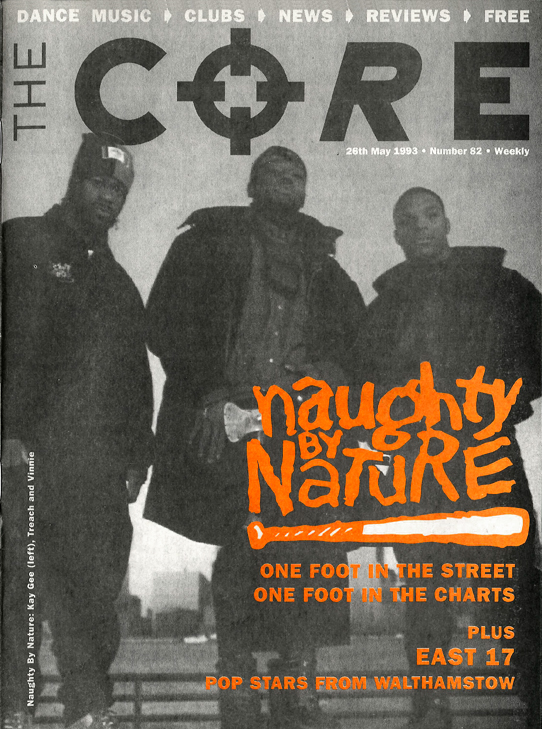
In the late spring of 1993, the music landscape was a dynamic tapestry of crossing genres and burgeoning local scenes. Hip hop artists were masterfully navigating the line between street credibility and mainstream chart success, while an electrifying array of dance music events and new club openings signaled a culture in vibrant, perpetual motion.
Naughty By Nature: Bridging the Street and the Charts
In an era where authenticity was paramount, Naughty By Nature carved out a unique space in the hip hop world, successfully balancing immense commercial appeal with unshakable street credibility. Their ability to craft infectious, chart-topping anthems without sacrificing their gritty, inner-city narrative was a strategic masterstroke, allowing them to connect with a diverse global audience while remaining true to their roots. This delicate equilibrium was the key to their meteoric rise and enduring influence.
Commercial Success and Acclaim
The group’s commercial achievements were undeniable. Their breakout hit, “O.P.P.,” achieved platinum status, rocketing them to international fame. This success was quickly followed by formal industry recognition, including winning Best New Rap Group at the American Music Awards. Their follow-up single, “Hip Hop Hooray,” from the album 19Naughtylll, continued this trajectory, achieving gold certification in less than a month. Both the album and the single were released on Tommy Boy and distributed in Australia by Mushroom.
The Group’s Philosophy and Message
Reflecting on their journey, member Vinnie acknowledged the group’s early struggles and the moment they found their voice: “Back in ’88 or ’89, when we first started, we always clapped and stuff, but we were just about to quit… that was when we found what we kind of did best.”
A core part of their philosophy was retaining authenticity, even while appealing to a large white audience. Vinnie saw hip hop as a powerful unifying force that could “cross-culturalize” people, pointing to historic collaborations like Run-DMC with Aerosmith and Public Enemy with Anthrax as proof. He articulated a positive mission for their music, hoping it would give listeners a glimpse into their world and foster understanding. Their goal, he explained, was to let people “get to see what it’s really like… growing up in the ghetto.”
Background and Influences
The group’s music often drew from deeply personal experiences. For a French-Vibes single, Vinnie re-described his feelings in the song “Everything’s Gonna Be Alright,” which touched on his experiences with his “younger and eldest sisters” and family; this track was subsequently banned. Separately from the song’s narrative, he also spoke of the personal loss of a family member, stating, “I had a sister that I’d lost from AIDS.” Despite the tough subject matter and their “Naughty” moniker, the group was clear about their lifestyle, stating plainly, “We don’t have any connections in the drug game.” Their primary musical inspirations were foundational acts who defined the genre, citing Run-DMC and the Rakim/Jazzy Jeff era as their key influences.
Looking ahead, Naughty By Nature was expanding its creative horizons, working on a film script and producing for the group Da Youngstas, signaling an ambition that stretched far beyond the recording studio.
East 17: Pop Stars from Walthamstow
Emerging from the working-class streets of East London, East 17 established themselves as a formidable dance-pop force, considered by some to be “more pop than the Pop Queen herself, Kylie Minogue.” Their unique blend of infectious pop hooks and street-savvy attitude set them apart in a crowded marketplace, capturing the attention of a massive international audience.
Musical Style and Identity
The group’s sound was a vibrant “dance-pop-soul-funk fusion,” infused with what member Terry Caldwell described as a “streetwise gangsta lean.” This unique identity was entirely their own creation; the group handled all their own stage choreography and frequently wove anti-racist statements into their music, adding a layer of social consciousness to their pop sensibilities.
Origins and Formation
East 17’s identity is intrinsically linked to their origins in Walthamstow, a working-class area of London whose postcode gave the group its name. The members included Anthony Mortimer (22) on keyboards, vocals, and raps; John Hendy (21) on bass and keyboards; Brian Harvey (18); and Terry Caldwell (18).
The group formed in the wake of the “Summer of Love” in 1988, and their creative process was rooted in their local environment. Their hit song “Deep,” for instance, was written in an old building where the members used to hang out, a testament to their authentic connection to their hometown.
Chart Success and Future Plans
Their relatable, high-energy music translated into widespread chart success across Europe, with number one hits in Israel, Sweden, and Finland. With their debut album Walthamstow, available locally on Polydor, under their belt, the group had ambitious plans for the future, including a tour of Australia, the recording of a second LP, and a commitment to performing “as live as possible.”
While international acts like East 17 were setting trends globally, their energy was mirrored on the ground in Australia, where a hungry and sophisticated club scene in cities like Adelaide was building its own distinct identity.
Adelaide’s Vibrant Club and Music Scene
While international acts dominated the charts, a dynamic and rapidly growing local club scene was flourishing across Australia, with Adelaide emerging as a key hub of activity. The city’s nightlife was buzzing with everything from the grand opening of new, genre-specific clubs to major fundraisers and warehouse parties, showcasing a diverse and passionate community.
New Club Openings: New Jack City
A significant addition to the city’s scene was the grand opening of New Jack City on Saturday, 29th May. Billed as “Adelaide’s Longest Overdue Club,” the city’s first venue dedicated to New Jack Swing was located at 171 Hindley Street (the former site of Centro). The club’s resident DJs were Therio and Diamond, lauded as “Adelaide’s Specialist Funk DJ’s.” DJ Therio laid out the club’s specific musical focus: “We’ll be playing all the latest funky New Jack music, soft trip hop, R&B — all that American-based black stye of music.”
Major Upcoming Events
The calendar for May and June was packed with can’t-miss events for Adelaide’s music fans:
- Release – An Amnesty International Fundraiser: Taking place on Saturday, 29th May, this “awareness night” coincided with the release of an LP featuring a mix of local and classic artists spanning genres from hip hop to hard-edged dance.
- Total Recall – The System AD: Scheduled for Friday, 16th July, this event at the Dance (Ark) Club was a celebration marking one full year of its popular Friday night sessions.
- This Saturday Release: A massive party held at Vision Warehouse (20 Adam St, Hindmarsh) featuring an extensive lineup of music programmers: Groove Terminator, HMC, UZI + Brendon, Nigel, MPK, and PMA, alongside live performances from Bliss and Finger Lickin’ Good.
- Journey To Atlantis: Set for Saturday, 26th June, this was billed as a major night at The Ark, with a DJ lineup including ATB, Brendon, MPK, and others.
- Unity Dance Party: This party was announced for Saturday, 12th June at 181 Hindley St West.
Regular Nights and Venues
Beyond these major one-off events, Adelaide’s nightlife was sustained by a robust schedule of regular club nights. Krush Klub established itself as Adelaide’s “premier SOUL FUNK R&B dance venue,” holding down Sunday nights. Other key weekly and recurring events included DISCOVERY at The Cauldron with Groove Terminator and PhD on Thursday, 27th May, and UNDERGROUND EVOLUTION at Synagogue featuring HMC and pHd. Adding to the energy, the Sydney-based band DIG was slated for a live performance on Friday, 28th May.
The vibrant energy of Adelaide’s dancefloors was a local manifestation of broader shifts in the musical landscape, where new genres like acid jazz were finding an Australian voice and the global hip hop nation was buzzing with landmark events.
Genre Spotlights and Industry News
The musical conversation in 1993 extended far beyond pop charts and club nights. The year was defined by the evolution of genres like acid jazz, which was finding a unique voice in Australia, and by notable events shaking up the established hip hop community.
The Rise of Australian Acid Jazz: Albare
A key figure in the burgeoning Australian acid jazz movement was Albare, a Melbourne-based songwriter and guitarist. His debut album, Acid Love, showcased his unique style with 11 original tracks and an inventive cover of Chick Corea’s jazz standard, “Spain.”
Albare’s musical journey was as eclectic as his sound. Born in a French-African colony, he moved to France and was first influenced by the legendary Django Reinhardt before immersing himself in the work of jazz icons like Charlie Parker, Dizzy Gillespie, Miles Davis, John Coltrane, and Prince. After moving to Australia in 1984, he developed his distinct sound. He described his goal for the album with accessibility in mind: “My brief to myself when I started to make this album wasn’t to make music solely for myself but for as wide an audience as possible…”
Developments in Hip Hop
The hip hop world was buzzing with news from across the spectrum of the culture:
- The LA Rebellion: Filmmaker Matthew McDanniel captured the raw reality of the recent Los Angeles riots in his documentary Birth Of A Nation 4-29-92, which was based on camcorder footage of a store riot.
- Shaquille O’Neal: The basketball superstar officially entered the music world, signing a record deal with Jive Records after his guest appearance on the Fu-Schnickens single “What’s Up Doc?”.
- Digable Planets: The critically acclaimed trio gained further mainstream exposure with a recent performance on The Late Night With David Letterman Show.
- Ice Cube: His single “It Was A Good Day” became a massive commercial hit, selling 1.2 million copies. In other news, the rapper was involved in a recent altercation with Vanilla Ice at the opening of Sean Penn’s new club.
International Tours on the Horizon
Australia’s growing reputation as a destination for international electronic music talent was evident in the number of upcoming and rumored tours:
- A tour for +8 Records DJ and techno innovator Richie Hawtin was being considered for August.
- Berlin’s pioneering DJ Westbam was confirmed for an appearance at The Ark in Adelaide on Friday, 18th June.
- Discussions were also underway for a potential tour by German master DJ Dag.
- Unfortunately for hip hop fans, a rumored Australian tour for Naughty By Nature in July was reported to be “apparently off.”
Amidst this flurry of news, critics were busy assessing the sounds that were currently defining the dancefloors and airwaves.
Reviews of the Moment
A critical look at the singles and live shows of the period provides a real-time snapshot of the sounds capturing the attention of DJs and music fans. From ambient techno to hard-trad tracks and mood-oriented rock, the reviews reflect a diverse and experimental musical climate.
Music Reviews
A selection of recent dance music releases received the following assessments:
- KEN ISHII – GARDEN ON THE PALM: This track was identified as ambient techno, noted for its R&S/R&S-like sounds.
- PSYCHODRIMS – ACID PAGE: A notable track featuring a “nicey-slidey acid riff” and a prominent 303 effect.
- WARNING – BERLIN EP: The cut “It’s F-Dancer” stood out as a progressive track that builds to become “very fast.”
- 2 UNLIMITED – TRIBAL DANCE: This single was seen as a step forward for the group, with the review noting it was the first time they had managed to “sound tough.”
- DJ JUDGE DREDD – DIATONIC: Characterized as two “straight bat hard-trad tracks” with a heavily 303-laden sound.
Live Performance Review: Caligula and Bliss
A live show featuring Caligula and Bliss at the Lido on Friday, 21st May, was described as a night of “slow, mood-orientated rock.” The review noted that the performance initially had a budget sound but improved significantly as the crowd grew and the energy in the room built. The reviewer also offered positive comments on the quality of some of the support acts and separately noted that The Synagogues “came up trumps as a great venue,” highlighting the overall strength of the local live music scene.
Leave a Reply