
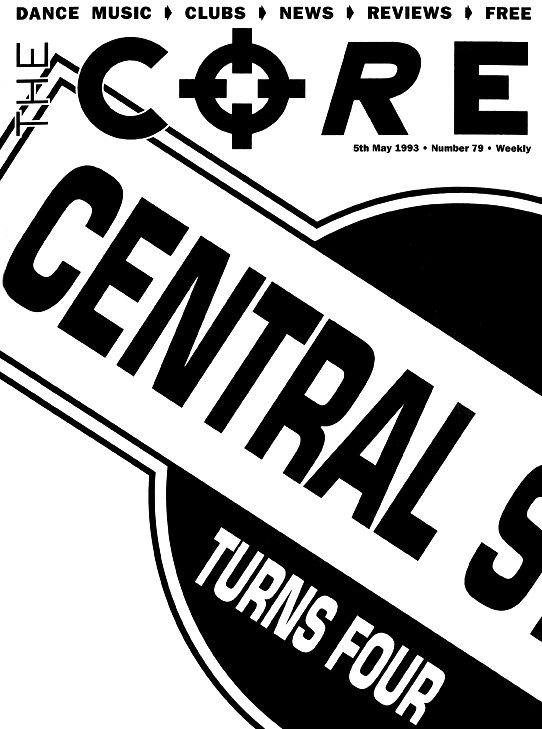
In the early weeks of May 1993, Adelaide’s dance music culture was a dynamic and rapidly evolving ecosystem. The city’s nightlife was defined by a diverse array of competing club nights and high-stakes DJ battles, all anchored by the community’s central hub, Central Station Records, which was celebrating a significant anniversary that marked both its own success and the maturation of the scene it served.
Central Station Records: Four Years at the Heart of the Scene
As Adelaide’s dedicated dance music specialists, Central Station Records marked its fourth anniversary not just as a retail milestone, but as a testament to its foundational role in the city’s subculture. The store’s celebration offered a moment to reflect on the scene’s journey, providing a unique lens through which to view its growth, its trends, and its future, as articulated by the store’s founder and owner.
The Store’s Journey and Impact
Founded in 1989 by Tony, Central Station Records began in a smaller location before growing demand for underground dance music necessitated a move. The store relocated to its current Twin Street address to better service a burgeoning community of DJs and fans. Its success was built on a simple, powerful premise: stocking music that other stores simply didn’t carry. This commitment to the underground—from techno and house to hip hop and beyond—established it as the scene’s lifeblood and primary arsenal for DJs.
As of May 1993, the store’s contact details and hours were:
- Address: 32 Twin St
- Phone: (08) 232-1202
- Fax: (08) 224-0090
- Trading Hours:
- Monday–Thursday: 10am–6pm
- Friday: 10am–9pm
- Saturday: 9.30am–5pm
- Sunday: 11am–5pm
State of the Adelaide Scene: A Retailer’s Perspective
From his vantage point, owner Tony described the Adelaide scene as one of “continual growth,” noting that it had been “consistently busy for the last four years.” He observed a particular strength in the hip hop genre and pointed to the emergence of a more educated and younger clientele, citing the example of a “15-year-old who knows what she wants.”
Tony acknowledged that Adelaide’s scene often followed trends from larger hubs, estimating it took “6 to 9 months before underground/resistance came to town.” However, he saw this changing as the local audience became more discerning and diverse in its tastes. He expressed significant optimism for the future, fueled by the launch of the new radio station, Dance 1007. With this broader exposure, he believed, “Adelaide will be on the map.”
Charting the Changes: Music Over the Years
The store’s feature article provided a musical time capsule, showcasing its top-selling tracks from its early years and illustrating the scene’s sonic evolution.
4 Years Ago (CSR Adelaide Top Ten, July 1989)
- Move Your Body To The Rhythm – Hit House
- U Said – 2 In A Room
- Can U Party? – Royal House
- Who’s In The House? – Beatmasters & Merlin
- I’m Every Woman – Chaka Khan
- Hey!dj/i Can’t Go For That – Spanic
- Better World – Royal House
- O-O-O – The Beat Club
- It’s Time To Get Funky – D-Mob
- Planet E – KC Flight
3.5 Years Ago (Australian Dance Chart, 5th November 1989)
- Ride On Time – Black Box
- Numero Uno – Starlight
- Let’s Go – Lil’ Louis / Honesty 69
- Hey Boy, Hey Girl – Double Trouble
- Pump Up The Jam – Technotronic
- Warning – Adeva
- Theme – Double Trouble and the Rebel MC
- It’s Over Now – S’Express
- Manina for a State of Mind – Lidell
- House Energy Revenge – Capella
3 Years Ago (CSR Adelaide Top Ten, January 1990)
- Jack To The Sound Of The Underground – Hithouse
- I Will Survive – A.P.P.
- Get On This Dancefloor – Rob Base & DJ EZ Rock
- Weekend – Todd Terry Project
- Let’s Get Busy – Mary Kiani
- We Call It Acieeed – D Mob
- It’s Alright – Sterling Void
- Jackie – Blue Zone UK
- Stand Up For Your Love Rights – Yazz
- Kiss – Art Of Noise & Tom Jones
These charts vividly illustrate the scene’s rapid sonic shift, moving from the soulful, US-influenced house of mid-1989 to the harder-edged, chart-dominating piano house and Euro-centric techno that defined the dawn of 1990. This look back at the store’s history highlights its role in supplying the very records used in the highly competitive DJ events that were a cornerstone of the culture it supported.
The 1993 DMC DJ Championship Heats Up
The DMC Championship stood as the premier competition for Adelaide’s DJs, a crucial platform for showcasing technical skill, creativity, and performance prowess. As the South Australian heats concluded, the local scene buzzed with anticipation for the grand final, where the city’s top turntable talent would battle for a chance at national recognition.
The Grand Final on the Horizon
The SA Grand Final was scheduled for the upcoming Thursday (May 13th) at The Ark, with a $10 entry fee. The six finalists competing for the state title were:
- Analog Love Quest
- Code One (with PMA + Cool Matt)
- Finger Lickin’ Allstars
- Hob G
- Home Grown (AnguS + Brendon + MC Dee)
- Underdogs
The prizes on offer underscored the event’s prestige:
- 1st Prize: A trip to Sydney for the Australian DMC Finals, DMC leather jacket(s), and $600 cash.
- 2nd Prize: DMC record flight case and DMC leather jacket(s).
- 3rd Prize: DMC record flight case and $100 Central Station Records voucher.
A Look at Heat 2
The second heat, held the previous Thursday, demonstrated the diversity of styles and technical approaches in the competition. Analog Love Quest featured DJ Deej on two turntables while John E worked an Ensoniq sequencer/sampler. Code One impressed with an ambitious four-deck assault that incorporated samples and live keyboard work. Taking a more laid-back approach, Brendon from The Finger Lickin’ Allstars famously took a mid-set beer break. Meanwhile, solo competitor DJ Chaotic (Danny Pickard) showcased his versatility and flair, at one point unconventionally using his elbow to manipulate the records.
After a hard-fought night, the three acts that advanced to the final were Analog Love Quest, Code One, and The Finger Lickin’ Allstars. These high-stakes competitions were the pinnacle of the scene, but its foundation was built on the weekly club nights that kept dancefloors full across the city.
A Week in Adelaide’s Clubs and Venues
This week in May 1993 showcased a vibrant and healthy club scene, with an extensive list of events catering to a wide spectrum of musical tastes. The sheer volume of options, from established weekly residencies to brand-new, specialized nights, highlighted Adelaide’s active and engaged nightlife.
New and Specialized Club Nights
The scene continued to diversify with the launch of several new, themed events designed to push musical boundaries and cater to niche audiences.
- Future Techno: Launching Tuesday, May 11th, at the Adelaide Uni Bar, this night aimed to “promote underground sounds and techno culture.” It offered a non-commercial forum for young DJs to develop their skills, with free entry and a featured demo tape from The Quantisation.
- Synagogue Goes Funky: Starting Friday, May 7th, this new night at Synagogue shifted focus to acid jazz, funk, soul, and rap, promising a “60s rhythmic groove” and showcasing a “production line” of local live talent.
- Proscenium’s New Night: Beginning Thursday, May 13th, DJ Lenny Dread, with experience in New York, London, and Berlin, took up residency at Proscenium on Blyth Street, playing reggae, soul, funk, and rap. The venue also announced a “Divine” rare party for Sunday, May 16th.
- Pride Dance Party: A party for gay men and lesbians was scheduled for Saturday, May 15th, at the Adelaide Uni Bar. The night featured DJ Nigel, with tickets priced at 8 (6 for students).
Weekly Club Guide
Across the city, established venues hosted a packed schedule of regular events.
- The Ark: The week kicked off with a Thursday “DJ Jam” session featuring DJs Chaotic, Y-Me, Karma, Glacia, and Brendon. Friday featured DJs ATB, Brendon, and Uzi, while Saturday’s “Bar Sumo” night was hosted by DJs ATB & Madness.
- Synagogue: Thursday was “Underground Solution,” followed by the new “Synagogue Goes Funky” on Friday. The weekend continued with “Intense” on Saturday, featuring DJs X-citement, E-zee-G, and Brendon.
- Astor Hotel / Club: Saturday night featured DJs Corey and DJ Glacia. The venue also hosted a “Not the Mardi Gras Party (Erotica)” on Sunday, an industry night on Monday, and a Tuesday session with DJs Triad Beat Programmers and Funk D’Void. On Friday, May 7th, it held the “Phunky Phresh” Digable Planets giveaway event.
- Heaven: The schedule included DJs Rave ‘n’ Waves on Thursday, DJs James Ingram and Steve Hooper on Saturday, and the “ASTRAL” night on Wednesday.
- Le Rox: DJs James Ingram and Steve Hooper played on Thursday. Friday was “Disco” night, followed by the unlicensed “Unity” event on Saturday, and “Bioka” on Wednesday.
- Club One: DJ Madson was on the decks for Friday night, while Saturday featured a Veltone Records’ Night CD promotion.
- The Big Ticket: Thursday’s lineup included DJs G-T-O and PhD, while Friday featured DJs Q-T and MC Queensyde.
- Margaux’s (Adelaide Hilton): The “Discovery” nights were scheduled for Wednesday, May 5th and 12th, with DJs Brendon, PK, Uzi, and MCs Maestro D & Tim, joined by DJ Glacia on both dates.
- Krush Klub: Hosted a Sunday night of Soul, Funk, and R&B.
- Jump! at Bar Toons: This weekly Wednesday event featured DJs OHC & Nigel, along with a Wreckx-n-Effect promotion.
This flurry of activity prompts the question: who were the people filling these venues every week? A reader survey provides a detailed, data-driven answer.
Profile of the Scene: The 1993 Core Reader
In an era when rave and dance culture was often misunderstood or sensationalized by the mainstream, the 1993 Core Readers Survey offers a rare, quantitative look into the scene’s reality. The data provides a fascinating demographic and psychographic portrait of the typical participant, revealing a young, musically literate, and socially active audience that formed the backbone of the culture.
Demographics and Lifestyle
The average reader was 19.5 years old, living at home with their parents, and a quarter of them were students. Their social habits were consistent: most read The Core magazine every one to two weeks and spent an average of $25 a night out at clubs like Disco, The Ark, or Hell.
While alcohol was the preferred intoxicant and 40.7% were smokers, this audience also showed a strong interest in personal health, spending an average of $650 per year on sports and related equipment. The gender breakdown was predominantly male, at 65.5% male to 34.5% female, with a significant portion of the readership—about 23%—being under the age of 18.
Music Consumption and Preferences
The survey detailed the audience’s music-buying habits, showing a clear preference for modern formats while still supporting vinyl.
- 67% buy on CD
- 37% on 12-inch vinyl
- 22% on tape
The most frequented record stores were Central Station, Sanity, Dirt Cheap, Megastore, and CC Records. Crucially, the survey indicated that musical tastes were becoming more diverse. While readers had favorite tracks, they were less likely to name favorite DJs, suggesting a sophisticated audience more focused on the music itself than on personality.
Top Five Clubs
The survey results ranked the city’s most popular nightlife destinations, providing a clear hierarchy of the scene’s hotspots.
- Disco (50.7%)
- The Ark (37.5%)
- Hell (32.9%)
- Heaven (27.0%)
- Le Rox (17.8%)
This detailed profile of the Adelaide audience provides local context for the broader industry news and cultural shifts happening in the wider music world.
Music Industry News and Reviews
Beyond the local club and retail scene, May 1993 was a busy period for the wider music industry, with new media ventures, artist controversies, and notable releases impacting the dance and alternative landscape.
SBS Launches ‘Nomad’ Music Show
SBS television announced the premiere of “Nomad,” a new music, art, and dance program debuting at 10:50 pm on Friday, May 7th. Hosted by Jane Gazzo, the show promised a broad scope, covering music videos, clip producers, claymation, grunge, fashion, and modern dance. The production team included director Jane Castle and producers Marena Manzoufas and Don Elrader. The first episode was set to feature “Reggae To Resta,” a report tracing the roots of reggae and its connection to the legacy of Bob Marley.
News from the Hip Hop Nation
The hip hop world was buzzing with several key stories. Controversy surrounded Marky Mark, who faced accusations of past racial slurs and assault. It was also revealed that Public Enemy had been Spike Lee’s original choice for the “Malcolm X” soundtrack before he approached Arrested Development. Finally, the growing association between hip hop and marijuana culture was highlighted by a special issue of High Times magazine dedicated to the genre.
Melbourne’s Hellfire Club Courts Controversy
In Melbourne, the Hellfire Club generated significant backlash for planning, and subsequently canceling, a “Nazi Nuremburg” rally-themed night. Club owner Richard Masters stated the idea was dropped after complaints but added that he would encourage protests from groups like neo-nazis to take place outside the venue. Defending the club’s provocative themes, Masters claimed they are “just taking the piss” and that his events are not political.
Record and Live Performance Reviews
Reviews from the week captured a snapshot of current releases and live shows, offering critical assessments of established and emerging artists.
- Record Reviews
- Morph – Stormtrooper: 3/5
- Front 242 – Religion: 3.5/5
- DHS – A-CID-3-D: 4/5
- Freestyle Fellowship – Hot Potato: 4/5
- The Movement – Revoltel Le Tempo LP: 1/5
- Live Reviews
- Arrested Development‘s performance at the Adelaide Entertainment Centre was criticized for a perceived lack of energy.
- In contrast, Skunkhour‘s show at Cargo Club received a positive review, praised for its good sound and confident stage presence.
Taken together, the anniversary of a foundational record store, the intensity of DJ competitions, a thriving network of clubs, and an engaged, knowledgeable audience all point to a scene in Adelaide that was brimming with dynamic energy and creative potential in May of 1993.
Leave a Reply