
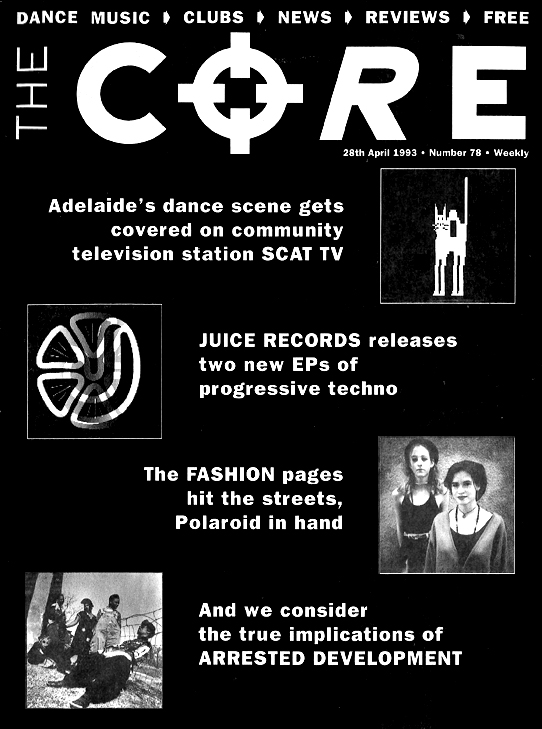
In the autumn of 1993, Adelaide’s cultural landscape was a vibrant tapestry of sound, style, and community debate. The city’s scene was defined by a dynamic confluence of major international tours, fiercely contested local DJ championships, and a burgeoning street style that celebrated individuality over conformity. This was a moment where the global and the local collided, creating a uniquely energetic atmosphere across Adelaide’s clubs, stages, and streets.
Grammy-Winning Group Arrested Development Tours Adelaide
The arrival of Grammy-winning hip hop collective Arrested Development marked a significant international event for Adelaide’s music scene. Fresh off their critical acclaim, the group’s “Cultural Revolution Tour” was more than just a concert; it was a statement. In an era where mainstream media often focused on violence in rap, Arrested Development offered a profoundly different narrative, positioning them as a pivotal force in the evolution of hip hop.
The Adelaide leg of their tour was scheduled for Saturday, May 1st, at the Adelaide Entertainment Centre. Tickets were available from a range of vendors, including BASS, Austickets, and Brashs Music Stores, with phone booking accessible through Auscharge (13 13 14) and Bass Dial ‘n’ Charge (213-4777).
Cultural Impact and Musical Philosophy
Arrested Development cultivated a reputation as “The Gentle Side of Rap,” actively working to rescue the genre’s image. This positioning led some to view them as a “socially-aware, ‘safe’ choice” for mainstream audiences, but their message was rooted in a deep and revolutionary consciousness. Group leader Speech credited Public Enemy with shaping his worldview, recalling, “Public Enemy first got me to read up on my black culture. It was Rebel Without A Pause that really got me… I was just basically ignorant. What they were talking about was the same message over a funky bass sound and that was what I wanted to put across.”
Their music diverged from the confrontational style of many contemporaries, focusing instead on solutions, black cultural pride, and a connection to African roots, drawing comparisons to groups like De La Soul and A Tribe Called Quest. The full collective included dancer Montsho Eshe, DJ Headliner, and their elder spiritual advisor, Baba Oje. This unique structure contributed to a live show described by critics like Gen One and Quoromystix as “expansive,” “introspective,” and “spiritual,” though the group also contended with conflicting media portrayals that saw them labeled as both a “safe” alternative and “painfully aggressive.” Reflecting the group’s grounded, rural perspective that set them apart from urban-centric hip hop, Speech noted, “I like being a country boy, the city is too crazy for me.”
While international acts of this caliber brought global attention to Adelaide, the city’s identity was being forged just as powerfully by its own local talent.
The 1993 DMC Championship Ignites DJ Culture
The 1993 DMC Championship stood as a premier event for Adelaide’s hip hop and turntable culture, drawing competitors and fans to witness the pinnacle of local DJing skill. The competition was a battleground where new rules and old-school techniques clashed, defining the sound and style of the city’s turntablists.
The first heat kicked off with an opening set from Home Grown, followed by a dynamic back-to-back performance from DJ Groove and DJ Chris. The group Underdogs delivered a full-blown show that, while not strictly technical, captivated the crowd. Ultimately, Underdogs, DJ Groove, and reigning SA champion Rob G advanced to the SA Final scheduled for Sunday, 16th May.
New Rules Reshape the Competition
This year’s event was a “very different competition” due to a significant rule overhaul. The changes required MCs to actively engage the crowd and mandated that turntables be used as percussive instruments, reducing the importance of 90s drum machines. This shift created a clear divide between competitors. While many embraced the new format, veterans stuck to the “traditional two-deck setup.” Reigning SA champion Rob G’s “back-cueing and crossfader work… was as tight as ever,” while DJ Glacia—who had “no real experience of Hip Hop”—demonstrated impressive technical skills, highlighting a stylistic clash between classic technique and the new performance-oriented demands.
Heat Two Details
The competition was set to continue with Heat Two at The Ark on Thursday, 29th April. The lineup of contestants featured:
- Analog Love Quest
- DJ Chaotic (Danny Pickard)
- Code One + PMA + Cool Matt
- Finger Lickin’ Allstars
An expert panel of judges was assembled to scrutinize the performances, including DJ Ph.D, Trist Jones (Central Station), Chris Despotakis (Club FM), Bruce Logan (Club FM), Stilgherrian (The Core), and Kirsty Whicker (The Ark). For the competitors, the ultimate prize was the chance to represent Australia in the prestigious World DMC Final in the UK.
This competitive energy was a reflection of the vibrant club and live event scene thriving across the city every night of the week.
A Guide to Adelaide’s Club Scene and Live Events
In late April and early May of 1993, Adelaide’s nightlife offered a diverse and energetic schedule catering to a wide array of musical tastes. From techno experiments and charity fundraisers to high-fashion parties, the city’s venues were buzzing with unique concepts and sounds.
Featured Events
- Retro-Tech at Discovery (Wednesday, 28th April): Guest DJ HMC (Dino Lenny) headlined a unique night combining music and gaming. He utilized a CD-ROM games machine in his set, and classic 80s and 90s games were available for patrons to play throughout the venue.
- Music! Fashion! Style! JUMP! (Wednesday, 28th April): Bar Toons hosted a fusion of sound and style, featuring fashion from labels like Major Damage, Gino Vanucci, Fila, X Colours, and Polo, with DJs OMG and Nigel providing the soundtrack.
- Cause to Party (Saturday, 29th May): Held at the Big Ticket, this event was a fundraiser with all profits aiding Amnesty International. The party was split into two distinct spaces: “The Full Flavour Room” offered soul, funk, and disco, while “The Second Room” focused on Acid Jazz and dance hop.
- Future Experiments in Sound (Tuesday, 11th May): The Adelaide Uni Bar provided a non-commercial forum for DJs to explore the cutting edge. This event encouraged the playing of futuristic techno, ambient, and trance music that might not fit into a typical commercial club set.
Club Reviews
- The DMC Rhyme Competition at Synagogue showcased a “wide variation in ability” among Adelaide’s MCs, with winners Flak and Planet Funknon impressing the judges.
- The Discovery night with DJ HMC was a success, with an enthusiastic crowd responding to energetic sets from local DJs Brendan and Uzi.
- Circus Disco offered a unique experience that was more than a typical club night, featuring acrobats, jugglers, and a mime who mingled with the crowd, creating a truly memorable atmosphere.
- Cargo Club hosted the Sydney-based jazz/funk band Directions in Groove, who drew a solid and appreciative crowd with their live performance.
Weekly Gig Guide
A snapshot of the city’s recurring club nights included:
- Thursday, 29th April: The Ark (DMC Championships Heat 2); Paxtons Hotel (DJ HMC and Steve Crewe); Synagogue (DJs Michael Bendall, HMC); The Mill (DJs James Ingram and Steve Hooper).
- Friday, 30th April: The Ark (DJs ATB, Madness, Angus); Synagogue (Higher Good); Le Rox (Deco – Thank God It’s Friday).
- Saturday, 1st May: The Ark (DJs ATB and Madness); Synagogue (DJ Michael Bendall); Le Club (DJ Steve Crewe and Jules).
- Sunday, 2nd May: Austin Club (DJs Alistair, Alan and Magic); Le Rox (DJs Soul and Emmanuel).
- Monday, 3rd May: Rhino (Industry Night with DJ Mark).
- Tuesday, 4th May: Astor (DJs DT, Ozi, guest); Cargo Club (DJs Groove, Terminator, NC Scott T).
Beyond the live scene, Adelaide’s own artists were busy producing and releasing music that was shaping the city’s sonic identity.
Spotlight on Local Talent and Releases
The creative output of Adelaide’s music scene was thriving, with local labels and artists making significant contributions. Progressive techno label Juice Records and emerging hip hop group Flak stood out as key players pushing the boundaries of their respective genres.
Juice Records’ Progressive Techno
The Adelaide-based label Juice Records announced the release of two new records, further cementing its place at the forefront of progressive techno. One of the featured artists was Paddée (Damien Daniels), who had joined the label at the end of 1992 after his time in the group Exquisite Corpse. His sound was influenced by German industrial music, with Paddée noting his goal was to create “certain moods” with his compositions. “It’s intense but it’s fresh,” he said of his style.
The new releases were:
- Juice 006, which included the track “In Orbit” featuring DJ Michael Janista.
- Secret Weapon 2.
Both records, distributed by Shock, were scheduled for a launch party at Synagogue on Thursday, 6th May.
The Rise of Adelaide Hip Hop: Flak
The hip hop group Flak emerged as a powerful new voice in the local scene. Starting as a solo rapper before expanding into a collective, Flak drew inspiration from politically charged acts like Public Enemy and Sydney’s Def Wish. An anecdote from Def Wish highlighted the rapper’s distinct delivery, which they described as “too fuckin’ clean.”
Flak’s lyrics were unabashedly political, with sharp attacks on both the Labor and Liberal parties for their policies on Aboriginal affairs and unemployment. Reflecting on the state of the local scene, group member Gen One observed a need for more voices: “There’s a lot of techno in Adelaide, so not so much in the hip hop… we need to get more people to actually get up there and do it.” Alongside Flak, the growing Adelaide hip hop community included acts like Shit Tod, Belar, Shutouts, Shazzy Shane, 73A, RCF, NA, TDC, and Risk.
As Adelaide artists made their mark locally, the international music scene continued to evolve with major new releases and technological innovations.
Global Music News and New Releases
A snapshot of the international music landscape in April 1993 revealed new albums from established stars, cutting-edge technologies transforming the listening experience, and a host of noteworthy import singles shaping club sounds worldwide.
Caron Wheeler’s ‘Beach Of The War Goddess’
Caron Wheeler, the iconic former lead singer of Soul II Soul, released her solo album, “Beach Of The War Goddess.” The record was a rich blend of African rhythms, reggae, funk, and R&B. Wheeler, who had previously won a Grammy for the Soul II Soul classic “Back to Life” and collaborated with artists like Erazure and Phil Collins, brought a wealth of experience to the project. The album featured production from industry heavyweights Jimmy Jam and Terry Lewis, Jazzie B, and Miklo Bennet, and was released on EMI Music.
International Music Briefs
- Lisa Stansfield’s AIDS Fundraiser: Stansfield joined forces with George Michael and the remaining members of Queen to record the “Five Live” mini-album. All proceeds were directed to the Mercury Phoenix Trust to support AIDS awareness and care.
- Endless Trance on Disc: The new CD-i (Compact Disc-interactive) format promised an immersive audio-visual experience. An early example, “Electron Eclat” by Trance, combined music with interactive, computer-generated visuals. However, the technology was prohibitively expensive, with the required player costing approximately A$1000.
- Pats Signs with Tommy Boy: Independent LA artist Pats, who had impressively sold over 400,000 copies of his second album on his own, signed a major deal with the legendary rap label Tommy Boy.
- Shitty Nappies’ Industrial Release: GPC Productions released the highly unconventional “Baby Had An Accident.” The release was packaged in a disposable nappy and contained a cassette, a bag of hair, and a 120-page booklet featuring “artwork from the fringes of the underground.”
Reviewed Singles
Import Reviews
The latest crop of imports was led by the laid-back grooves of The Pharcryde’s “Passin’ Me By,” praised as being “miles ahead” of the album version. Other key tracks included the Slam Cool Beats EP, the fat techno of Soofle’s “Nouveau,” hard trance from the Sorcerer EP, and desolate beats from Q Bass. Also on the decks were new releases from Aurora Borealis and Uzuri.
Local Reviews
On the home front, the Global Cutz Vol. 1 release of “I Want You Now” brought a groovy garage sound, while The Choice / Soofle EP offered up a quality slice of deep, Detroit-label house.
While fans were consuming new music on vinyl and CD, a local television station was working to bring the energy of the dance scene directly into people’s living rooms.
The Dance Scene on Community Television
Adelaide’s community television station, SCAT TV, played a crucial role in documenting and championing the local dance music scene. Its flagship programming provided a platform for artists and promoters, aiming to present a positive counter-narrative to mainstream media’s often-critical portrayal of club culture.
SCAT TV operated as a non-profit, community-access station. The group, formed two years prior, was based at Flinders University’s student union and had grown to about 200 members. Production co-ordinator Walter May described the initiative’s origins as a “film maker led a revolutionary.”
The station’s commitment to the dance scene was most evident in its 45-minute segment Vision Switch, which aired on Monday nights. Looking ahead, SCAT TV announced a major broadcast schedule on Channel 59 from Sunday, 2nd to Sunday, 16th May, running from 4pm to midnight daily. The programming aimed to showcase the scene’s “creativity” and highlight its “economic benefits” rather than focusing on controversy. Featured events and artists included performances from Lenny Dee at The Ark, Jigsaw and Underground Resistance at Le Rox, and local acts Aquarius and Unconscious.
This visual documentation of the scene complemented the vibrant visual expression of identity found in the city’s street fashion.
Adelaide Street Style: Fashion in Focus
By 1993, Adelaide’s street fashion had moved beyond simple subcultural uniforms into a more fragmented and individualistic realm. Whether you were dealing with “Young terrorists, freedom fighters, tough homie girls, writers and gangsta chics,” one thing was clear: the prevailing ethos was one of self-expression.
Themes in Self-Expression
The core idea was that “People can no longer be categorized by what they wear, as styles and sub-cultures fragment and cross-over.” Key influences shaping the city’s look included grunge, skateboarding, hip hop, and retro styles from the 60s, with a heavy reliance on second-hand clothing to create unique outfits. The ultimate goal for many was simply to “be themselves and express their own style and some serious attitude.”
Perspectives from the street highlighted this new individualism:
- Individuality and Interpretation: “I read a lot of magazines and interpret styles from that,” said Vicki, a student. Peter, a hairdresser, emphasized that “Customised clothes are important.”
- Thrift and Practicality: “I love second-hand clothes,” stated Antoinette, who was unemployed. The grunge look was seen not just as a trend but as a “sensible and affordable way of expressing yourself.”
- Cultural Heritage: Students Joseph and Maurice noted, “We’re from Central America. We still have strong ties to our culture.” This sentiment was echoed by students Sally, Jasmine, and their friends, who issued a direct call for tolerance: “People should just chill… and don’t be racist.”
- Standing Out: For fashion students Ashley and Kell, the motivation was simple: “We like to stand out in a crowd.”
Clothing stores and designers fueling these looks included Miss Gladys Sym Choon, Scarab, Urban Streetwear, Dawn Gear, Shades, and Hot Rock. The street style photos were credited to Matt Nettheim.
This outward expression of identity was matched by an equally passionate, if sometimes contentious, internal dialogue within the community itself.
Community Voices: Letters from the Scene
The letters section of a publication provides an unfiltered glimpse into the debates, frustrations, and passions of a community. In Adelaide, the voices of the scene revealed a range of opinions on the state of clubbing, from disillusionment to staunch defense.
Key perspectives included:
- A writer known as The Hitchhiker lamented that the scene had become “boring” and full of “bitching.” They called for a return to chaos and spontaneity, asking, “Are our clubs owners and raw promoters up to the chal-lenge? Can they open our minds?”
- Dame Soul complained about the negative “attitude” in clubs, specifically targeting underage attendees, or “fillers,” whom they felt detracted from the experience for legitimate over-18 patrons.
- Meanwhile, a reader named Velcro had a blunt, unrelated message for someone named Emie: “get off the hip hop rolls on.”
- In a more inquisitive tone, Confucius #21 asked for a definition of the term “Northern Soul,” which was explained as an underground music scene originating in 1960s northern England, focused on obscure American soul records.
Leave a Reply