
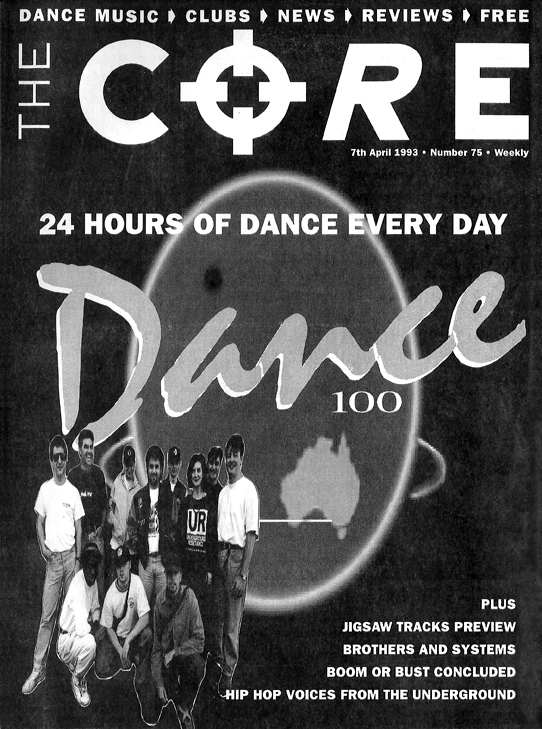
In the early autumn of 1993, Adelaide’s electronic music culture was in a state of vibrant and rapid expansion. The scene was characterized by a palpable energy, with promoters staging ambitious, large-scale events, pioneering media ventures promising a new era of accessibility, and a burgeoning local hip hop movement beginning to find its distinct voice. This dynamic period is meticulously documented within the pages of The Core magazine’s 75th issue, revealing a community at a pivotal moment of growth, creativity, and self-examination.
Easter Weekend: A Convergence of Major Events
The Easter weekend of April 1993 served as a major focal point for Adelaide’s dance scene, becoming a veritable showcase of the culture’s ambition and energy. Local promoters and artists converged on this holiday period, scheduling several large-scale, competing events that highlighted the growing scale of the city’s nightlife. From all-night raves in massive warehouses to specialized club nights, the weekend offered a diverse slate of festivities for the city’s electronic music enthusiasts.
Jigsaw: The Year’s Biggest Rave
Positioned as Adelaide’s second major rave of 1993, Jigsaw was the centerpiece of the Easter weekend’s offerings. Organized by a collaboration between Intense Entertainment and Instan-taneous Productions, the all-night event was scheduled for Easter Saturday, April 10th.
The logistics underscored the event’s significant scale:
- Venue: The Vision Warehouse
- Time: 10pm to 8am
- Tickets: $19 plus booking fee from Central Station and Austickets, or $25 on the night.
- DJs: The lineup featured a comprehensive list of local talent, including HMC, Uzi, PHD, PMA, Brendon, Angus, Maestro D, Scott T, and MPK.
The production promised a state-of-the-art sensory experience, moving beyond the standard club setup:
- Sound System: A powerful 30K sound system was installed to fill the warehouse space.
- Lighting: A sophisticated rig featuring mechanical and intelligent lights was controlled by a Samurai lighting control system from BSS Light and Sound.
- Visuals: The lighting was complemented by strobes, Q-scans, and large-scale screen visuals managed by Amenoth and Scran.
Reflecting on the event, featured artist DJ Brendon articulated the high hopes and intense energy surrounding Jigsaw, expressing a belief that Adelaide was on the cusp of becoming a globally recognized music hub.
“Every DJ will be just going absolutely sick.”
Brendon envisioned a future where Adelaide could stand alongside influential cities like Manchester or Detroit. His musical approach for the night was to maintain relentless energy by mixing diverse styles and avoiding predictable track structures. He noted his own production work was moving in a harder direction, focusing on the fundamental power of rhythm.
“I’m making two tracks, one of them is very hard… a 4/4 beat or a breakbeat — it’s just a beat.”
He also mentioned an upcoming collaboration with fellow DJ Angus. As a key selling point highlighted in advertisements, the Jigsaw ticket included entry to a Recovery Party held immediately after the main event, offering a complete weekend experience. In a separate promotion, a “Start at Discovery” pre-party gave attendees a chance to win one of five complimentary tickets that Instan-taneous Productions were releasing for the main rave.
Easter Bounce, Disco Magic, and Other Festivities
While Jigsaw was the weekend’s largest rave, it was by no means the only option. A host of other events catered to different tastes and communities across the city.
- Easter Bounce: Held on Sunday, April 11th, from 10pm to 8am, this event promised a marathon night of music from DJs Brendon, D.T., S.F.I., Eon, Eccelerate, Tronik, Dr Dent, and MPK. The venue offered a relaxed atmosphere with pinball and pool tables available. The production centerpiece was a “Dazzling Lazer” show, featuring a three-colour twin-head laser operated by Kinetic Energy and The Ream. Pre-sold tickets were priced at $10.
- Disco Magic: On Easter Sunday at the club Disco, DJs Scott T and MC Scott T hosted an evening that also featured a live performance by Matt Henshaw.
- Heat: Catering specifically to “gay men, lesbians and their friends,” this Easter Saturday event was held at Le Rox. Hosted by Intolerable and Bar Toons, it featured DJ Nigel on the decks with production by Pulse FX.
- Austral: The Austral hotel offered a double billing on Easter Sunday, with a performance by Russ with Clay as well as a separate set from DJs Brendon & Chris.
The transient energy of these live events was mirrored by a more permanent shift in the media landscape, with the launch of a revolutionary new radio station dedicated entirely to dance music.
A Revolution in Radio: The Launch of Dance 100
The launch of Dance 100 marked a pivotal moment for Australian dance music, signifying the genre’s transition towards mainstream accessibility. For the first time, the community would have a dedicated 24-hour media platform that existed beyond the confines of clubs and niche print magazines, promising to bring the culture directly into the homes of its followers.
The Concept and Technology
Dance 100 was established as Australia’s first 24-hour, subscription-only dance music radio station, operating as part of the Club FM network. Its broadcast method was innovative for the time: a scrambled signal was transmitted on the normal broadcast band, found at 88.0FM in Adelaide. To access the content, subscribers were required to purchase a special decoder that could unscramble the signal and deliver clear audio.
Content and Programming
The station’s content strategy was to provide a comprehensive and uninterrupted listening experience.
- The music policy covered a wide spectrum of genres, including house, garage, techno, rap, swing, R&B, pop-dance, acid jazz, and reggae.
- Crucially, the station was entirely commercial-free, allowing for continuous music flow.
- The programming schedule was designed for freshness and variety, with new tracks added every three hours. Friday nights featured non-stop extended mixes, and there were ambitious plans for future content, including locally produced shows, internationally syndicated programs, and specialist shows hosted by artists, such as dedicated hip hop segments.
Subscription and Vision
The business model was based on a combination of a one-time hardware purchase and an annual fee. Subscribers paid an 80 one-off fee for the decoder** and a **50 fee for the first year’s subscription. The founder, identified only as Chris, saw the venture as a groundbreaking development for Australian media.
“This is a revolution in radio as we know it.”
He acknowledged the difficulties in establishing a more robust cable distribution system but argued that the over-the-air subscription model successfully filled a major gap in the market, providing high-quality, continuous dance music to a dedicated audience.
This new platform’s inclusion of specialist hip hop programming reflected the growing prominence of another vibrant sub-genre carving out its own identity on the Australian scene.
Voices from the Underground: Australia’s Hip Hop Scene
The “Voices From The Underground” feature in The Core shone a significant spotlight on the Australian hip hop scene, underscoring its development into a distinct cultural force. By profiling emerging talent from both Melbourne and Adelaide, the piece documented a growing movement focused on creating an authentic, local identity for the genre, separate from its American origins.
Featured Crews and Their Sound
Intense Quality (IQ)
A Melbourne-based crew, Intense Quality (IQ) consisted of rappers Reason and Per-Vooz, with production handled by MCQ and DJ duties by DJ Code Black. Having been together for three and a half years, the group was committed to developing a uniquely Australian sound, with Reason stating their style was “pure Australian… not trying to be fake and copy what they do in America.”
Mama’s Funkstikools
One of Melbourne’s better-known hip hop acts, Mama’s Funkstikools featured rappers The Rize and Tankee. With extensive live performance experience, they cultivated a positive and accessible musical style.
“Just friendly kind of stuff.” The group expressed ambitions to expand their reach beyond Australia and make an impact on the international stage.
Urban Poets
Representing Adelaide, Urban Poets had recently achieved significant milestones, including signing an international publishing deal. The group had just released a new six-track cassette single titled “Finger Lickin’ Good.” Their artistic philosophy was rooted in their local experience and environment.
“We’re really from the street, so we just do stuff that is street-orientated.”
The Adelaide Showcase
These three distinct voices of Australian hip hop were scheduled to share a stage in Adelaide on Thursday, April 15th. The showcase, featuring Intense Quality, Mama’s Funkstikools, and Urban Poets, was set to take place at The Old Hindley Cinemas in Victoria Square.
While hip hop was carving out its niche, the broader dance scene continued to be influenced by a diverse range of international artists and experimental local producers.
Artist and Genre Spotlights
Beyond the major events and specific subcultures, the character of the Adelaide scene was also shaped by the influence of key international and local artists, alongside a constant influx of new records. This period saw a diverse range of sounds, from hardcore techno to experimental fusion, capturing the scene’s eclectic tastes.
Lenny Dee’s Hardcore Sound
Renowned international DJ Lenny Dee (real name Damon D’Andrea) was scheduled to bring his signature sound to Adelaide for a performance at The Ark on Good Friday, April 9th. Affiliated with the influential Juice Records, his music was described as “hardcore at its finest.” Commenting on his moniker, he noted with a hint of irony, “Of course Lenny means dangerous doesn’t it?”
The Experimental Music of Brothers and Systems
A feature on the act Brothers and Systems highlighted a more experimental and genre-bending side of electronic music. Their album, “Transcontinental Weekend,” was a testament to creative sampling and eclectic influences, blending elements of Latin music, 1950s experimentalism, funk, and jazz. The album featured vocals from New York artist Nee-Cee. Producer Tom revealed a unique creative process that involved sampling from old films and using a vintage Bill Putnam Universal 610 Recording Console, a piece of equipment that predated modern electronic music production by decades. His philosophy was captured in a bold declaration:
“HOUSE MUSIC COULD HAVE BEEN DONE THIRTY YEARS AGO.”
New Music Releases and Reviews
The influx of new music was constant, with record store shelves featuring a mix of major international artists.
- David Bowie – “Jump They Say”
- L.L. Cool J – “Now I’m Comin’”
- Shabba Ranks – “Mr. Tek-It-Back”
Album reviews from the period showed a strong appreciation for hip hop, with both L.L. Cool J’s “14 Shots to the Dome” and Ice T’s “Home Invasion” receiving positive write-ups. In contrast, the dancehall release “Bedroom Bully” by Shabba Ranks was met with a negative review.
This influx of diverse sounds and international talent fueled a rapidly expanding scene, but this very growth forced a critical and sometimes contentious internal debate about its identity and future.
The Scene’s Pulse: Boom or Bust?
Perhaps the most telling artifact of the scene’s internal state is the “Boom or Bust” feature, a piece that captured the raw, unfiltered debate among its key figures. The very ambition on display during the Easter weekend was a direct cause of the growing pains explored by the DJs, promoters, and club-goers who were navigating the culture’s rapid shift towards commercialization.
An Insider Critique
Insiders from across the scene shared their candid observations on its changing nature.
- Expansion and Commercialization: There was a general consensus that the scene had grown significantly, but this had attracted a more commercial focus and a less discerning “teenybopper” crowd, diluting the original underground atmosphere.
- Venue Owners: DJ Brendon criticized venue owners for “jumping on the bandwagon” to make a profit without genuinely understanding or supporting the foundational underground culture.
- Promoters: Promoter Space Cadet expressed disappointment with peers who failed to deliver on their promises, stating, “Some promoters said so much and did so little, and it’s a disappointment.”
- DJs and Music: DJ Groove Terminator (GT) raised concerns that some DJs were becoming complacent, playing it safe with their track selections rather than pushing the music forward.
- Crowd Behavior: A sense of division within the crowds was noted. Brendon observed social cliques forming, while Xylic pointed to the arrival of a “surf-T shirt and short hair” crowd that brought a different, and sometimes unwelcome, vibe to events.
- Cost: Offering a counterpoint to the critiques, DJ Maestro D argued that, despite its issues, Adelaide’s scene remained accessible, boasting the “cheapest raves in Australia.”
Views from the Dancefloor
Letters to the editor published in the “Correspondence” section provided a raw and unfiltered perspective from the clubbers themselves.
- A “newcomer” to the scene wrote to complain about unfriendly attitudes and the prevalence of cliques within the clubs.
- Another attendee, writing under the name “BP,” offered a starkly negative assessment, declaring that “Adelaide’s club scene at the moment is truly dead.”
- In contrast, a letter from “Marcus” issued a call to action, urging people to stop complaining and work together to “get that positive vibe back.”
These debates about the scene’s soul unfolded against the backdrop of its weekly club nights and other cultural happenings that formed the backbone of the community.
The Weekly Grind and Cultural Sidelines
Beyond the headline-grabbing Easter festivities, the vitality of the Adelaide scene was sustained by a consistent schedule of regular club nights, annual competitions, and a wider interest in adjacent cultural fields like film.
Regular Club Nights and Competitions
- DMC Championship: The prestigious 1993 DMC Championship Heats were announced to begin on Thursday, April 22nd. The competition would be judged by a panel of local luminaries: DJ Groove Terminator, DJ Ph.D. James Ingram, Tristan Jones, Sfigherman, and Kirsty Whicker. Prizes for the winner included a trip to the national finals in Sydney.
- Weekly Gigs: Several clubs hosted recurring weekly nights that provided a consistent pulse for the scene. These included JUMP! every Wednesday at Bar Tcoons with DJ Nigel, and the soul, funk, and R&B-focused Krush Klub on Sundays at Margaux’s.
- Unique Events: Promoters also organized one-off specialty events, such as “Unique I” at the Synagogue on Thursday, April 8th. This event featured a chill-out room, video games, and a DJ lineup including Brendon, Uzi, and E-Zeeng.
Reel Time: Film Reviews and Features
The interests of the community extended beyond music, as evidenced by the “Reel Time” section, which reviewed a diverse slate of films. Mainstream Hollywood releases like the parody “Loaded Weapon 1,” the survival drama “Alive,” and the Robin Williams fantasy “Toys” were covered. More significantly, a special feature was dedicated to Indigenous Film from the Pacific, highlighting a symposium running from April 13th-16th. This showcase included seminal works such as “Night Cries: A Rural Tragedy” by acclaimed artist Tracey Moffatt and “We Have Survived The White Man’s World,” demonstrating a cultural curiosity that reached well beyond the dancefloor.
Leave a Reply