
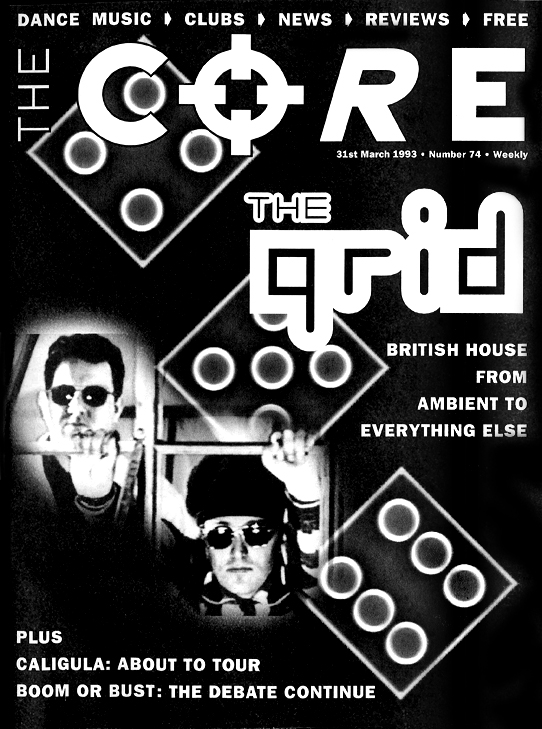
In the early autumn of 1993, Adelaide’s dance music scene was a hive of activity, buzzing with the energy of weekly club nights and the palpable anticipation of major parties scheduled for the upcoming Easter long weekend. This snapshot reveals a scene at a crucial crossroads, grappling with the tensions between its underground origins and burgeoning commercial appeal. Amidst feature profiles on influential artists like the UK’s The Grid and Sydney’s Caligula, a grassroots debate among club-goers signals a community in a period of critical self-reflection, questioning its own rapid growth.
The Pulse of the Adelaide Scene: Major Events and Community Debates
An Overview of the Clubbing Landscape
The Adelaide club scene in March and April 1993 was undeniably bustling, offering a dense schedule of weekly residencies and a slate of highly anticipated, large-scale events. This period of high energy, however, was also marked by a critical self-examination from within the community itself. While promoters were planning bigger and bolder parties, club-goers were beginning to voice significant concerns about the quality of their experience, questioning whether the scene’s rapid commercial growth was coming at the expense of the culture that built it.
Major Upcoming Dance Events
The month of April was set to be a landmark period, particularly over the Easter holiday, with a series of significant one-off events promising to draw large crowds.
- Primal Energy: Scheduled for Thursday, April 1st, at Control from 10 pm to 6 am. Presented by Tribal Productions, this event featured the Tribal Leaders: MPK X-citement, Tribal Maestro D. With a $5 entry fee, it promised a unique atmosphere with “primal dances and primitive decorations” intended to offer something different from a “normal warehouse party.”
- A Unique Pulse: Taking place on Thursday, April 8th, at The Synagogue on Rundle Street. This event, running from 7:30 pm to midnight, highlighted its technical production, boasting an “intelligent lighting rig never before seen in Adelaide” and a “New Ultra Scans” system. Tickets were priced at $7 pre-sold or $8 at the door.
- Evolution ’93: Also on Thursday, April 8th, this “ultimate unlicensed dance experience” was held at Disco from 8 pm to 1 am. The lineup included DJs G.T.B, HSR, and X-citement, with special guest P.H.D and MCs Scott T & M.C.ut. Attractions included free drinks and Easter eggs on entry, a pinball competition, and dancers. Tickets were $7 pre-sold and $9 at the door.
- Jigsaw: Billed as an event to “reunite the scene this Easter,” Jigsaw was scheduled for Saturday, April 10th, at The Vision Warehouse from 10 pm to 8 am. The extensive DJ lineup featured HMC, Groove Terminator, Uzi, Brendon, Angus, MPK, PHD, and PMA. Tickets were available for $19 plus a booking fee, or $25 on the night.
- Heat: Promoted as “Adelaide’s Biggest Ever Gay Dance Party,” Heat was set for Easter Saturday, April 10th, at Fenn Place. Running from 9PM – 5AM, the party featured a huge dance floor, a chill-out area, and state-of-the-art lighting, with DJ Nigel in the warehouse and DJ O-H-C in the Toons backroom. Advance tickets were $15 (full) / $10 (concession), with door prices at $20 / $15.
- Special Easter Bounce / Easter Bounce: Two major events were scheduled for Easter Sunday, April 11th. The Special Easter Bounce featured Sydney’s Dr Des alongside Adelaide’s MPK, plus residents DT, Eon, and SFL, with tickets at $10. Meanwhile, BOOM Productions presented Easter Bounce at The Venue from 10 pm to 6 am, with an 8-track laser experience and a lineup featuring special guests Decterant & MPK and residents Nigel DT, SFI, Eon.
The “Boom or Bust?” Debate: A Scene in Reflection
An ongoing debate, captured in a recurring opinion column based on reader-submitted opinions, highlighted a growing dissatisfaction among some club-goers with the commercial aspects of the scene. As the introduction to the column noted, “Opinions keep rolling in as the debate on Adelaide’s dance club scene continues.” The core argument was that as dance music’s popularity grew, some club owners and promoters were prioritizing profit over patron experience. The primary complaints were threefold:
- Waiting in Line: The experience of queuing was a major point of contention. The argument was that long lines were often an artificial tactic employed by clubs to create a perception of exclusivity, with one writer noting, “I have walked past a club with a smallish queue to get in, only to find the club wasn’t packed inside.” This created a frustrating barrier to entry that seemed unnecessary.
- Bouncer Policies: Doormen were frequently criticized for acting as “fashion police,” refusing entry to patrons based on arbitrary and subjective standards of dress. This practice was seen as exclusionary and unfair, especially when large groups of friends were split up at the door. As one contributor passionately asked, “why do you get fucked off when you get slagged in The Core, for one night a week, why not listen to us?”
- Overcrowding: Once inside, many club-goers found the venues to be uncomfortably crowded, transforming the dance floor into a “cattle-run” where it was nearly impossible to move, let alone dance. This issue led to the conclusion that some clubs were simply selling too many tickets for their capacity.
The debate culminated in a direct call for change: “We need more club owners who look after their clientele, not just their cash registers.” This sentiment reflected a concern that the commercialization of the rave scene was eroding the very sense of community and freedom it was built upon.
Weekly Club Night Compendium
Beyond the major one-off parties, the bedrock of the Adelaide scene was its dense and consistent schedule of weekly club nights. A glance at the listings for any given week revealed a rich tapestry of options for the dedicated clubber. Club Colosseum was a mainstay, offering “Funk’n’Stuff” on Wednesdays, “Le Freak” on Fridays, and “Get Stuffed” on Sundays. The Union Hotel was home to “Disco” on Wednesdays and “The Garage” on Saturdays, which featured the popular “Finger Lickin’ Good” night with DJs Madcap and Nigel. The Astor Hotel hosted “Phunky Phresh” nights featuring “House of Pain,” while also offering DJ sets on Thursdays, Saturdays, and Sundays at Astor’s. Other notable weekly events included industrial strength techno pioneer Lenny Dee at The Ark, “Discovery” at Disco every Wednesday, and a variety of nights at venues like Heaven at The Newmarket, 151 Melbourne Street, and JUMP! Bar Toons, ensuring the city’s pulse was strong every night of the week.
This vibrant local activity provided a ready audience for the international artists and musical trends shaping the global dance music landscape.
Artist Spotlights: The Grid and Caligula
The Evolution of The Grid
The Grid stood as a significant force in electronic music, recognized for their pioneering role in both the British acid house scene of the late 1980s and the subsequent ambient house movement. Comprised of Richard Norris and David Ball (of Soft Cell fame), the duo’s journey was one of constant sonic exploration, pushing the boundaries of what dance music could be.
Pioneering a Sound
Emerging in 1988, The Grid were foundational to the development of British acid house. By 1990, they had shifted their focus to help establish the sound of UK ambient house. Their collaborative process was born from a shared history and a mutual desire to experiment with the emerging technologies and sounds of the era.
Musical Influences and Process
The Grid’s sound was a rich tapestry woven from a diverse set of influences, including the experimental textures of Krautrock bands like Can, 1960s psychedelia, and the ambient theories of Brian Eno, alongside the progressive rock of King Crimson. Their creative method evolved from purely electronic origins to a more integrated approach incorporating live instruments, samples, and a variety of guest vocalists. As Richard Norris explained, the initial draw to the genre was its forward-thinking nature: “We got into dance music because that was the cutting edge.”
The New Album: “456”
Their then-current album, “456”, represented a clear evolution from their previous work, “Electric Head.” Described as their “balsamic album,” “456” was structured more around conventional songs and featured a greater emphasis on vocals. This shift away from pure instrumental tracks demonstrated their desire to create a more emotionally resonant and varied listening experience. The album was preceded by the singles “Swamp Thing” and “Crystal Clear,” the latter of which had recently become a Top 30 hit in the UK.
Caligula: Sydney’s Crossover Contenders
Hailing from Sydney, Caligula represented a different kind of evolution: the crossover act. The band was actively blending the energy and rhythm of dance music with the structure and instrumentation of a traditional rock band, creating a sound that defied easy categorization.
- Sound and Style: Lead singer Ashley Rothschild described the band’s music as “quite emotional yet still very dance-orientated.” Their work balanced introspective themes with grooves designed for the dance floor, a combination that set them apart in the Australian music landscape.
- Recent Work: Their EP, “The Bluff,” was produced by Dave Harrow (Technohead), a figure known for his work in electronic music. The EP showcased their hybrid style, featuring dance-friendly remixes alongside more rock-driven tracks.
- Live Performance: The band placed a significant emphasis on their live shows. They believed their on-stage energy was a crucial component of their identity, aiming to translate the recorded material into a dynamic and spontaneous experience for the audience.
The careers of artists like The Grid and Caligula were not just shaped in the studio, but also by broader industry developments, competitions, and controversies.
Industry News and Developments
The 1993 DMC Championships Come to Adelaide
The DMC World DJ Championships stood as the premier global competition for turntablists, a prestigious platform for DJs to showcase their technical skill, creativity, and musicality. The announcement of the Adelaide heats for the 1993 competition was a major event for the local scene. The new rules for the year reflected the rapid technological and artistic evolution of DJing itself, moving beyond traditional beat-matching to embrace the DJ as a live electronic performer.
- Venue and Dates: The heats were set to begin at The Ark Dance Club on Thursday, April 15th.
- Judges: The judging panel comprised a who’s who of the Adelaide scene, including DJ Groove Terminator, DJ P.H.D., DJ James Ingram, Tristan Jones (Central Station Records), Chris Despotakis (Club FM), Stigherrian (The Core), and Kirsty Whicker (The Ark).
- Prizes: The winner of the Adelaide final would receive a trip to the Australian DMC finals in Sydney, DMC leather jacket(s), and $500 cash. The runner-up would be awarded a DMC Record flight case and a $100 voucher from Central Station Records.
- Evolution of the Competition: Significantly, the 1993 championships introduced new rules that marked a major evolution in the art of DJing. Competitors were no longer restricted to the traditional two-deck-and-a-mixer format. The new rules permitted the use of up to four turntables, as well as keyboards, samplers, and even a live vocalist or rapper, encouraging a more complex and performance-oriented approach.
Copyright, Controversy, and Hip-Hop Headlines
The global music industry was grappling with several key issues, particularly around copyright and the business of hip-hop.
- Sampling in Court: A landmark legal case was underway in the UK, where the Mechanical Copyright Protection Society (MCPS) had taken action against the influential UK rap label Shut Up And Dance. The label was accused of copyright infringement for its widespread use of uncleared samples, highlighting the growing legal complexities of a genre built on sonic collage.
- On Da Hip Hop Tip: The hip-hop world saw major news with the contentious split of the seminal group EPMD, with Parrish Smith and Eric Sermon going their separate ways. Meanwhile, the controversy surrounding Ice-T’s track “Cop Killer” continued to make headlines, with the artist reportedly being dropped by his label, Warner Brothers.
Cultural Milestones and Genre News
Other notable developments reflected the deep roots and cultural impact of dance and its related scenes.
- House Godfathers’ Return: There was considerable excitement about the anticipated return of several seminal figures from the Chicago house music scene. Artists like Frankie Knuckles, Bam Bam, and Jesse Saunders were reportedly preparing new material, signaling a resurgence of interest in the genre’s origins.
- LSD’s 50th Anniversary: The hallucinogenic drug LSD, widely known as “acid” and inextricably linked to the acid house movement, was about to turn 50. Its psychoactive properties were discovered by Swiss chemist Albert Hoffman on April 16th, 1943, a half-century before its name would become synonymous with a global music culture.
This flow of industry news, artist releases, and cultural moments directly fed into the records being played and reviewed in Adelaide’s clubs.
Reviews: New Releases and Club Reports
Record Reviews
This period saw a diverse range of new releases being discussed and dissected by Adelaide’s DJs and music fans, reflecting the wide sonic palette of the dance and hip-hop communities.
- LL Cool J – I’m Coming: A comeback single from “rap’s first superstar,” signaling his return to the scene.
- Capital Tax – I Just Believe It: Reviewed as an energetic “new blood hardcore” track.
- Euromasters – Amsterdam: A “really noisy ‘gabba’ house” track, indicative of the harder, more extreme end of the techno spectrum.
- Various Artists – D.A.C Robinson EP: An EP featuring tracks licensed from the influential Plus 8 record label.
- Dr Dre – The Chronic LP: A landmark debut on Death Row Records, praised as the musical force behind NWA and a defining album for a new style of hip-hop.
- Ali Dee – Who’s the Flava?: This track was highlighted for its “funky bassline and Ali’s skillful rhymes.”
- Mad Look, No Hands LP: An album noted for its “numerous slammin’ releases” and “extremely funky sounds.”
Club Night Reviews
Reports from recent nights out provided a ground-level view of the city’s clubbing experience.
- Tapas Cafe: A Sunday night here was described as having a “very lively yet relaxing atmosphere,” with the notable spectacle of bar staff dispensing tequila shots while walking along the bar top.
- 151 Melbourne Street: A Thursday night event was praised for its “excellent atmosphere” and for being “not too big, not too small.” The music was primarily “social/garagey house tunes” accompanied by interesting lighting.
- JUMP! Bar Toons: A Wednesday night Warner Bros.-themed event featured “colourful, comfortable surroundings” and music from DJ Nigel playing “regular clubby tunes and gay-esque infused soul/funk.”
- OOPS! #1: A point of clarification was made regarding a photograph used in the “Boom or Bust?” debate. The photo, showing a crowded dance floor, was taken during a Carl Cox set at The Ark in January, not at the OOPS! #1 event as some had assumed.
Leave a Reply