
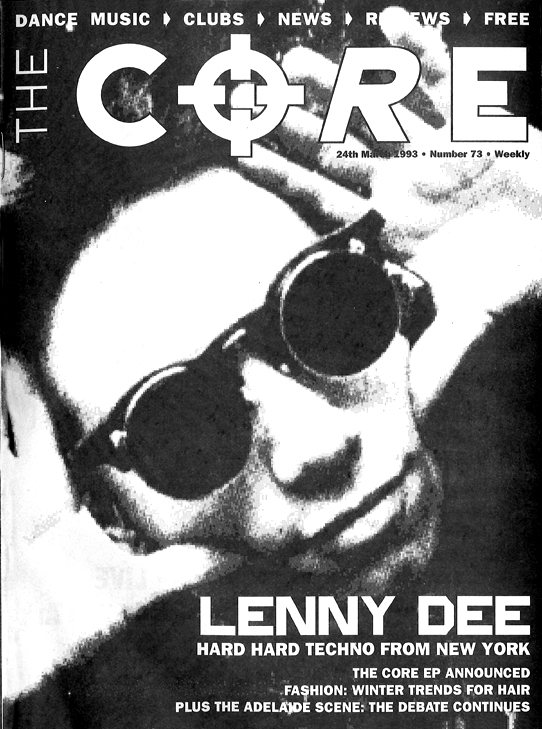
In the nascent global ecosystem of early ’90s electronic music, every city’s scene was a crucible, forging its identity in real time. For Adelaide in late March 1993, this process was at a fever pitch. The city was a paradox of explosive growth and internal anxiety, celebrating a vibrant event calendar and connections to international pioneers while simultaneously grappling with a fierce, public debate over its soul, its authenticity, and the creeping influence of commercialism.
Lenny Dee: The Hard Techno Innovator from New York
The arrival of a figure like Lenny Dee was a profound statement for Adelaide’s burgeoning scene. As a definitive architect of the hard techno movement, his presence was more than an attraction for ravers; it was a direct mainline to the aggressive, industrial sound galvanizing European rave culture. His upcoming performance represented a crucial touchpoint for a local community eager to measure itself against the global vanguard.
Musical Identity and Style
Lenny Dee’s musical philosophy is one of raw, uncompromising intensity. When asked to describe his sound, his response is immediate and absolute:
“HARD. HARD AS HELL, MAN, HARD AS HELL. WHEN YOU HEAR ME PLAY SOME OF THE MUSIC, YOU’LL BE GOING, ‘WHAT THE HELLS GOIN’ ON?’”
This declaration perfectly encapsulates his work, which centered on the sound he championed through his own imprint: Industrial Strength Techno. His production credits reveal a consistently hard-edged portfolio, including collaborations with Casper Pound, work alongside fellow New York pioneer Frankie Bones, and releases on influential European labels like R&S Records and Music Man. His sonic reach even extended to Hollywood, having produced a track for the film Juice.
Career and Influences
Dee’s career began humbly at age 17, DJing at a roller rink in Staten Island. From there, his artistic evolution was shaped by a transatlantic dialogue. He cites the pioneering techno of Detroit, Germany, and Italy as foundational influences, while noting the conspicuous lack of a comparable hard techno movement in America at the time.
This creative imperative drove him to Europe. His first tour was a revelation, ultimately leading him to relocate to London. He found a creative and spiritual home in the unparalleled intensity of the German rave scene, where he witnessed parties that were “much more than they’ve even got in England.” This immersion was fundamental to the genesis of his label, Industrial Strength, which quickly became a global standard-bearer for the uncompromising hard techno style.
Philosophy on Music and Crowds
Beyond sheer velocity, Lenny Dee perceives his music as a potent social tool. He posits that the cathartic energy of hard techno can serve as a powerful, unifying force, paradoxically preventing conflict by channeling a crowd’s aggression onto the dancefloor.
“I SEE ALL THE TROUBLE-MAKERS IN THE SAME ROOM, BUT THEY DON’T GO FIGHTING EACH OTHER BECAUSE THE MUSIC IS HARDER THAN THEY ARE.”
This philosophy connects directly to the broader rave ethos of collective release, framing the visceral experience not as mere hedonism, but as a necessary exorcism of social friction. In Dee’s view, a DJ’s role is to escalate this energy, arguing that music at “200 miles an hour” leaves no room for boredom or trouble. The music itself becomes a transcendent force that focuses collective energy and purges negativity.
Upcoming Adelaide Appearance
Lenny Dee was scheduled to bring this signature intensity to Adelaide for a special guest DJ set at the Dance Club on Friday, 9th April. His visit served as an affirmation of the city’s place on the global circuit, establishing a benchmark for sonic extremity against which the diverse array of local events would be measured.
The Pulse of the City: Upcoming Events and Club Nights
The event calendar for late March and April 1993 is a testament to the Adelaide scene’s extraordinary vitality. From colossal warehouse productions and intimate, underground launches to the competitive spectacle of a DJ championship, the city offered a dense and diverse schedule for its dance music faithful. This guide captures the key happenings that defined the city’s nightlife during this explosive period.
Major Upcoming Events
Jigsaw
- Date and Time: Saturday, April 10th, 10pm – 8am.
- Venue: The Vision Warehouse.
- Presenters: Righteous Entertainment, Larger Than Life Productions, Triple J 105.5 FM, and The Core.
- Featured DJs: HMC, Groove Terminator, Uzi, Brendon, Angu$, MPK, PHD, PMA.
- Special Features: Each DJ was set to produce original tracks specifically for the event. The ambitious production included the Samurai light show, decor by Sarahh and a 2-screen video wall by the Boiler Room Raider team, arcade games, and secure parking.
- Ticket Information: Available from Central Station Records and Audio-Xchange for $19 plus booking fee.
Primal Energy
- Date and Time: Thursday, April 1st, 10pm – 6am.
- Venue: Control.
- Promoter: Tribe Productions (led by Manike).
- Concept: The launch event for a series of productions aimed at returning to the “underground,” prioritizing core musical integrity.
- Featured DJs: HMC, MPK, Maestro D, X-citement.
- Entry Details: $5 entry, with water and snacks free all night.
Easter Bounce
- Date and Time: Sunday, April 11th, 10pm – 8am.
- Venue: The Venue, 155 Hindley Street.
- Presented by: Mayhem Productions, Kinetic Energy.
- Features: A tri-colour laser experience by TechnoFear, 8 track spots by BSS, pool tables, pinball, and cocktails.
- Featured DJs: Doctor Dent & MPK, Nigel D, SFI, Eon, Eccelerator, Revronik.
Unique Parts I & II
- Presented by: Pulse Unlicensed Club.
- Part I: Thursday, April 8th at Synagogue.
- Part II: Wednesday, April 21st at Arkaba.
1993 DMC Championship
- Entry Deadline: Wednesday, March 24th at 6pm.
- First Heat: Thursday, April 15th at The Ark Dance Club.
- Judges: DJ Groove Terminator, DJ Ph.D., DJ James Ingram, Tristran Jones (Club FM), Stilgherrian (The Core), and Kirsty Whicker (The Ark).
- Prizes: Included a trip to the Australian DMC finals for the winner, along with DMC leather jackets, record cases, and cash prizes for the top three contestants.
Regular Club Nights and New Venues
Beyond the major one-off parties, Adelaide’s weekly club schedule was a tapestry of diverse and consistent offerings.
- Dance Club: Free entry before 10pm. Fridays featured DJs ATB, Brendon, X-citement, Uzi, MC Tim & Ranel’s Bongo Massive. Saturdays were helmed by DJs ATB & Madness.
- Discovery: A weekly Wednesday at The Grenfell Tunnel, with DJs Brendon, MPK, Uzi, T-Com, and MC Maestro D.
- Heaven at The Newmarket: Thursdays offered “Heavenly Grooves” by Uzi GT and “Sonic Tunes” from X-citement and James Ingram.
- Jump! On Wednesdays: A new night launching at Jumpi on O’Connell Street, featuring DJs Nigel and OHC. Entry was free for members from 9-10pm.
- And Go Retro On Sundays: A new Sunday club bar at Tapas Cafe on Rundle Street, curating a blend of music styles suited to its name.
- Public Enemy Extravaganza: A special on Friday, March 26th at Phunky Phresh, with DJ Ngel+ and MC Quoromystix.
- Evolution ’93: Held on Thursday, April 8th at Disco at Light Square, this event included a winter fashion preview by Action Gear.
- Club Listings (March 25-31): Other active venues included The Ark (DJ James Ingram), Cargo Club (DJ Chaps), Club Colosseum (DJ Michael), Le Rox (DJs Brendon, Uzi, Angu$, Nigel D, Ph.D), L.S.D. Meltdown (DJ Michael Beresford), and Astor (DJ Cory).
This saturated schedule of events formed the vibrant backdrop for a contentious, soul-searching conversation about the scene’s future.
Community Debate: Is the Adelaide Scene Boom or Bust?
Despite a calendar brimming with activity, a passionate debate was unfolding within Adelaide’s dance music community. Through magazine letter pages and word-of-mouth, clubbers, DJs, and promoters voiced frustrations that questioned the scene’s health, asking whether it was in a genuine boom or on the verge of a bust brought on by commercialism and apathy. This was a classic “underground versus mainstream” conflict, a rite of passage being played out in nascent electronic music communities across the globe, with Adelaide’s scene serving as a compelling case study.
Arguments and Perspectives
Criticisms of Promoters and Venues
Much of the criticism was aimed squarely at club managers and promoters. A prevailing sentiment held that high door prices and a fixation on profit were eroding the scene’s communal spirit. Concerns were raised about perceived greed and a failure to reinvest in the fundamentals of a quality night: superior sound, lighting, and decor. The sentiment was neatly captured by one contributor’s cynical take on a recent international booking:
"You ask for underground, you get Frank De Wulf at a rip off price."
The argument was clear: a sustainable scene required promoters to act as community builders, not just short-term opportunists.
The Role and Attitude of Clubbers
In response, other voices insisted the responsibility lay with the patrons. In a letter, Robert Southwood argued that raves were more successful than clubs because of a better “attitude,” suggesting club-goers had become too self-conscious and “cool” to dance, creating a stagnant atmosphere. This perspective called on punters to become active participants, to vote with their feet and their energy, and to support the venues and DJs who were genuinely pushing the culture forward.
A Call for Quality and Passion
The through-line in the debate was a collective demand for greater passion and higher standards from all parties. Jeff Owens of The Ark Dance Club offered the blunt advice to “shut the fuck up and enjoy,” but it was part of a broader appeal for promoters to heed constructive feedback and for patrons to recognize and reward quality. The underlying consensus was that a healthy scene required a symbiotic contract: promoters must deliver exceptional experiences, and clubbers must meet that quality with enthusiastic support.
This impassioned debate revealed that the culture was a complete ecosystem where aesthetics, identity, and personal expression—particularly through fashion—were just as vital as the music.
Style and Culture: Winter Fashion and Hair Trends
Within the holistic culture of the 1993 dance scene, style was not an accessory but a central pillar of expression. Fashion and hair were primary canvases for the same ethos of individuality and innovation that defined the music. As Adelaide prepared for winter, local salons were forecasting the key aesthetics that would populate its dancefloors.
Featured Company: Black Diamond
A key player in the city’s style scene was Black Diamond, a brand of hair products manufactured by Just Luv’d Pty Ltd. With a strong ethical stance against animal testing, the brand had already found success in UK and German salons. Its director, Julian Noel, founded the company in Melbourne in 1988 but was now based in Adelaide, making the city a creative hub for the brand’s identity.
Emerging Winter Hair Trends
Adelaide’s leading salons predicted a diverse winter aesthetic, blending retro nostalgia with a distinctly modern, individualistic sensibility.
- The 70s Revival: Mirroring the return of flares and platforms in street fashion, salons like Limbo and Gritti Palace championed looks from the seventies. Groovy centre parts, plaits, and pony-tails were the order of the day.
- The Grunge Look: As a counterpoint to retro glamour, Dare e’ Dare forecasted the “garage look.” This style embraced long, layered hair with feathered edges, designed to appear artfully messy and unkempt.
- Short and Textured: Moving away from the sleek bobs of the recent past, salons like Taboo and The Speckled Boa focused on short hair with high impact. Layers, texture, and distinct, piecey sections were used to create volume and character.
- Individuality: The overarching theme, articulated by DFHG and Swerve, was the death of “precious” hairdressing. The new paradigm valued personal expression above all, encouraging styles that reflected the wearer’s unique identity rather than a rigid, universal trend.
Local Salons and Artists
This creative energy was fostered by a network of local salons, including Taboo, The Speckled Boa, Gritti Palace, Limbo, Swerve, DFHG, Dare e’ Dare, Half Moon Haircutters, and Individualists in Creative Hair Artistry. Tying the city’s artistic communities together, much of the era’s fashion photography featured models from the Leigh Warren Dancers, a contemporary dance company based in Adelaide.
This vibrant local style was the visual analogue to the sounds being created and curated in the city’s clubs, which were themselves in a constant state of renewal thanks to a steady flow of new music.
On the Record: New Music Releases and Reviews
A constant influx of new records is the lifeblood of any thriving music scene. For Adelaide’s DJs and enthusiasts in March 1993, this guide to the latest releases was an essential resource for discovering the tracks that would define the sound of the coming weeks, from global hits to local productions.
Global Music News
International Releases
- Germany Goes Hi-Tech: The German techno engine was in overdrive, with new material from Frankfurt rave pioneers Tribal Groove and Illuminatus‘s track Tremora Del Terra.
- From Da Hip Hop Nation: Eric B & Rakim were embroiled in a legal battle with Bridgeport Music Inc. over sampling. In more creative news, releases were expected from The Fugees and The Goats, while Cypress Hill continued its ascent.
- UK and Beyond: Apache Indian released a significant collaboration with Jamaican reggae star Shabba Ranks, and acid jazz pioneers The Brand New Heavies prepared to drop a new EP.
Compilations and Local Releases
- Global Music launched a “12-inch mixes on CD” compilation series. The first releases featured tracks from artists like Wheeled, Guns, and Freedom, with the label announcing upcoming material from major acts including Alexander O’Neal, Luther Vandross, Jesus Jones, The Clash, and The Bangles.
- Locally, new music included Sunscreem’s “Broken English EP” and Unique III’s “7,” featuring vocals from N’Dea Davenport of The Brand New Heavies.
Record and Club Reviews
Track Reviews
- The Grid – Crystal Clear: A tricky, housey project. (***1/2)
- Geto Boys – Till Death Do Us Part: Acknowledged for its lethal rhymes but noted as being more of the same. (***)
- Humble Souls – How Now: Exceptionally praised as a “truly spontaneous Leftfield biz” and the best thing the group had ever written. (****1/2)
- Too Young To Die – C2: Funky white boy acid jazz. (***)
- Ignition – Fantasy: A half-decent breakbeat track. (**)
- A-Track EP: Not as left-field as anticipated but still a worthy series. (***1/2)
- Ismistik – 3rd Price: Solid house that delivers the goods. (****)
- Life Force – Centre Stage: An extensive and reconstructive remix. (***1/2)
- Super Ragga Man – Super Ragga Dance: A low rating with no further comment. (**)
Club Reviews
- 80s Retro Night (Boltz Cafe): Praised for its fun, unpretentious vibe where people came simply to dance.
- Funk Competition (Le Rox): After a slow start, the event successfully celebrated Adelaide’s finest rappers in a well-run contest.
- Equinox (UJS Underdale): A mostly student party with a good atmosphere, though the music policy felt somewhat dated. DJ Ellis was commended for keeping the floor moving.
Ultimately, March 1993 in Adelaide was not just a month on a calendar, but a microcosm of rave culture’s adolescence—a moment of explosive energy, stylistic innovation, and the crucial, often contentious, process of a community defining its own soul.
Leave a Reply