
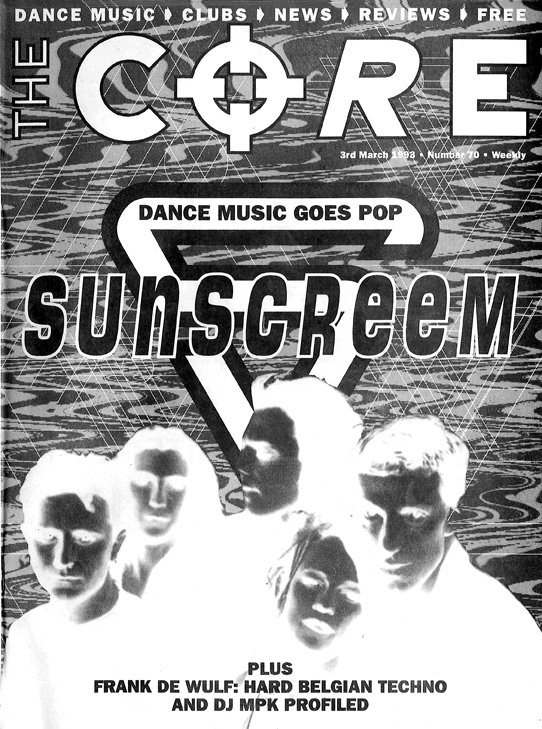
By early March 1993, the world of dance music was at a dynamic crossroads, marked by a fascinating convergence with mainstream pop culture. This movement was epitomized by artists like Sunscreem, who were translating rave energy into chart-topping hits, while pioneers of hard Belgian techno like Frank De Wulf continued to shape the sound of the global underground. Locally, Adelaide’s club scene was thriving, showcasing a vibrant ecosystem of dedicated DJs, iconic venues, and highly anticipated events that pulsed with a life of its own.
The Rise of Dance-Pop: A Profile of Sunscreem
The declaration on the cover of the 3rd March issue of The Core said it all: “Dance Music Goes Pop.” This was more than a headline; it was a snapshot of a cultural moment where the infectious energy of the rave scene was being strategically packaged for mainstream radio and global charts. Leading this charge were acts like Sunscreem, a band from Essex whose unique ability to blend underground credibility with pop sensibility placed them at the forefront of a new wave, bridging the gap between warehouse parties and Top of the Pops.
An Interesting Phenomenon
Sunscreem’s musical identity is a study in eclectic synthesis. Described as an “interesting phenomenon,” their sound is a vibrant mix that defies easy categorization, shifting effortlessly from “jazz to breakbeat rave to chewy gum-pop.” Their influences are equally broad, drawing from ’70s material and the synth-driven textures of Detroit techno-pop. This unique sonic blend allowed them to pioneer what the UK music press had dubbed “dance pop,” a genre that captured the euphoria of the dancefloor while remaining accessible enough for widespread commercial appeal.
From a Cow Shed in Essex
The band’s origins are as unconventional as their sound. Formed in Essex, the core trio of Paul, Lucia, and Darren created their earliest work in a 24-track studio named The Rapid, which was famously housed in a converted cow shed. It was in this rustic setting that they honed their craft, developing the foundational tracks that would soon capture the attention of a major label and a global audience.
“We are a studio band really”
While their music was born in the studio, Sunscreem was far from a purely electronic act. Paul identifies the group as a “studio band really,” highlighting their meticulous approach to production. The songwriting process is a collaborative effort, with Lucia composing the music and Paul penning the lyrics. However, they translated this studio work into a powerful live experience, performing as a full four-piece band since 1990. Paul expressed a clear preference for this dynamic setup over the sterile approach of simply showing up to “plug in the DAT and go off,” underscoring their commitment to authentic performance.
On Pop, Sony, and the Future
Sunscreem’s relationship with commercial success presents a fascinating paradox. Signed to major label Sony, they embrace the machinery of the mainstream while simultaneously claiming a subversive mission. Paul is candid about this contradiction, stating, “We’ll take the cliches of the music world and pervert them… we’re really trying to destroy the whole music business.” This rebellious ethos—using the system to dismantle it from within—is channeled into their new album, O3. An Australian tour is scheduled for late 1993, promising to bring their unique brand of dance-pop rebellion to a new audience.
The album features the key singles:
- LOVE U MORE
- PRESSURE
- PERFECT MOTION
- BROKEN ENGLISH
——————————————————————————–
Full Tracklist for O3 includes:
- SURFING ON SINEWAVES
- WALK ON/PSYCHOWAVE
- SHADES OF RHYTHM
- TILL WE MEET AGAIN
- JACQUELINE/INNER CITY
- SHINE ON/MIDI PAIN
- WE ARE FAMILY (93 REMIXES)
- SWEETEST PAIN
- OPEN YOUR MIND
- THE EVERY NO MAN
- (NO. NOT THE) DEEPY VIBE/E2-E4
——————————————————————————–
While Sunscreem was busy injecting pop with rave energy, foundational figures from the European underground were still pushing the harder, more elemental sounds of techno.
The Belgian Invasion: Frank De Wulf, Godfather of Hard House
In the late 1980s and early 1990s, Belgium became an unlikely epicenter of a sonic revolution. The country’s unique “New Beat” sound—a dark, chugging, and hypnotic style—had a profound impact on the development of techno and house music worldwide. At the very heart of this movement was Frank De Wulf, a prolific producer and DJ whose pioneering work earned him the title of a founding father of the Belgian sound.
The New Beat Sound
New Beat was defined by its deliberate simplicity and atmospheric weight. De Wulf describes it as a slow style, typically between 110 and 120 beats per minute, built around a prominent 303 bass line. The tracks were often instrumental and built for the dancefloor, creating a trance-like state. De Wulf was a key architect of this sound, having produced an astonishing 242 tracks under various aliases during its heyday. He recalls working on three or four different records in a single day, cementing his status as one of the genre’s most important and prolific contributors.
From Underground to Commercial
De Wulf played a pivotal role in bringing the Belgian underground to a global audience. His watershed 12-inch release on the legendary R&S Records legitimized the sound for a wider market, and his B-Sides series of releases further solidified his reputation as a master of hard-hitting, innovative techno. He believes the sound resonated so deeply because it was “culturally attuned to the nation’s psyche,” a unique expression of Belgium’s musical identity that soon became an international phenomenon.
Evolving Tastes and Future Sounds
By 1993, however, De Wulf felt the aggressive, over-the-top sound that evolved from New Beat had become creatively stagnant. He expressed a dislike for the “whole Dominator thing,” which he felt was over-exposed and lacked subtlety. His focus has since shifted, with current projects including collaborations with Jam & Spoon and a new release forthcoming on R&S. His artistic direction is broadening, as he explains his current approach to DJing: “I will try to play the latest records, the new sound. It’s not the soft European style or hardcore, but a bit in between. I’m not going to play hardcore, but I will play good hard records, good breakbeat, even good deep house records…”
De Wulf in Adelaide
Adelaide audiences will have a chance to witness this evolution firsthand when Frank De Wulf performs at the Ark Dance Club on Friday, 5th March. He will be joined by local stalwarts Brendon, Uzi, and X-citement for a night spanning two levels of the club. Tickets are $10, and De Wulf is expected to bring a heap of new white label tracks, offering a glimpse into the future of hard dance music.
The presence of an international pioneer like De Wulf highlights the health and dynamism of Adelaide’s own thriving local music culture.
The Adelaide Scene: DJs, Clubs, and Events
In March 1993, Adelaide’s dance music scene was a hive of activity, characterized by a diverse roster of local talent, a network of dedicated venues, and a calendar packed with significant events. From intimate club nights to large-scale competitions, the city’s culture was vibrant, self-sufficient, and continually evolving.
Local Profile: DJ MPK
One of the DJs making a name for himself is DJ MPK, also known as Daniel James Michael. On the decks since early ’92, he champions a “hard breakbeat style” with “influences catered for by Detroit techno.” He offers a candid perspective on the local scene, observing that Adelaide crowds often prefer well-known remixes over raw, unfamiliar music—a stark contrast to the crate of “new white labels” international guests like Frank De Wulf are bringing to the city’s shores. This tension between the familiar and the cutting-edge defines the current state of the Adelaide dancefloor.
Beyond DJing, MPK is active in promotion and holds a residency every Wednesday for the Discovery night at Disco. When asked about his moniker, he explains with a laugh, “It’s a sort of a pay-out of ward DJ’s… The M stands for ‘mighty’. You have to guess the rest.”
The 1993 DMC Championship Approaches
The city’s DJ talent will soon be on full display with the arrival of the 1993 DMC Championship. The first heat is scheduled for Thursday, 8th April at The Ark Dance Club. This year introduces an innovative “team/mix competition” format, allowing groups of up to three people to compete using up to four turntables.
The prizes on offer are significant:
- First Prize: $500 cash, plus a DMC leather ‘silk embroidered’ jacket and record flight case.
- Second Prize: $200 cash plus a DMC record flight case.
- Third Prize: $100 cash voucher.
- Encouragement Award: $100 cash, to be awarded at the judges’ discretion.
The competition will be overseen by an extensive panel of local industry experts, including:
- Simon Linke (from Central Station Records)
- Angus (from Central Station Records, also DJ Shift of 6/28s)
- Colin Ellis (from Fresh FM)
- DJ Mad C
- Mark SEB FM
- Shignoman (from The Core)
- Kirsty Whicker (from The Ark)
Upcoming Events and Club Nights
Beyond the DMC, the month of March is filled with must-attend nights across the city:
- Pulse at The Old Lion (Friday 5th March): This unlicensed event promises a “hardcore progressive” soundscape, powered by an immense Monstar JAM.5K Turbo sound system. The lineup features DJs Uzi, E-Zee-G, Gravity, and Glacia.
- Powerhouse at Tonsley Hotel (Thursdays): Known for showcasing top South Australian talent, Powerhouse features an appearance from DJ PMA on Thursday, March 4th.
- A Night of Discovery (Saturday 6th March): Taking place at the historic old Adelaide Gaol, this unique event features MC Maestro B alongside DJs Uzi, Brendon, and MPK.
- The Synagogue: The venue is launching a new direction, promising to be “a bit underground” because they “don’t want to get pigeon-holed.” Events include E-Zee G, X-Citement, and Dangergirl on Saturday the 6th, while Fridays are dedicated to the “House of Love” night, focusing on garage and rare groove with DJs X-Citement, JK, and Eeze.G.
- SWOOP at Zuluz: The popular act has scheduled two live shows for Wednesday the 10th and Thursday the 11th of March.
As Adelaide’s scene flourishes locally, it is also influenced by broader news and trends impacting the music industry on a global scale.
Industry News and Global Trends
Beyond the stages and dancefloors of Adelaide, the international music industry was in a constant state of flux. The launch of influential new record labels, evolving trends in hip hop, and major shifts in the mainstream charts all contributed to the dynamic landscape of early 1993.
New Labels and Releases
In the UK, two new record labels emerged, promising to bring fresh sounds to the market. Breakbeat powerhouse XL Recordings announced it was branching out to launch Azuli Records, a new subsidiary specializing in “moody soulful U.S. garage.” The first release is Mount Rushmore’s “Videa That Flow,” licensed from the original Azuli label. XL’s Richard Russell described the new imprint’s direction as “simply a label for music that’s maybe too mellow or too gargantuan to fit into XL.” Also new is Flid, a label started by London’s Rollover Studio, which was renowned for its production work with the influential act Leftfield.
The State of Da Hip Hop Nation
The hip hop world was buzzing with activity. The 9-year-old rap trio Immature was gaining attention with a feature song, “Tear It Up,” in the film Bebe’s Kids. Meanwhile, a legal battle was brewing between Eazy-E and Dr. Dre‘s Deathrow Records over contractual issues. Elsewhere, Naughty by Nature was on tour, Tome Loc was seen filming a new movie, and Pete Rock and CL Smooth appeared to be in the midst of a disagreement.
Chart Toppers and Media Buzz
Several key developments were making waves in mainstream music and media:
- Whitney Houston: The megastar’s single “I Will Always Love You” broke the record for the longest-running number one single in American chart history, surpassing the previous record held by Boyz II Men.
- Triple J: The ABC’s national youth radio network saw a significant increase in its Adelaide listenership, growing its total audience in the city to 134,000.
- The Grid: The British ambient house act was venturing into cutting-edge technology, working on a virtual reality system that featured MIDI interactivity, with the complex coding handled by guitarist Fritz Catlin.
Leave a Reply