
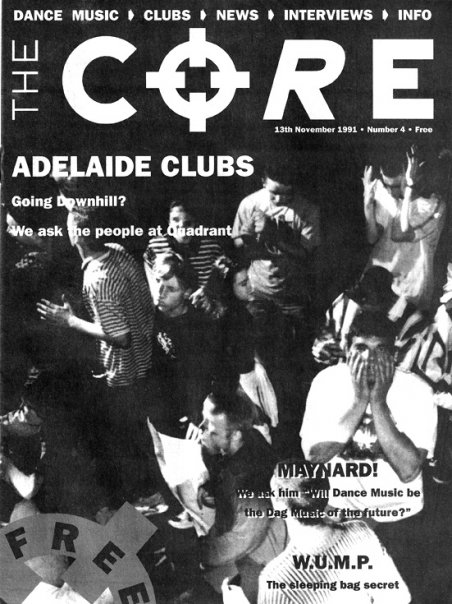
In the late summer of 1993, the youth culture of Adelaide was a vibrant and kinetic landscape defined by a remarkable convergence of emergent subcultures. In the city’s clubs, parklands, and public spaces, the distinct energies of beat-driven dance music, an ascendant hip hop scene, and the rebellious athleticism of in-line skating began to overlap and influence one another. This period documents a unique cultural moment where these disparate movements found common ground, creating a dynamic ecosystem of sound, style, and community.
Artist Spotlights: The Sounds of the Scene
The sonic identity of Adelaide’s nightlife was shaped by a diverse array of artists, each contributing a unique element to the city’s musical fabric. The following profiles serve as an archival record of the key acts defining the local and national landscape at this time. These spotlights range from commercially-minded dance groups strategically targeting mainstream success to innovative acid jazz funk ensembles pushing the boundaries of live groove.
Too Strong: Going for Mainstream Success
Adelaide-based dance act Too Strong was strategically positioning itself for commercial success, evolving its sound while meticulously crafting a powerful visual identity. The group consisted of vocalist Damir (also performing as MC Rhyme D), vocalists Ciaude and Cecilia, and DJ James Ingram. Having moved from their earlier trip-hop and rare groove influences, the band had embraced a more potent, beat-driven sound tailored for the dance floor.
Their approach was unapologetically commercial, with an explicit focus on securing a record deal by emulating the crossover success of their contemporaries. As Damir stated, “We are inspired by people like Sound Unlimited, for example. For us, we’re trying to follow in the footsteps of bands like Sydney’s Sound Unlimited.” This strategy was audibly influenced by American acts like Bell Biv Devoe, Color Me Badd, House of Pain, and LL Cool J. This focus on market viability was balanced with a commitment to substance; as Damir explained, “There is a message in every song, but it’s not a political message,” indicating a focus on relatable themes over overt activism.
Their upcoming schedule was packed, with performances slated for The Ark Dance Club on Friday, 26th February, and Heaven on Saturday. They were also scheduled as special guests at an UZI event, where they planned to film a new video clip, further solidifying their professional image in their quest for mainstream appeal.
DIG: Reinventing Groove with Acid Jazz Funk
Hailing from Sydney, the acid jazz funk band DIG was set to bring its unique, genre-bending sound to Adelaide. Led by Scott Saunders, the group’s philosophy was to reintegrate authentic jazz improvisation into the club environment, creating what Saunders described as a “jazz solo accessible… filling a funky dance floor.” The band was built around a five-piece jazz core—spearheaded by Saunders—with a rhythm section composed of Alex Hewetson on bass, Tim Rollinson on guitar, and Terepai Richmond on percussion.
Their sound was a rich synthesis of soul, hip hop, funk, and world music, drawing from a deep well of influences that included legends such as Miles Davis, James Brown, Jimmy Smith, Herbie Hancock, and George Clinton. Their growing reputation had recently earned them a signing with id Records, with distribution handled by Phonogram. The group was also pursuing an international recording contract, signaling their global ambitions. Adelaide audiences had several opportunities to experience their live performance, with shows scheduled at Le Rox on Friday 26th and Saturday 27th February, and a Thursday night gig at Zulu on February 25th.
The Rockmelons: A New Direction with “Form One Planet”
Veteran Australian group The Rockmelons signaled a new strategic direction with their single “Form One Planet,” the band’s first to feature a rapper. The new addition was 23-year-old Eric Sebastian, whose diverse background included R&B and classical influences. The band was transparent about the single’s commercial intent, a calculated decision to embrace mainstream accessibility. Eric described the track as accessible and enjoyable, stating, “It’s just fun… that’s not what you’d actually call the clichéd rap track.”
This commercial pivot was a conscious, strategic choice, as evidenced by the group’s internal discussions about their long-term trajectory. While embracing the current single’s pop appeal, they were already looking ahead, revealing the tension between commercial demands and future artistic exploration: “…but on the next project, we’ve got to get a few new ideas in there… we’ve got to put our brains back together yet.” The single and its accompanying LP were available on Mushroom Records.
DJ PMA: A Profile
Adelaide’s Marc Plummer, known professionally as DJ PMA (Pase Master Ace), was a key figure in the local club circuit, whose history is indicative of the scene’s grassroots fluidity. Before becoming a fixture at venues like Control, Le Rox, and The White Room, Plummer “used to MC in a ‘bedroom-type’ hip hop group,” a detail that underscores the DIY origins of many local artists. In a candid assessment—made just before the opening of new clubs Powerhouse and H.E.L.L.—he described the city’s dance scene as a “bit stale at the moment” and in need of “something fresh.” Looking forward, Marc expressed his plans to transition from DJing into music production. His personal motto offered a nod to his peers: “Respect goes to Code One and T-Con.“
These artists, from the commercially ambitious Too Strong to the musically experimental DIG, were the driving force behind the city’s sound, which came to life within the ecosystem of its clubs and event spaces.
The Pulse of the Nightlife: Clubs and Live Events
The club scene was the beating heart of Adelaide’s youth culture, serving as the primary arena where music, fashion, and community converged. These venues were cultural hubs that hosted local talent, international acts, and special events that defined the social calendar. The following is a guide to the key venues, regular nights, and notable happenings from late February to early March 1993.
Upcoming Gigs and Club Guide
- The Ark: This venue was set to host Belgian techno producer Frank De Wulf on Friday, March 5th. The club also featured local act Too Strong on Friday, February 26th, and a night called Rango Bongo.
- Le Rox: A hub for diverse sounds, Le Rox was scheduled to host Sydney’s DIG for performances on February 26th and 27th. The club also featured “The Garage Goes Hip Hop” on Saturday, February 27th, with Righteous Entertainment and LTL. An examination of the night’s promotions reveals the economic details of the scene: entry was “$5 entry before midnight, 8 after,” with “1 beer, champagne and cocktails” offered from 10pm to midnight.
- Astor’s: The Phunky Phresh night held special significance as a “BMG RECORD LAUNCH FEATURING GIVEAWAY COPIES OF ERIK B & RAKIM’S ALBUM CASUALTIES OF WAR,” directly connecting a local Adelaide night with a major international hip hop release. The venue also offered a Sunday night “Relax-ion” for a more chilled-out vibe.
- Synagogue: “The Second Coming” event was announced for Saturday, 6th March. The lineup included music selectors X-citement & E-zee-G and featured artists G.T.B, Glacia, JK & Dangergirl.
- Powerhouse (Tonsley Hotel): This venue offered a Thursday night event with DJs Brendon and Angus, notable for its “late” 9pm start and free entry.
- H.E.L.L. (The Grenfell Tunnel): The “adrenalin mark II” event took place on Thursdays, featuring a lineup of hmc, uzi, nigel, and chico. A granular look at its promotions reveals the nightlife’s economic realities, with “1 soft drinks,” “3 all spirits,” “$2 hell shooters,” and “free water + mosquashing after 1am” on offer.
- Other Venues & Events: The scene was dotted with other notable events, including an “Urban Streetwear fashion parade” at Boltz Bar and “Go To Hell, HMC!” at The Grenfell Taverns. An Uzi event on Saturday was also promoted, featuring X-citement MC Tim and Ranel’s Bongo Breakdown.
Nightlife Reviews and Announcements
The period was also marked by significant reviews and one major event cancellation. The Galliano “post-WOMAD party” at The Ark, held as part of the Adelaide Fringe, received high praise. The review highlighted Valerie Etienne’s “soaring vocals” and an “impressive show” from the percussionist, culminating in a performance that had the “vibe” just right.
Meanwhile, the Amazing Space event at the Craze Warehouse was a resounding success. Drawing around 800 people, the party was lauded for its impressive setup, which included a “Virtual Reality machine.” The event’s positive reception, coupled with the reviewer’s note that “the next few weeks should see a number of big English DJ’s” heading to the city, prompted the bold declaration: “Adelaide is Rave Capital of Australia.“
In less positive news, the rave event Garden of Eden ’93 was cancelled. Ticketholders were instructed to obtain a full refund by presenting their tickets at Jiv’s Surf & Ski at 121 Grenfell Street between Wednesday, 24th February, and Saturday, 6th March.
Beyond the established music and club scene, a different kind of youth culture was rapidly gaining momentum on the streets, boardwalks, and in the parklands of South Australia.
Special Feature: The Rise of In-Line Skating
By early 1993, in-line skating had become one of the fastest-growing sports in the country, representing a fusion of athleticism, style, and a distinctly independent subculture. While many referred to the sport by the ubiquitous brand name Rollerblade, the official term is in-line skating. This feature explores the culture surrounding the sport in South Australia, from its professional stunt teams to the legal and practical challenges faced by its participants.
Team Creatures: South Australia’s Professional Stunt Team
At the forefront of the local scene were the Coca-Cola Team Creatures, the only professionally sponsored in-line skating display team in South Australia. Formed in June 1992, the team consisted of eight males and two females who practiced weekly to perfect their routines.
Led by team captain Matthew Clarke, their primary focus was on promoting safe skating. All team members wore full protective gear—helmets, knee and elbow pads, and wristguards—setting a responsible example for newcomers. Clarke’s advice for beginners was simple and direct: learn the basics of skating and stopping before attempting any advanced stunts.
The Skater’s Dilemma: Where to Legally Skate
Despite its growing popularity, in-line skating faced significant legal and infrastructural hurdles. In South Australia, it was illegal to skate on both the road and the footpath, with skaters facing potential fines. This was compounded by a lack of dedicated facilities such as rinks and half-pipes, leaving skaters with few safe and legal places to practice.
Safety was a major concern for authorities. Data from the SA Health Commission documented 72 skating-related accidents since December 1985, with a staggering 3000% increase since the introduction of in-line skates. This led to caution from local governments. Glenelg City Council Mayor Brian Nadilo expressed contentment with the lack of facilities due to safety concerns. In contrast, the Adelaide City Council proposed a more progressive approach, suggesting that skating could be allowed on designated paths within the city’s parklands. The Glenelg council was also considering a plan for a boardwalk and tracks to provide safer dedicated areas for skaters.
Getting Started: A Guide to Gear and Safety
For those looking to enter the sport, selecting the right equipment was paramount. Quality skates with durable wheels made from super high-rebound polyurethane and comfortable boots were recommended. Equally important was comprehensive protective gear, with wristguards, elbow pads, and knee pads considered essential to prevent common injuries.
A snapshot of available gear and approximate prices at the time included:
- Skates:
- Bladeline Skateline Express: $190
- Retro by Bladeline: $220
- Roller Derby BX 5500: $330
- Roces: $340
- Rollerblade: $430
- Protective Padding:
- Elbow pads by Bladeline: $25
- Knee pads by Bladeline: $30
- Wristguards by Rollerblade: $40
This equipment was available at retailers such as Bladeline stockists, Check It Out, Coastal Creatures, and Arbourne.
The Future of Skating: Roller Hockey
Emerging from the skating scene was Rollerhockey, billed as the newest way to have fun and get fit on skates. This non-contact sport could be played on most surfaces by people of any age or ability. While competitions were already established in Melbourne and Sydney, the scene was just beginning to form in Adelaide. Team Creatures captain Matthew Clarke was organizing games on Tuesday days and nights at the asphalt courts at Brighton High. Interested players were advised to contact Dave Fraser at Coastal Creatures for more information.
The rise of a new subculture like in-line skating existed alongside the broader currents of music news and pop culture, which connected Adelaide’s local scene to national and international trends.
Music News and Culture
This section provides a snapshot of the wider cultural context of early 1993, covering hip hop news, updates on major competitions, international music trends, and noteworthy films circulating at the time.
Hip Hop Beat: “Da Hop Thang”
The international hip hop world saw several significant developments. England’s pioneering rap group Cookie Crew officially broke up following their last record deal with London Records. In music literature, two notable books were available: “The Suganill Gang to Public Enemy” by Lawrence Stanley and the novel “Malcolm X: The Angriest Man in America.” In the United States, an Ice Cube show in Seattle was followed by a drive-by shooting incident. On a different note, the Beastie Boys were reported to be adopting a new anti-sexist stance, signaling a potential shift in their lyrical focus.
1993 DMC DJ Mixing Competition
The prestigious 1993 DMC DJ Mixing Competition was announced with a fresh set of rules designed to encourage creativity. For the first time, groups of up to three people were allowed to enter, and contestants could use up to four turntables in their routines. The use of the official PMX-2 DMC competition mixer was mandatory. A representative from DMC Australia offered advice to aspiring champions: “You have six minutes… But don’t forget the crowd wants to be entertained visually too.” Adelaide heats for the competition were being planned for April, with Central Station Records handling inquiries.
Global Music and Imports
The international music scene was buzzing with activity. Scottish techno act Fini Tribe launched their own label, Fini Flex Productions. In Glasgow, the band The Boove started 13th Note Records. Key new releases included Londonsbeat’s “I Feel About You” and Mr. Wendel’s “Chrysalis.” An EP from The Juice on Ad-lib Records also received a review. For those seeking the latest overseas sounds, import reviews highlighted new material from Brand Nubian, Black The Ripper, and Young Black Teenagers.
Film Reviews: Critic’s Choice
Two major biographical films were reviewed for Adelaide audiences.
- Chaplin: Directed by Richard Attenborough, this biopic was praised for its faithful portrayal of the silent film icon’s life. The performances of Robert Downey Jr. as Charlie Chaplin and Moira Kelly as his wife Oona were highlighted as exceptional.
- Lorenzo’s Oil: This moving drama told the true story of Lorenzo Odone, a boy diagnosed with the fatal nerve disease ALD. The film, which carried a PG rating, was noted for the powerful performances of Nick Nolte and Susan Sarandon as Lorenzo’s determined parents.
While professional critics offered their take on music and film, the most direct feedback on the state of Adelaide’s scene came from the participants themselves.
Voices from the Scene: Correspondence
The letters to the editor provide a direct, unfiltered glimpse into the thoughts, passions, and frustrations of the local club-going community. These correspondences cover everything from the performance of specific DJs to philosophical reflections on the nature of the rave experience, offering an invaluable ground-level perspective.
Reader Feedback and Commentary
The performance of local DJs was a frequent topic of debate. DJ Steve Hopgood found himself the subject of both criticism and defense, with one reader complaining about his “chewing gum” style of mixing, while another wrote in to support him. The music selection at “The Arena” on a Saturday night also drew negative feedback from a patron who felt the DJs were playing for themselves rather than for the crowd.
Other letters took on a more philosophical tone, capturing the spirit of the rave scene. One writer expressed a desire for escapism, writing, “Nature surrounds me,” seeking a temporary release from reality. Another offered a playful suggestion to “paint yourself blue for the rave at Smurf village.” One surreal account described a disorienting night at “Le rox 2,” encapsulating the strange magic of the club experience. Finally, a reflective letter about “Miss Helena” touched on themes of change and memory, highlighting the personal connections and evolving histories forged within the scene.
Leave a Reply