
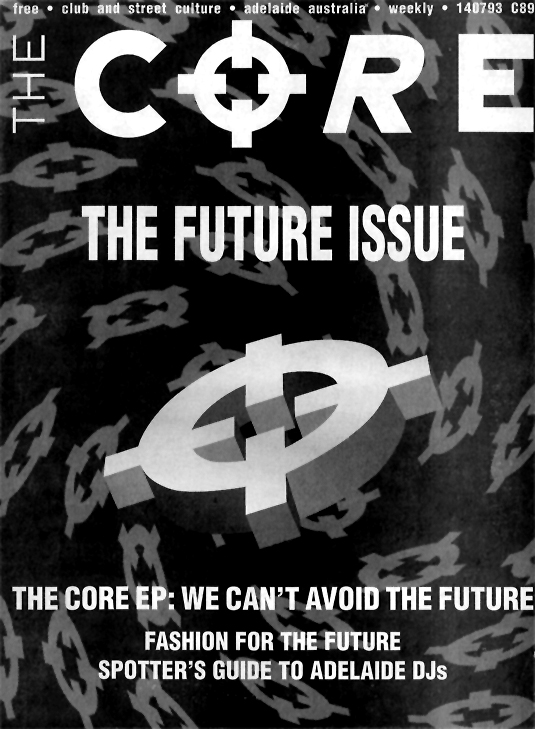
This document provides a detailed look into the vibrant club, music, and street culture scene of Adelaide, Australia, during a specific week in July 1993. Drawn from contemporary listings, reviews, and features, it captures the energy of a thriving electronic music community, from major dance parties and influential local artists to the weekly pulse of the city’s nightlife.
Major Events: Highlights of the Adelaide Scene
July 1993 was a landmark month for Adelaide’s dance music scene. The city was still buzzing from a massive, festival-style event that had just taken place, proving the scene’s ambition and scale. With several more highly anticipated parties on the horizon, it was a period defined by a palpable energy, a fusion of international sounds, and the confident rise of homegrown talent.
Review: Independance 2 at The Entertainment Centre
Signifying Adelaide’s arrival as a serious player on the national stage, “Independance 2” was a monumental success. Held on Saturday, 3rd July, the event drew an immense crowd of 3,000 people to The Entertainment Centre. The Kolossal main room was described as “heaving,” energized by a state-of-the-art lighting and laser show that did justice to the heavyweight international lineup: LTJ Bukem, Grooverider, and Fabio.
The local contingent more than held their own, delivering powerful performances that showcased the depth of Adelaide’s talent pool:
- DJ ATB kicked off the night with a set of powerful hard house.
- DJ HMC followed, ripping through a set with the “speed of technologically induced motocross.”
- DJ Hellcat and DJ Damon kept the energy high with strong sets.
- DJ Techno PMA spun a selection of “excellent anthemic techno.”
The night was also notable for its diverse supporting acts. The father-son duo Red Fred Pence made an “impressive debut with an entertaining list of straight-up hits,” while The Rhythm is a Pervvert and live act Pendulum rounded out a showcase that left an indelible mark on the city’s scene.
Upcoming Anniversary: Total Recall at The Ark Dance Club
Celebrating the one-year anniversary of the Dance It Club, a special event named “Total Recall” was scheduled for Friday, 16th July 1993. Held at The Ark, 150 Glen Osmond Rd Fullarton, the party was a testament to the club’s staying power and a highlight of the weekly calendar.
The lineup featured resident performers DJs Brendon ATB & UZI alongside MCs Tim & Maestro D. Demonstrating a keen understanding of their crowd, the promoters offered 10 entry** with an unbeatable happy hour of **1 beer and champagne from 9-11 PM.
Launch Party: The Core EP – ‘We Are The Future’
Another hotly anticipated event was the dance party launching The Core EP, titled ‘We Are The Future’. Set for Saturday, July 24th, at The Ark Dance Club, the party served as a powerful showcase for Adelaide’s premier DJ and MC talent, with tickets going on sale Wednesday, July 21st.
The extensive lineup was a who’s who of the local scene:
- DJs: Brendon, HMC, Angus, MPK, PMA, DAMC, Aquila, Maas
- MCs: Maestro D & Tim
While these parties drew the crowds, the scene’s future was being forged in home studios and the offices of ambitious labels, where a new generation of artists was building an industry on its own terms.
In the Spotlight: Profiles of Local Innovators
While thousands flocked to parties each weekend, the scene’s future was being shaped by pioneering producers and record labels working to define a unique local sound. Figures like Groove Terminator and the team at Volition weren’t just making music; they were challenging commercial norms and building a self-sufficient industry from the ground up.
Groove Terminator and ‘The Predator EP’
Adelaide producer Simon Lovrich, known as Groove Terminator, released his second Terminator Trax installment, “The Predator EP,” on July 13th. His third record overall, the EP was a statement of intent, distributed by Shock and stocked at key retailers like Central Station and Virgin Megastore.
The four-track EP included:
RU DOWNGET LOOSECREATORFOUR AM
Lovrich was vocal about his artistic independence, pushing back against the dominant “‘Progressive House’ orientated” sound of the time. He instead looked abroad, drawing on harder, more industrial influences.
“I would call it techno influenced… I’m more influenced by the European style of techno. Belgian stuff, German stuff, y’know. I think it’s a lot stronger.”
Defining himself as a “DJ who likes to make music,” Lovrich spoke of his commitment to originality and his recent travels to play for audiences in Europe. His philosophy was one of perpetual motion, a constant re-evaluation of his craft: “About once every 18 months I change the way I look at music and look at DJing.”
Volition Records: Redefining ‘Commercial’
Sydney-based label Volition, helmed by founder Andrew P, was on a mission to dismantle the narrow definition of commercial music enforced by mainstream radio. The label championed Australian electronic artists who were creating innovative music but found themselves locked out of traditional airplay.
“…it’s only the stalwarts of the 70’s and 80’s holding places in radio stations that are preventing our tracks from getting air time.”
Volition’s primary strategy was the compilation, a powerful tool for showcasing different facets of dance music and promoting its roster. The label’s forthcoming release slate was a testament to this vision, promising a flood of new and diverse Australian sounds.
Forthcoming releases from Volition included:
- Volition High – A Dance Compilation
- Celtic Kings of Rock – Rave The Brave single
- Swedish
- Boxcar chicken single
- Vision Four 5 – Texture EP
- Ritual of Love single
- Universal Hymn single
- Finalcut EP
- Boxcar EP
- Itch-E and Scratch-E EP
- Proud – A Street Soul Compilation LP
The centerpiece was the “High” dance compilation, featuring a roster of the country’s most vital electronic acts:
- CELTIC KINGS OF ROCK
- BOXCAR
- GRIDLOCK
- ITCH-E & SCRATCH-E
- MISTER MORROW
- NOW ZERO
- PLAY
- PRIME
- SCATTERED ORDER
- SEVERED HEADS
- SEXING THE CHERRY
- SINGLE GUN THEORY
- SOUTH END
- THIRD EYE
- VISION 4/5
The ambition of artists like Groove Terminator and labels like Volition manifested directly in the diverse sounds heard across the city every weekend, creating a powerful feedback loop between the studio and the dance floor.
The Weekly Pulse: A Guide to Adelaide’s Club Nights
The bedrock of the Adelaide scene was its rich and reliable schedule of weekly club nights. From dedicated dance clubs to pub backrooms, these were the spaces where the culture was lived and breathed. This guide offers a consolidated map to the city’s nightlife during this period in July 1993.
- The Ark (150 Glen Osmond Rd, Fullarton): A vital hub for the scene, The Ark was the home base for key players like HMC, Brendon, and UZI. It hosted major Friday nights with HMC & HMC-Crucial and was the chosen venue for crucial events like the “Total Recall” anniversary and the “We Are The Future” EP launch.
- Discovery (69 Light Square): The essential Thursday night destination, featuring residents DJs ATB & MPK with MCs Maestro D & Tim. Known for its free entry before 10 PM and specials like $1 schooners and champagne.
- Synagogue: Offered a Wednesday night showcase called “The Pulse” with Bass Crimes, The Morphanist, and Ed Elower. It was also the venue for the “Book Of Love” event scheduled for Friday, July 23rd.
- Le Rox: Thursdays featured “Rave/Wave” nights with DJs Jason and Ingram.
- Heaven: Home to “HYPNOTIC” on Fridays, featuring DJs Hype, Jason, and Gary.
- Morphett’s: Saturdays were dedicated to “S.T.A.T.E – Attitude of Style at Morphy’s,” with residents DJs Uzi and Nigel and guest DJ Jason.
- S.KAL.8 (10 Park Terrace, Salisbury): Hosted an event on Friday, 9th July featuring DJs Jason & Gary and the “Intelligent Live Act” GL3 Project.
- 151 Melbourne Street: Wednesdays belonged to DJs Mark Hereson with Chewbacca.
- London: Thursdays were “Contagious” with DJ Steve Hooper and Steve Chilcolt.
- Daicos: Saturdays featured the “New School Disco” with DJs Lenny D and Martin.
Party Nights Calendar
Beyond the weekly residencies, a packed calendar of one-off parties stretched across the city and its suburbs, proving the scene’s widespread appeal:
- Sports Cafe: 23rd July
- Charleys Bar: 24th July
- Findon Hotel: 30th July
- Norwood Hotel: 31st July
- Transformers: 27th August
- Pier and Pines Ramada Grand: 2nd September
- Morphett Vale Tavern: 3rd September
- Arkaba Hotel: 4th September
- Victoria Hotel: 10th September
- The Big Ticket: 17th September
This relentless calendar of live events was fueled by a constant influx of new music, both local and imported, which was tracked, sold, and debated across the city.
Sounds and Charts: Music News and Reviews
The vitality of Adelaide’s music scene was also reflected in what was selling in record stores and being discussed in the media. The charts provided a real-time snapshot of popular tastes, while news and reviews offered a window into the cultural currents shaping the sound of the underground.
Chart Toppers
Two charts from early July 1993 reveal the tracks moving units and filling dance floors.
CAN YOU FORGIVE HER? SINGLE Chart
- A BOUT DE SOUFFLE – Can You Forgive Her?
- CROSSOVER – Laurent Garnier
- WE LOVE IT – Digital Boy
- I WANNA LOVE YOU – DJ H & Stefy
- FIND A WAY – Mass Plastic
Virgin TOP 5 (Local)
- MIC SHOCK – The Sunscreen
- PRESSURE US – Sunscreen
- OUT OF SPACE – Prodigy
- JAZZMATAZZ LP – Guru
- ALL THAT SHE WANTS – Ace Of Base
Local and Global Music News
From the engine rooms of Detroit techno to debates in Adelaide’s DJ booths, the news connected the local scene to a global conversation. A Detroit Update confirmed that the legendary techno outfit Underground Resistance was touring Europe, a significant note given the trans-Atlantic influences cited by local producers like Groove Terminator. The update also praised producer Speedy J for his new work on Warp Records. Locally, the “DJ Stuff” column waded into the perennial debate over “sell out” DJs, while giving nods to DJ Buzz and DJ D.I.L. In hip hop, Run-DMC were reportedly getting a makeover, Young Disciples and Jungle Brothers were active, and Public Enemy had a new LP in the works.
Album and Single Reviews
A series of short reviews highlighted a diverse range of new releases:
- The Misanthropes: Praised for their “strong, smooth flows.”
- Very Profile: Described as “heavy listening.”
- S.M.C: Noted for its “catchy 3 boy singalong chorus.”
- D.F.X: “The second single off light speed records is on the move.”
- F.I.S.T.: Characterized by “heavy and very interesting production.”
- Naughty By Nature: The review noted the act was “quick this time chasing the import.”
- Acid Jazz/Shock: A compilation featuring “weird psychedelic funk” from Acid Jazz and “crazy dubs.”
- Yothu Yindi: A release showcasing “psychedelic rock funk.”
- Humble Souls: A soulful act whose name “paints a picture in ya head.”
This rich musical landscape was the soundtrack to a wider street culture that encompassed fashion, film, and a growing sense of community identity.
Beyond the Dance Floor: Culture and Entertainment
In 1993, the concept of “street culture” in Adelaide extended well beyond the dance floor. This final section covers other cultural touchstones of the time, from avant-garde fashion shows and sharp-witted film criticism to lifestyle spaces and community-focused initiatives.
Fashion and Style
A unique fusion of fashion, performance art, and music was set for Saturday, 10th July at the State nightclub. Titled “Fashion and 2120 at State,” the evening’s main event was a conceptual fashion show, “Colours Of Rumble St.,” presented by Miss Gladys Sym Choon and Bimbo. The event also marked the final performance of the group 2120, with lighting designed by Sam Hopkins and music provided by resident DJs Uzi and Nigel.
Film and Video Reviews
A column by the pseudonymous “Junky” offered concise and opinionated reviews of recent film and video releases, reflecting the pop culture diet of the era.
- Blade Runner (The Director’s Cut): (Rating: 95%) Hailed as one of the best films ever made, with the director’s cut noted as a significant improvement.
- Panama Deception: (Rating: 68%) An Oscar-winning documentary praised for its “interesting and ladened” look at foreign policy.
- Champions: (Rating: 67%) A surprisingly “human and funny” film about an underdog junior ice hockey team.
- Hot Shots 2: (Rating: 70%) A sequel deemed funnier than the original, spoofing a new selection of war films.
On the video front, the Robert Redford film Sneakers was reviewed, while the video game Mortal Kombat was noted for its “in-person cell animation” and “gruesome” appeal.
Community and Lifestyle
Beyond entertainment, other cultural elements pointed to a diverse and engaged community. The Green Mango Cafe offered a regular schedule of live jazz on Wednesdays and Saturdays. Niche local businesses like the Mind Field bookstore and Computer World at the Mercury Cinema advertised their specialized wares.
In a poignant sign of the times, a public awareness advertisement titled “Which one of us is gay?” ran to promote a vital support service for gay and bisexual youth. The ad challenged prejudice and provided a contact number—(08) 232 0733—for young people seeking support and information.
Leave a Reply
You must be logged in to post a comment.