
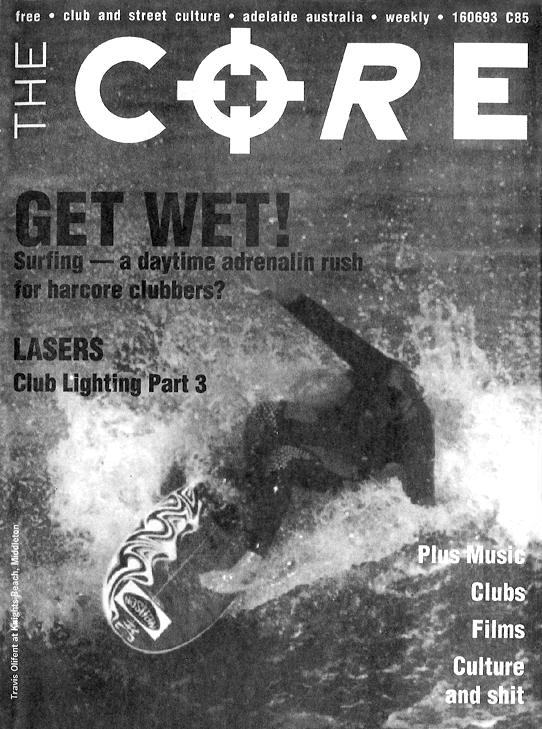
In mid-1993, Adelaide’s youth culture was a dynamic fusion of high-energy pursuits, as documented in issue C85 of the street press magazine ‘The Core’. The city’s cultural landscape was defined by a remarkable intersection of the daytime adrenaline of surf culture and the hardcore nocturnal energy of the club scene. This convergence was powered by emerging technologies in music and lighting, creating a multifaceted world of fashion, film, and fervent community discourse.
1.0 The Convergence of Surf and Club Culture
A defining feature of Adelaide’s youth scene in this period was the strategic crossover between surfing and clubbing. This phenomenon represented more than just shared demographics; it was a cultural union built on a common pursuit of intense, visceral experience. The connection was articulated as a direct parallel between the “daytime adrenalin rush” of conquering a wave and the “hardcore” energy of a packed dance floor, bridging two seemingly disparate worlds through a shared ethos.
This emerging subculture, profiled in the magazine’s cover story “GET WET!” and the feature “The Surfing Hardcore,” saw participants seamlessly transition from the ocean to the nightclub. The synergy was captured in the sentiment, “Surfing is exactly like hardcore techno, it’s a pure adrenalin rush.” This perspective elevated surfing beyond a mere hobby, framing it with the declaration that “Surfing isn’t just a recreational pursuit but a way of life.”
The archetype of this hybrid identity was Belinda Godfrey, identified as “SA’s top female surfer and also a clubber.” A formidable presence in the international surfing community, Godfrey was ranked 17th on the World Championship Tour. Her professional status was underscored by an impressive list of sponsors, including Town & Country Surfboards, Quiksilver, Oakley, Ocean and Earth, and Gorilla Grip.
For those inspired to join the scene, the path was presented as accessible and dependent on resolve. Surf Culture Australia reported an 80% success rate for students standing up on a board after a single two-hour lesson, suggesting that the primary barrier to entry was not athletic prowess but determination. This ethos was captured in a photo caption of Oceangraffix/Manta sponsored rider Dave Clarke, who, while navigating a difficult wave, was described as: “Almost losin’ it.”
To broaden accessibility, the culture also embraced bodyboarding as a parallel entry point. The magazine provided a practical guide for all aspiring wave riders, breaking down the necessary gear and associated mid-1993 costs.
Essential Surfing Equipment and Costs
- Essential:
- Surfboard: Second-hand options started from $50+.
- Roof racks: 30-50.
- Board cover: 20-55+.
- Wetsuit: A 3/2mm full-length suit for summer/winter use cost between 130-210.
- Wax: 1.50-3.
- Bodyboards: Beginner models were available from 45-115.
- Nice To Have:
- Board professionally made: 450-549.
- Leash/leg rope: 25-40.
- Beat-up station wagon: Around $500+.
- Strictly Hardcore:
- Stickers for the car: $2+.
- Travel cover for surfboards: $60 for one board, or over $200 for a four-board cover.
The search for this visceral rush did not end at sunset; it merely transitioned from the natural elements of the coast to the technologically manufactured environments of the city’s clubs.
2.0 The Technology of the Night: Lasers in Club Lighting
This installment of an ongoing series on club technology demonstrates a scene increasingly fascinated with the technical means of producing transcendent experiences. The article delved into advancements in lighting, specifically the use of lasers to craft immersive and powerful sensory environments for Adelaide’s club-goers, matching the intensity of the burgeoning electronic music scene.
Adelaide clubs utilized several types of gas lasers to produce spectacular visual effects. The most common were:
- Argon lasers: Producing green, blue, or turquoise light, they were favoured for their efficiency and comparatively lower cost.
- Ruby lasers: Emitted a characteristic red beam.
- Krypton lasers: Capable of producing a mix of colours.
The mechanics of a laser light show involved projecting a single, pencil-thin beam of light onto a series of mirrors. By using rotating mirrors on both an X and a Y axis, operators could create complex, flowing patterns known as Lissajous figures. A computer-controlled shutter, capable of opening and closing in as little as 1/25th of a second, allowed these patterns to be manipulated and animated in time with the music.
Different techniques produced distinct effects. The popular “tunnel” effect was achieved by reflecting a beam across multiple mirrors in a line, creating a corridor of light that was only visible with the aid of smoke or haze. In contrast, high-intensity systems like the 20-watt Aqua-laser from Lasertainment, costing $22,500, were powerful enough to create visible “sheets” of light without requiring smoke, though they necessitated water cooling to operate. More advanced setups like the Twin-Head Laser used prism splits, fibre optic cables, and expensive motorized mirrors (costing $5000 each) to achieve even more fantastic and animated effects.
Operating this powerful technology came with significant responsibility and regulation; it was illegal for an unlicensed operator to use a laser in a public venue. The article cited several local and national experts in the field, including Matt Richter and Ross BSS from Quantum Ark, Innovations, Disco, and Total Concept Productions of NSW, highlighting the specialized knowledge required to safely stage these light shows. This advanced technology was showcased nightly in the city’s premier venues and at major dance events.
3.0 Adelaide’s Nightlife: Events and Venues
The club listings for June and July 1993 provide a comprehensive guide to Adelaide’s vibrant and diverse nightlife. The sheer range of events, from large-scale, multi-thousand-person dance parties to intimate, genre-specific weekly club nights, serves as a testament to the city’s highly active and engaged scene.
Major Upcoming Events
- Independence 2: Scheduled for Saturday, July 3rd at the Adelaide Entertainment Centre, this 12-hour “dance event” featured headline act T-1000 (hardwax) from Detroit. The lineup also included local DMC champions Home Grown (Brendon, Angus and MC Mad) and live performances from The Liquid Engineers and The Feyed Eyed Pipers. Tickets were priced at $17 plus a booking fee.
- Dance 100 at S.T.A.T.E: The official “International Club Date” launch party was held on Saturday, June 19th, at the Richmond Hotel (Level 1, 120 Rundle Mall). The event was unique for being recorded for house music, interviews, and promotional give-aways.
- Phunky Phresh: On Friday, June 18th, the Astor Hotel hosted this event with the theme “Heavy D & A Tribe Called Quest Revived.” The night featured sounds from DJ Nigel + MC Quromystix.
Weekly Club Guide
- Thursdays:
- Discovery: Held at disco (69 Light Square), featuring DJs Brendon, MPK, PMA, Maestro D, and MC Tim, along with a Sega Mega-CD promotion.
- Boltz: At the Astor with DJs Mark S and Chris S.
- Funk-It-Up: Hosted at the Union Hotel with DJs Groover Terminator, Uzi, James Ingram, and Steve Smooth.
- McMahon’s Salisbury: Toons presented DJs OHC, with live sets from Def FX and Salan Toast.
- Fridays:
- Club Kix: With DJs ATB, Brendon, Uzi, Guest DJ E-Zee•G, and MC Tim.
- The Big Ticket: DJ Corey at Le Cony.
- Club Cokobana: Held at Back with DJ Steve Collins.
- The Ark (Journey To Atlantis): Featured DJs PMA, Ph.D, ATB, Uzi, MPK, G•T•B, and Brendon on four decks, complemented by a Colour Shot 5-Watt 7-colour laser system.
- New Jack City The Club: Open from 9 pm at 171 Hindley St.
- S.K.AL-8: Running from 9 pm to 4 am at McMahon’s, with DJs Jason + Gary and special guest Nigel, plus a “12 K sound power visuals video wall.”
- Back to Basics: At 151 Millbourne Street.
- Le Rox was also a notable venue, having recently hosted international acts Westbam and L.U.P.O.
- Saturdays:
- Journey To Atlantis: The Ark (see Friday for details).
- The Prodigal Son Returns: An advertised Saturday night event.
- FunkEnSkUnk: Upstairs at Synagogue, playing acid jazz, funk, reggae, and hip hop with DJs madcap and johnny plus live guests. Doors opened at 10 pm.
- New Jack City The Club: Open from 9 pm at 171 Hindley St.
- S.T.A.T.E: Held at the Richmond Hotel.
- The Next Level: Featuring DJs T-Bone and Trev.
- Back to Basics: At 151 Millbourne Street with DJs Mark, Henda, and Jason.
- Sundays:
- Sunday Session: At Aquila with DJs MPK, Maestro D, and Noddy. The vibe was “groovy ambient anything” with free entry.
- Retro at Texas: With DJ Groover Terminator.
This bustling calendar of live events was fueled by a steady stream of new music and media, which shaped the tastes and conversations of the culture.
4.0 Music and Media Scene
The tastes and trends of Adelaide’s youth culture were heavily influenced by a combination of international music tours, new record releases, and contemporary film. This section explores the key media that were captivating audiences and driving conversations during this period.
Music News and Reviews
- DEF FX Touring: The band was promoting their new single ‘Space Time Disco’ and supporting The Shamen on their Australian tour. Their Adelaide show was scheduled for Thursday, July 1st, at Bliss.
- Big Day in this Sunday: A significant charity event held on June 20th to raise money for Auscare and World Vision to aid refugees from Cambodia. The extensive lineup featured acts such as The Angels, Big Audio Dynamite, Clouds, Def FX, The Hummingbirds, and many others.
- Global Music Reviews:
- The Prodigy and Aphex Twin: Reviewed as a “nightmare in progress.”
- Jesus Jones: Their new single ‘The Devil You Know’ was noted.
- Janet Jackson: Her new album Janet was set for release on September 20th.
- Onyx: The hip hop group’s debut Slam was described as “the norm for N.Y. Hip Hop these days” with “brutal honesty” and “funky beats.”
- Jam & Spoon: Their single ‘Right in the Night’ was deemed a “quirky pop trance classic.”
- Silver Soundtrack LP: This compilation, featuring artists like Smashing Pumpkins, was described as a must-have, with a notable track from Lords of Acid.
- DBC: The US hip hop act was praised as “excellent.”
- The Shamen: The band’s new album Boss Drum received a lukewarm review, critiqued for not matching their live energy.
- Local Hip Hop News: Adelaide’s own Basic Instinct, a Christian rap group, was gaining media attention, appearing in a new Christian rap-focused magazine and securing a track on an upcoming compilation album.
Film Reviews
- Blade Runner (Director’s Cut): The review offered high praise for this version of the 1982 classic, noting it was “better… than the original.”
- Fire, Walk With Me: The film by director David Lynch was mentioned.
- Boxing Helena: Directed by Jennifer Lynch and starring Sherilyn Fenn, this film was part of the cinematic conversation.
- Red Rock West: This new film from director John Dahl, starring Nicolas Cage, Dennis Hopper, and Lara Flynn Boyle, was reviewed favourably.
- Braindead: The latest from director Peter Jackson was featured, with screenings scheduled at the Mercury cinema on Friday the 18th and Saturday the 19th at 11pm.
- Super Mario Brothers: This adaptation received a largely negative review, criticizing its convoluted plot and acting. However, the reviewer acknowledged that the “special effects are pretty neat.”
Beyond consuming music and film, personal expression was paramount, articulated through fashion choices and direct engagement with the community’s tastemakers.
5.0 Lifestyle, Fashion, and Community Voice
The values and identity of Adelaide’s street and club culture were reflected not only in what its participants did but also in what they wore and what they said. Fashion provided a visual language for the subculture, while public correspondence offered a direct line of sight into the community’s concerns and passions.
Fashion and Commerce
The clothing brand Split was highlighted as embodying the scene’s ethos. Creator Dave Pain described the brand’s products as “wearable clothes with a positive message.” The line included shirts, t-shirts, shorts, caps, and beanies. The brand had achieved international classification in New York, Japan, and Canada, with plans for its products to be available in local A8 stores from the following month.
This cultural movement was supported by a robust commercial infrastructure. Advertisements from local retailers promoting sales and new products—including On & In Surf Shop, Make Waves, Urban Streetwear, Cut Loose, and Ocean Graffix—demonstrate how the business community both catered to and capitalized on the thriving surf and street scene.
Community Correspondence
The letters section of ‘The Core’ provided a valuable forum for public discourse, revealing the opinions and frustrations of the magazine’s readership.
- Record Store Service: A letter from “TJ and Co” detailed a complaint against Central Station Records for poor service. The store’s manager responded in the same issue, acknowledging the feedback and inviting further discussion.
- Club Security: “Debert Wilkes” wrote about feeling unwelcome at venues like The Fringe, The Uni Bar, and Cargo Club, attributing it to management and security, and calling for a more welcoming approach.
- Youth and Clubs: “Abbey” from Golden Grove voiced frustration over the lack of entertainment options for young people, specifically citing the closure of all-ages venues like The Old Lion and Warehouse and calling for new, safe spaces.
- Club Praise: On a positive note, “Pappa Smurf” wrote to praise clubs like Smart at Disco and S.T.A.T.E for their excellent music and atmosphere, appreciating their dedication to providing a quality clubbing experience.
As captured within this single issue, Adelaide’s youth culture in mid-1993 was a vibrant, multifaceted ecosystem—a self-sustaining world of sound, style, and community defined by the shared pursuit of an adrenalin rush, whether on a surfboard or a dance floor.
Leave a Reply
You must be logged in to post a comment.