
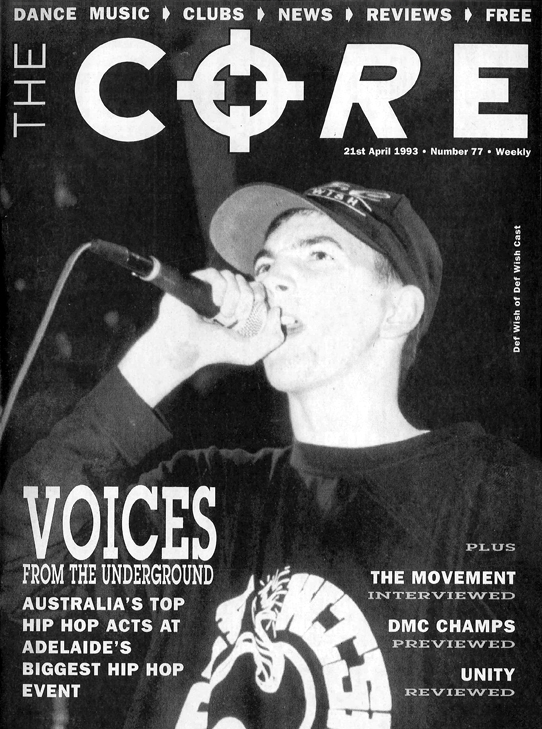
In the autumn of 1993, Adelaide’s music culture was a dynamic and evolving landscape, humming with energy from its underground roots to its burgeoning mainstream appeal. The final week of April served as a perfect cross-section of this vibrancy. The following report provides a detailed snapshot of the city’s hip hop, rave, and club scenes, highlighting the key competitions, live performances, and personalities that defined a pivotal moment in Adelaide’s musical history.
The 1993 DMC Championship Ignites the Scene
The DMC World DJ Championships have long been a hallowed institution, a global arena where technical skill and creative flair collide. For Adelaide’s aspiring DJs, the local heats were more than just a competition; they were a crucial proving ground and a launchpad for a national and even international career. This deep dive explores the first heat of the 1993 competition, a night charged with ambition, rivalry, and a shared passion for the craft.
Event Details
- Event: 1993 DMC Championship, Heat One
- Date: Thursday, 22nd April
- Venue: The Ark
- Entry Fee: $5
- Stakes: A chance to compete in the SA Final on May 13th and ultimately represent Australia in the World DMC Final in the UK.
Prizes and Sponsorship
The event, brought to the city by Central Station Records and The Core, offered a significant prize pool designed to propel the winner’s career forward.
- First Place: A trip to Sydney for the National Final, $200 in cash, and a DMC flight jacket.
- Second Place: A DMC record flight case and a DMC leather jacket.
- Third Place: A DMC record flight case and a $100 Central Station voucher.
The Contenders
Five contestants took to the stage, each bringing a unique style and philosophy to the turntables.
Glacia approached the competition with a fluid and crowd-focused mindset. Downplaying rigid preparation, he stressed that “It’s just what occurs on the night,” viewing the DMC as pure performance where the ultimate goal is to connect with the audience. “I’ve got a couple of things here and there that other people might not have thought of,” he hinted, but insisted that the real magic is in making a routine that is “all entertaining.”
Reigning SA champion Hob G entered the heat with the quiet confidence of a seasoned pro. While acknowledging the pressure, he was unfazed. “I’m just happy if I go well,” he stated, “I’m not really worried about the competition. If I do my best I should be alright.” His presence alone raised the stakes, setting a benchmark for technical precision and performance.
Home Grown (DJ Brendon, DJ Angus, MC Dee) came in as the tech-savvy favourites, planning to push the boundaries of a traditional DJ setup. “We have decided to exploit what is available to us,” Angus explained, signaling their intent to integrate drum machines and samplers for a set described as “hip hop with go go vibes.” Their commentary framed the DMC as a crucial platform for DJs to showcase a “personal side” often lost in a club set, a chance to prove that DJing is “a visually real thing.”
Representing the purist approach were The Underdogs (G•T•B and Nick). “What we’re about is pure hip-hop,” they declared, setting up a direct contrast to Home Grown’s hybrid style. They embraced the “traditional hip-hop style tip,” promising a raw display of turntable mastery with “mind stretching and brain breaking” feats of scratching and mixing, using the crossfader to chop and repeat beats in a showcase of foundational skill.
Returning competitor Y-Me (Nick Glaetzer) arrived with a clear strategy to improve on last year’s performance. His goal, citing influences like “DJ’s Q-Bert and DJ Shadow,” was to deliver a performance built on “Call & variety,” aiming to be “a bit quicker” and “do as many tricks as possible.” It was a promise of a complex, high-energy set designed to impress the judges with sheer technicality.
The Judges
A panel of nine industry figures was tasked with evaluating the contestants based on originality, technical ability, presentation, and crowd response.
- DJ Groove Terminator
- DJ Ph.D
- DJ James Ingram
- Chris Despotakis (Club FM)
- Bruce Logan (5EBI’s Club FM)
- Trish Jones (Central Station)
- Stigherrian (The Core)
- Kristy Whisker (The Ark)
- Bruce Caust (Central Station)
From the high-stakes pressure of the DJ battles, we move to where a scene’s real pulse is found: in the sweat and bass of its live gigs.
Spotlight on Live Performances
Forget the studio—a city’s musical identity is forged on stage. This week, two major events captured the scene’s attention, each representing a distinct facet of Adelaide’s underground culture: “Voices From The Underground,” a landmark hip hop showcase, and “Unity,” a raw, unlicensed club night.
Voices From The Underground: A Hip Hop Showcase
Held on Thursday, 15th April, this event was hailed by reviewer “Code One” as “one of the best nights SA hip hop has ever seen.” It brought together some of the most vital acts in local and national hip hop for a showcase that left a lasting impression.
The night began with Urban Poets, who, while “weren’t amazing,” successfully held the early crowd’s attention. They were followed by Intense Quality, joined by Pak, who effectively “really started to hype to crowd,” lifting the energy in the room.
Finger Lickin’, fresh off a recent signing to Mushroom Records, delivered a powerful set that cemented their status as a force to be reckoned with. The reviewer noted they “certainly proved they can match it with any of the interstate acts,” a significant endorsement of their talent.
The headline act, Def Wish Cast, affirmed their reputation as “Australia’s premier hip hop group.” Their performance was a masterclass in stage presence and skill, with DJ Vame’s “smooth fresh style” drawing direct comparisons to the legendary DJ Premier.
Closing out the night was Mama’s Funk, and though “the crowd seemed to be burning out a bit” by the time they took the stage, their set was a solid finish. The reviewer did suggest, however, that their performance on the night “would have been much better suited to being a D.J.”
Code One’s final verdict was unequivocal: “it was a fuckin’ dope night!” and, at an entry fee of just $9, “an absolute bargain.” The event stood as a powerful testament to the health and vitality of the South Australian hip hop scene.
Unity: An Unlicensed Club Experience
On Saturday, 17th April, the “unlicensed crowd” converged on Le Rox for Unity, an event that delivered a raw, high-energy club experience. The night started slow but evolved into a “busy crowd” by 9 pm, with the energy splitting between two distinct sonic environments.
Downstairs (Frenzy)
The downstairs area was a cauldron of pure, relentless energy. DJs Hob G and Royal Flush unleashed a “hard-as-you-can-get pumping hardcore” set. Reviewer TJQ declared it the “hardest sounding unlicensed event” they had ever attended, with the sound palette proving that the culture was alive and well.
Upstairs (Freedom)
In contrast, the upstairs room offered a more accessible vibe. DJs G-luv and DJ Stew spun more “commercial sounds,” providing an alternative for those seeking a break from the intensity below. Notably, the advertised guest star Bruce Samazan did not perform.
TJQ’s overall assessment was highly positive, concluding that “Unity will be the place to be in ’93 for the unlicensed crowd.” The event’s success signaled a strong future for Adelaide’s independent rave scene. And as local events solidified the city’s identity, the arrival of international artists promised to introduce new sounds and perspectives.
Artist Profile: Los Angeles Trio ‘The Movement’
Visiting from the epicentre of American electronic music, Los Angeles trio The Movement brought a unique sound and a seasoned perspective on rave culture to Adelaide. This profile explores the group’s origins and creative process ahead of their highly anticipated local performance.
Origins and Sound
The group’s three members—AJ, Ismaia, and Richard—first connected at Musically Motivated Records and the influential LA radio station Power 106. This fusion of studio and radio influences shaped their distinctive style, which they describe as “a freestyle-rave-hardcore-techno-hip hop groove.”
Their creative process is a collaborative effort. AJ is the group’s “computer wizard,” programming the beats and arrangements on his Ensoniq EPS 16 Plus sampler and sequencer. Richard contributes percussion and vocals, while Ismaia’s powerful voice, influenced by icons like Donna Summer, provides the melodic core.
Commentary on the LA Rave Scene
The Movement offered a candid analysis of the Los Angeles scene, which they noted had been heavily influenced by UK culture. For a time, it struggled with significant issues, including the prevalence of drugs like nitrous oxide and the constant difficulty of securing legal venues. “A lot of promoters weren’t getting legalized venues, so they were getting busted,” Richard explained.
However, they described a recent positive shift. The scene has moved back toward the clubs, leading to a more mature atmosphere where there is “a greater appreciation for the music” itself. “The scene in LA is very good and healthy,” said AJ, “at least I think it was.” The Movement’s observations on the LA scene’s growing pains—from securing legal venues to focusing on the music—offered a compelling parallel to the challenges and aspirations of Adelaide’s own burgeoning “unlicensed crowd” at events like Unity.
Adelaide Performance
The Movement was scheduled to bring their genre-bending sound live to the stage at the Rage N Rave event, performing singles like “Jump” and “B.I.N.G.O.” from their album, “The Movement”.
- Date: Thursday, April 29
- Venue: Heaven, 7 West Tce, Adelaide
- Supporting DJs: GT, UZI, James Ingram, Steve Hooper
While international acts like The Movement brought a global flavour to the city, the true lifeblood of Adelaide’s nightlife remained its diverse and consistent weekly club events.
Adelaide’s Club and Event Listings
Beyond the major one-off concerts and competitions, Adelaide’s nightlife thrived on a network of regular club nights, each offering a unique atmosphere and sound. This section provides a roundup of recent reviews and a guide to other notable events on the horizon.
Weekly Club Reviews
The weekend of April 15th-17th saw a flurry of activity across the city’s venues:
- Heaven (Thursday 15th): Hosted DJ Luti from Sydney, who played a solid “house style” set. The reviewer noted that while the music was good, the crowd was only “so-so.”
- Juice at Cargo Club (Friday 16th & Saturday 17th): This night was praised as a “very cool little night,” impressing the reviewer with how well-run and enjoyable it was.
- Charlton’s Pool Hall (Friday 16th): For those seeking a throwback sound, this venue delivered with a night of “old school techno and trance” that was well-received.
- Intense (Saturday 17th): As one of the city’s newer club nights, Intense was already making a positive impression with its “laid-back and happy” atmosphere.
Upcoming Events and Regular Nights
The calendar for the end of April and May was packed with a diverse range of events catering to every taste:
- Naughty By Nature Promo: Friday 23rd April at The Astor.
- Synagogue “Guilt”: Saturday 24th April in The Grooveroom, featuring E-Zee-G, X-citement, and more.
- Circus! Circus!: Sunday 25th April (Anzac Weekend) at Disco, featuring Groove Terminator, HMC, and MC Scott T.
- Dr Who Techno Ball: April 27 at The Astor.
- Jump! Music, Fashion, Style: Wednesday 28th April at Toons.
- Live Hardcore Hip Hop Live: May 25 at The Astor.
This vibrant live scene was complemented by a steady stream of new recorded media, from local albums to the latest imports and blockbuster films.
New Releases: Music and Film
In an era before streaming, the arrival of new albums, import singles, and cinema releases were major cultural events. This section surveys the new media capturing the attention of Adelaide audiences, offering a glimpse into the sounds and stories of April 1993.
Music Reviews
Import Hip Hop Review
- Onyx – Bacdafucup LP: A raw and aggressive release praised for its “hard-hitting, Nasty-vocalized rhyming” and “funky beats.”
- Tim Dog – Do Or Die LP: Considered an improvement on his previous work, though the reviewer found the lyrics to be “still pretty lame” in places.
Import Singles/EPs
- Debbe Wilson – Free: A house track notable for its clever sampling of the classic SOS Band song “Just Be Good To Me.”
- Masters At Work – I Can’t Get No Sleep: Highlighted for its “vastly superior MK mixes,” this release was an essential track for house DJs.
- Dodge City Productions – Unleashed For Love: A “deep and soulful hip hop” track that stood out for its intelligent and conscious vibe.
- Sequential – DMC/DEF: A “fairly ‘laid-back’ tune” with a focus on “paradise” style keyboard chords, offering a more relaxed techno sound.
Dance/Pop
- Jules Issa – Dangerous Game: A polished collection of dance, pop, and ballads described as a “good quality N.Z. track,” though perhaps released a bit too late to catch the trend.
Local Releases
- Bethelseda – Fast Dead Things: The debut cassette from the Adelaide-based progressive noise/funk band.
- Jo Me Mo – Get Sexy: One of the first singles released from the one.lp compilation album.
Film Reviews
- Indochine: A sweeping historical epic set in French colonial Vietnam, praised for being “beautifully made and acted” despite its occasional sentimentality.
- Reckless Kelly: Yahoo Serious’s modern take on the Ned Kelly legend, in which the bushranger becomes an LA bank robber to save his family home.
- In The Soup: A celebrated independent film starring Steve Buscemi as a desperate filmmaker who gets entangled with a charming gangster, played by Seymour Cassel.
- Johnny Suede: An eccentric indie film featuring a young Brad Pitt as a struggling musician with a fixation on his suede shoes, also featuring a cameo from Nick Cave.
- Teenage Mutant Ninja Turtles III: The third installment of the franchise, sending the heroes in a half-shell back in time to 17th-century Japan.
- Groundhog Day: Hailed by the reviewer as “a little gem,” this Bill Murray comedy was praised for its clever premise, sharp script, and genuinely romantic heart.
Beyond the critics and professional releases, a full picture of the scene emerges from the industry itself and, most importantly, from the voices of the community.
Industry Buzz and Community Voices
A healthy music scene is more than just artists and events; it’s an ecosystem of labels, technology, and passionate fans. This final section covers key developments from the business side of music and highlights the ongoing conversation within Adelaide’s own community.
Music Industry and Tech News
- Juice Records Overseas: Adelaide’s own Juice Records scored a major international nod, with its “Secret Weapon EP” listed at number 12 in UK publication ‘Muzik’ Update’s ‘The Hard Chart’.
- MDS and R&S Records: Mushroom Distribution Services (MDS) secured a major deal to distribute releases from the influential Belgian techno label R&S Records in Australia, making their catalogue more widely available.
- DJ Alistair Cooke: The music world mourned the death of influential British DJ Alistair Cooke, co-promoter of the legendary Back 2 Basics club night, who was killed in a car crash.
- “Barcode Battler”: A new electronic game from Nintendo and Sega captured the imagination of tech fans. The device allowed players to swipe barcodes from everyday products to generate unique characters with different stats for virtual battles.
- Pioneer’s Navigation System: The future of in-car entertainment arrived with Pioneer’s high-tech CD player featuring a satellite navigation system. The cutting-edge technology came with a hefty price tag of around $A6000.
Correspondence: Voices from the Scene
Nothing reveals the passionate fractures in a scene like the letters page, where a fierce debate over local pride versus ticket prices was boiling over.
In one corner, DJ Skypee mounted a spirited defense of the Adelaide scene. He challenged the “jaded” attitude of those who constantly compare Adelaide unfavorably to Melbourne or Sydney, calling on locals to stop complaining and start supporting their own talent. “We have proven that our own sound is developing still,” he wrote, championing the originality and skill of local acts.
In the other, a writer identified only as “Punter” offered a sharp critique of event pricing. While praising the skills of local DJs like HMC, Brendon, and PhD—stating they “mix it with the best of them”—the writer sarcastically questioned the value of a recent event with a $25 entry fee. The letter implied that if local talent is just as good as expensive interstate headliners, then promoters needed to justify such high ticket prices to the dedicated fans who support them week in and week out.
Leave a Reply
You must be logged in to post a comment.