
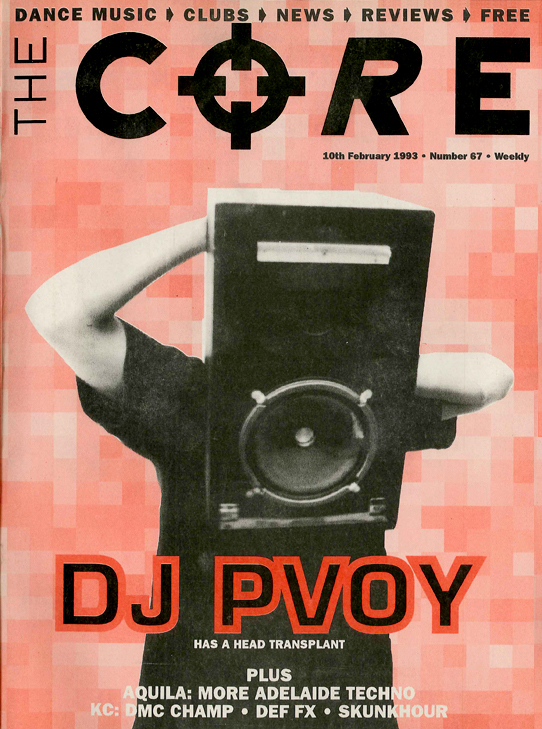
In early February 1993, Adelaide’s dance music scene was a vibrant ecosystem defined by the confluence of pioneering local techno producers, national touring acts, and major club events that drew the community together. This snapshot reveals a scene rich in talent and ambition, yet also grappling with questions of identity, infrastructure, and community.
Featured Artists and Scene Leaders
The vitality of Adelaide’s music scene was driven by a core group of DJs, producers, and performers, each contributing a unique sonic perspective. From national turntable champions to versatile club residents and experimental techno producers, these were the key figures shaping the city’s musical landscape at the time. This section profiles the artists at the heart of the action in February 1993.
DJ KC: The National Champion
Kieren Way, known professionally as DJ KC, stood as a prominent figure in the Australian music scene as the reigning DMC champion. Contrary to the fusion techno sounds prevalent in some circles, KC’s focus was firmly rooted in R&B and hip hop. His championship win was achieved with a purist’s toolkit: just two turntables and a mixer, a deliberate choice in a competition where 1992 rules had expanded to allow for four turntables, vocalists, and samplers.
KC was a vocal advocate for the development of a unique Australian cultural identity in music, particularly within hip hop. He expressed a strong belief in the quality of the local talent, stating, “there’s actually rappers up there and it’s not a joke,” and cautioned against simply emulating overseas trends.
“I think the English have taken the American thing too far… the future for the scene rests on it’s own culture. It’s no good having an American culture… our future looks bright.”
Looking ahead, KC was engaged in several projects, including collaborations with fellow Adelaide artist HMC and rapper Eric (Sebastian), with plans for a future album in the works. On February 12th, he was scheduled to perform a live 4-deck set at the DMC Championship showcase at Le Rox, while also serving as a guest DJ for the Pulse-DMC under-18 competition held at the same venue.
DJ pVOY: A Versatile Local Talent
Featured on the cover of “The Core” magazine with the playful declaration that he “HAS A HEAD TRANSPLANT,” DJ pVOY was a testament to the versatility thriving within the local scene. His musical range was extensive, spanning jazz garage, techno, and hip hop, and he lent his talents to a diverse array of groups including Harmony and The Zoo, Kinetic Energy, and Inquest.
His techno influences were a blend of Detroit legends and local pioneers, citing Dan Curtin, Blake Baxter, Derrick May, Carl Craig, and Adelaide’s own Juice Records as key inspirations. pVOY’s history in the scene was well-established, from his first gig at Le Rox alongside T-RAX, Massacre, and George Vagas to a turntable performance at the 1991 SA DJ Mixing Competition.
He offered a pointed critique of the prevailing atmosphere in the city’s nightlife, believing the scene had become overly segmented and self-conscious.
“Adelaide’s club scene’s too serious… Music should unify, not separate. In such a small city everyone should just relax.”
DJ pVOY’s philosophy was on full display at his regular weekly gigs, which included The Workshop at the Astor on Thursdays, The Ark on Fridays, and “Skeaving On” at the Austal on Sundays.
Aquila: Pushing Adelaide’s Techno Boundaries
Matt Thomas, the creative force behind the techno project Aquila, was dedicated to crafting a sound that challenged the conventions of the dancefloor. His music was described in visceral terms: “raw analog techno,” “analogue bubblebath,” and containing “really good hard distorted sounds.” His creative process involved marathon two-day studio sessions, where he blended “nice choir sounds” and hard-edged electronics to create tracks that were as suitable for deep listening as they were for dancing. The name ‘Aquila’—Latin for ‘eagle’—was chosen as a “symbol of spirit,” reflecting his philosophical approach.
Thomas was also one of the scene’s most insightful critics, arguing that the city’s reliance on large, one-off parties came at the expense of a consistent and supportive club culture.
“If Adelaide still had a club scene I think Adelaide music would be pushed more.”
He observed that the lack of regular, intimate venues made it difficult for local artists to develop and showcase their work. To address this, Thomas was planning to launch a new label, Underworld, to provide a platform for local talent facing similar challenges. Alongside his musical pursuits, he was studying Art History, a discipline that informed the intellectual depth of his work.
Touring Acts: Def FX and Skunkhour
Adelaide’s local talent was complemented by a steady stream of national touring acts. Fresh off an intensive 1992 that included two American and three Australian tours, Def FX were back on the road. The band was promoting their new LP, ‘Light Speed Collision’, and the single ‘No Time For Nowhere’, with band member Sean commenting on the profound “effect of technology-based music.”
Joining them were Sydney’s Skunkhour, who brought a “fresh funk-influenced” sound that blended ’50s and ’60s classics with traditional funk, hip hop, and jazz. Citing influences as diverse as Van Morrison, Sly Stone, and A Tribe Called Quest, the band consisted of Michael on bass, Warwick Scott on guitar, Dean Sutherland on drums, and Aya Larkin on vocals. The group was preparing to release their debut 12″ single, ‘Do You Like It’, on EMI’s ID label.
Adelaide audiences had multiple opportunities to see them perform: Def FX and Skunkhour shared a bill at Le Rox on Thursday, the 11th; Skunkhour played the Cargo Club on Friday the 12th and Saturday the 13th; and both bands were featured on the Big Day Out lineup. These national tours fed into the major events that defined the scene’s pulse, offering large-scale platforms where local and visiting artists could converge.
Major Upcoming Events
In the absence of a dense, nightly club circuit, Adelaide’s 1993 dance culture was often anchored by large-scale, one-off events. These ambitious parties, competitions, and concerts served as crucial social and musical focal points, though they also revealed the scene’s internal diversity, from the high-cost exclusivity of a private beach rave like Garden of Eden ($79 a ticket) to the more accessible, community-focused DMC turntable competitions.
Garden of Eden ’93: The Exclusive Beach Rave
Scheduled for Saturday, February 27th, Garden of Eden ’93 was promoted as an exclusive and elaborate affair. The event was set to take place at a “mystery location” on a 25km-long private beach on the Yorke Peninsula. Organizers promised a high-end production, with features designed to create an immersive experience.
- Production Specs:
- 80 sq.m lighting rig
- 100 sq.m dancefloor
- 200 sq.m stage area
- 12K twin MT-4 sound system
- 5 star luxury coachliners for transport
- Live visuals
Attendees were promised an all-inclusive experience with free beer, champagne, soft drink, rain water, fruit shakes, lollies, and gum. The musical entertainment was set to feature a significant live component, with up to seven performers using keyboards, DAT machines, and 909 drum machines, accompanied by an MC and vocalists. The DJ lineup included X-citement, GTB, Jarrod S, HSR, and special guest The Key. Tickets were priced at $79, available exclusively from JR’s Surf & Ski, with sales closing on February 20th. Due to high demand, an extra 100 tickets were released to the public.
DMC Championship Showcase and Competition
Friday, February 12th was a major night for turntable enthusiasts, with two distinct DMC-branded events taking place at Le Rox, both of which were strictly unlicensed, no-alcohol affairs.
The evening featured the 1992 Australian DMC Championship showcase, headlined by a live 4-deck performance from the champion himself, KC (Kieren). This was a platform for the scene to witness the skills of the country’s top turntablist. He was supported by a lineup of DJs including E-ZeeG, DanI, Sanity, and t-Jament, with a judging panel composed of Siliqua, Brendon, Choc, and Chris Smith.
Running on the same night was the Pulse-DMC Under 18 DJ mixing competition. This event provided a vital stage for the next generation of talent. The grand prize was a one-month, 4-deck residency at Le Rox, supplemented by over $1000 worth of prizes and vouchers. The judging panel for the youth competition included The Hot Ezee-Man, David G., Royal Flush, and Astex.
Post WOMAD Party with Galliano
Riding the wave of the WOMAD festival, The Synagogue was set to host the “Post Womad Party… Reachin’ For The Right Vibe” on Sunday, February 21st. The headline act was the UK acid-jazz collective Galliano, performing as a full 10-piece live group. The featured lineup included vocalists and musicians Valerie Etienne, Mick Talbot, Bro. Constantine, Crispin “The Pump” Taylor, Ernie “Bottom” McKone, Snafe, Uncle Big Man, and Papa Watu.
Support for the evening was provided by JJJ’s Scott Pullen and local favourites X-citement & E-Zee*G. Tickets were available for $16 from Derringers, Central Station & Shades. These major parties offered communal experiences that stood in contrast to the regular, weekly pulse of the city’s more conventional club scene.
The Weekly Club Scene
Beyond the large-scale raves and special events, a network of clubs and bars provided the week-in, week-out soundtrack for Adelaide. This was the city’s nightlife engine room, though as commentary from artists and patrons reveals, it was a scene facing its own set of challenges regarding atmosphere, accessibility, and consistency.
Guide to Weekly Club Nights
A survey of the listings for the week of February 11th-17th reveals a diverse but scattered array of options for club-goers.
- Le Rox: A central hub for both live music and DJ nights. The week featured the Def FX and Skunkhour gig (Thurs), the dual Pulse-DMC events (Fri), and regular Sunday sessions with DJs Matt, MPL, Von, EFX and more. A future “Respect” night with Melbourne’s Jnr. Angel and Ph.D. was also advertised for Saturday the 20th.
- The Astor: This venue hosted “The Workshop” on Thursdays and was launching new nights like “Astro’s” (Wednesdays) and “Tuned” (Tuesdays) with DJs like the Tribal Beat Programmers and Mark D. On weekends, it transformed into The Ark, with DJs ATB and Brendon on Friday, and ATB and Mad B on Saturday.
- Cargo Club: Focused on a cooler, funk- and jazz-influenced sound with its “Rebirth of the cool” events, and hosted Skunkhour for two nights (Fri & Sat).
- Boltz Cellar: Hosted the “Joyful Cocktails” party with DJs Chris D, Mark D, and HMC (Thurs) and a gig by Sixty Foot Robot (Sun).
- Heaven: Held its weekly “RAGE’N’RAVE” night every Thursday at its 7 West Terrace location.
- Disco: Located at 69 Light Square, this club offered a full week of themed nights: Disco-Tech (Wed), Thank God it’s Friday (Fri), Fever (Sat), and Boogie Wonderland (Sun).
- Other Venues: A variety of other spots held regular nights, including the Britannia (DJ Glada), Club Colosseum (DJ Michael Bedford), and McMohan’s Salisbury (DJs Konrad and Jason).
Venue Reviews and Commentary
Patron and critic experiences varied widely across the city’s venues.
The “Rebirth of the Cool” night at Cargo Club received a positive live review, praised for its blend of live saxophone from Chris Soule and DJ sets from Finger Lickin’ Good and Groove Terminator, which a “small yet receptive crowd enjoyed.”
In stark contrast, a review of “The New Le Rox” was highly critical. The reviewer recounted an experience plagued by a two-hour queue, ineffective air conditioning (“was it on?”), high drink prices, and unpleasant crowd behaviour, including seeing patrons “puking right next to us.” While the overall verdict was “rather disappointing,” the reviewer held out hope that the “renovated staff” might eventually improve the experience.
Meanwhile, a review of the Big Day Out at the University of Adelaide suggested that local acts struggled to make an impact, with the writer noting that the standout “international players were Disposable Heroes Of Hiphoprisy and pretty much everyone else.” This commentary highlights the challenges local artists faced in being heard, even on their own turf, bridging the discussion from physical venues to the music being created.
Music Releases and Industry News
The dissemination of recorded music—whether pressed on local vinyl EPs or arriving as sought-after imports—was crucial to the health and evolution of the Adelaide sound. This section covers the latest news on local productions, impactful international tracks, and developments in the wider music world influencing the scene.
The Core EP and Local Releases
In a significant move to champion local talent, The Core magazine announced it was producing a double vinyl EP of Adelaide dance tracks. The response from the community was overwhelming, with 28 artists submitting a total of 70 tracks. The submissions spanned the full spectrum of the scene’s sounds, including dance, techno, house, breakbeat, hip hop, funk, and ambient. The quality was reportedly so high that, according to the magazine, “The material could be released tomorrow.” The EP was scheduled for release on the Vicious Vinyl label in late March.
The “Out Now!” column also highlighted several other recent local releases:
- Baseheads – Who Can Make Me Feel So Good?
- Semblance – No Give…Or For-give?
- Semi VC – Trust Me
- The Tyrrel Corporation – Walking On A Stranger
Hip Hop News and Commentary
The “Da Hip Hop Thang” column kept the scene connected to global trends and controversies. Key updates included the news that J-Pac’s album ‘2Pacalypse Now’ had been banned in Texas following a high-profile court case. Other news included the legal troubles of Ganksta N-I-P of C.M.W., the formation of a new group called Cool ‘n Nasty by Rodney-O and Joe Cooley, and the announcement that influential New York house and garage DJ Tony Humphries was relocating to London.
Import and Compilation News
For DJs and fans eager for the latest international sounds, news from overseas labels was critical. It was announced that the popular ‘Reactivate’ compilation series had concluded. It was set to be replaced by a new series called ‘React’, with the first release slated to be Mrs Wood’s ‘The Eclectic’. The “Import News” column featured a long list of new music from global trendsetters like Moby, The Shamen, Masters At Work, Global Communication, and Orbital, indicating the powerful currents of international electronic music that were shaping the city’s sound in near-real-time.
Scene Reflections and Community Voice
Beyond the artists, events, and releases, a scene is ultimately defined by the shared experiences and collective opinions of its participants. This section explores critiques from within and correspondence from the community, providing a valuable primary source for understanding the scene’s social dynamics and anxieties.
Artist Perspectives on the Adelaide Scene
A common thread among the scene’s leading artists was a critique of its structural limitations.
- Matt Thomas (Aquila) articulated the most pointed concern: that Adelaide lacked a consistent, supportive club culture. He argued that the scene’s reliance on large, infrequent events stifled the development of local music, which needs regular, smaller venues to thrive. This critique found a stark echo in the direct experiences of clubbers, exemplified by the highly negative review of “The New Le Rox,” which detailed the exact kind of unreliable venue experience that fails to nurture a healthy scene.
- DJ pVOY focused on the social atmosphere, suggesting the club scene had become “too serious.” He called for attendees to be more open-minded about different genres to foster a more unified and relaxed environment.
- DJ KC looked outward, urging Australian artists to move beyond imitation and cultivate a unique cultural identity, particularly in hip hop, to ensure the long-term health and relevance of the local scene.
From the Correspondence Column
Letters submitted to The Core magazine served as a direct line to the thoughts of the people on the dance floor.
- One writer lamented a “strange trend where the people inside tend to keep to yourself,” expressing a desire for more social interaction and a sense of fun that they felt was missing in 1993.
- Another letter highlighted a significant gap in the scene: the lack of options for people under 18. With licensed clubs off-limits, the writer made a plea for more unlicensed parties to provide a space for younger fans.
- The inclusion of a more abstract, poetic letter titled “Fat, This, Out.” served as a reminder of the creative and diverse mindsets that constituted the scene’s audience, each participant bringing their own perspective to the shared experience.
Leave a Reply
You must be logged in to post a comment.