
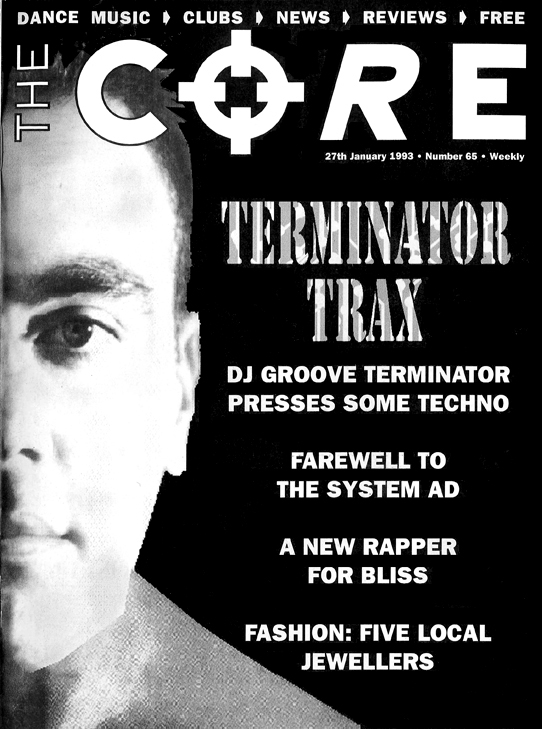
In the biting heat of late January 1993, Adelaide’s dance music scene was a culture at a crossroads—raw, fiercely independent, and crackling with the static of an identity being forged in the basements and warehouses of a city far from the genre’s epicenters. A snapshot from this period reveals a culture defined by the raw energy of techno and hardcore, the sophisticated groove of acid jazz, and a burgeoning sense of local identity expressed through music, fashion, and a critical discourse about the scene’s future.
I. Profiles in Sound: Key Artists and DJs
This week in Adelaide was a microcosm of a scene in flux: while international icon Carl Cox demonstrated the global pull of dance music, the departure of local tastemaker The System AD prompted a reflection on the city’s identity. This tension between outside influence and homegrown innovation was further embodied by Groove Terminator’s inaugural vinyl pressing and Bliss’s genre-bending experiments. These artists were the primary architects of sound and culture, defining the sonic landscape for a hungry audience.
Carl Cox at The Ark
The arrival of international heavyweight DJ Carl Cox for a performance at The Ark on Thursday, 28th January, was a major event. A titan of the global scene known for his technical prowess, Cox was advertised to be performing on three decks—a showcase of the trademark, high-energy mixing skills that had made him a legend. The event, a collaboration between The Ark and Madnezz, promised a full-fledged club experience across its two levels, with doors opening at 9pm and tickets priced at $10. Bolstering the lineup was a roster of formidable local talent, including DJs ATB, Brendon, The System AD, and Uzi, solidifying the night as an essential date for the city’s dance music faithful.
Farewell to The System AD
As one international star arrived, a local fixture prepared his departure. English DJ The System AD (Adam) was leaving Adelaide, prompting a reflection on his impact. Arriving in Australia in February 1992, he was initially surprised to find a dance scene at all.
“I didn’t expect there’d be much going on with dance music at all, ‘cos I hadn’t heard anything. In England Adam says, ‘My mum would regularly send me a copy of The Core, the day I got it I had a read and thought, ‘Oh, I was wrong. There is something happening with dance music here. The first thing I went to was Heaven.’”
Adam’s DJing style evolved during his time in Adelaide. Immersed in techno and house in England, he adapted to a more eclectic local sound.
“It’s not that I went out of fashion, I was into it as it progressed from there. My first experience with mixed music was at those old Mindflux parties where the line-up was electro.”
A sharp critic of the scene, Adam voiced concerns about its future, advocating for professional promoters and warning against the homogenizing force of commercialization.
“What would kill the club scene here would be if it went more commercial.”
His final performance, “Farewell to The System AD,” was scheduled for the long weekend on Sunday, 31st January, at 21st Century AD, featuring a massive lineup of Adelaide’s finest: Uzi, HMC, X-Citment, Phid, Brendon, Mindflux, and Aquila. His departure represented a scene grappling with its own potential, forced to consider whether it could maintain its authenticity as it grew.
Groove Terminator Releases “Terminator Trax”
Embodying the scene’s burgeoning DIY ethos, Groove Terminator (Simon) released his debut techno record, “Terminator Trax Vol 1.” The track’s genesis was explained with a characteristic lack of pretence.
“It just seemed like a good idea at the time.”
Using a Korg M1, a Roland 626, and “a few hundred synthesizers,” Simon produced a track that was a tangible piece of Adelaide’s sound. His approach to the industry was equally pragmatic, noting the production cost of $1200 for 500 copies highlighted the financial barriers facing local artists. His ambition was a statement of intent against the established music industry.
“Hopefully me and a couple of other people will put a label together about the middle of the year.”
Available at Red record stores, the release signified a crucial step towards a self-sustaining local musical economy, moving from consumption to production.
A New Rapper for Bliss
The Adelaide-based band Bliss was pushing boundaries of a different sort, blending hip-hop, hardcore techno, and other sounds. The band expanded its lineup with a new rapper, MC Say, who described their evolving identity.
“They’ll still be Bliss… We’re now being classed as a crossover band which I think is a developing band for new bands coming up and I see the new categories as a developing for bands that splurge into different areas of music.”
Utilizing two rappers to generate “more power,” Bliss’s genre-fluid approach reflected the porous boundaries of the early 90s, where techno, hardcore, and hip-hop frequently collided on the dancefloor. The band had two shows scheduled for the long weekend: the Cargo Club on Saturday, 30th January, and the Austral Hotel on Sunday, 31st January.
A Taste of Galliano
The influence of international sounds was felt through British act Galliano, standard-bearers for the “acid jazz” movement—a sophisticated, soulful fusion of jazz, funk, and hip-hop that was then dominating London’s forward-thinking clubs. Led by Rob Gallagher, whose first release “Frederick Lies Still” dropped in 1988, the band emerged from a scene that included luminaries like DJ Gilles Peterson and collaborators from Soul II Soul and Young Disciples. Gallagher saw the band as a catalyst.
“All the people now in Galliano, I had something to do with,” he says. “They were all in the jazz scene. But they weren’t into dance music. And the music we produce is accessible through the personalities involved, as it represents so many different strands.”
The group’s recent releases included the EPs Skunk Funk and Prince Of Peace, and the album A Joyful Noise Unto The Creator. Their single, “The Prince of Peace,” on the Talkin’ Loud label, was available locally through Phonogram, demonstrating how global trends were filtering into and influencing the Adelaide scene.
These artists—from the global titan to the departing critic and the rising producer—were the pulse of the scene, a pulse that found its rhythm within the city’s network of clubs and late-night venues.
II. The Adelaide Club Circuit
This collision of local and international talent required a stage, and in January 1993, Adelaide’s club circuit offered a diverse and energetic landscape for the scene to unfold. These venues were the proving grounds for local DJs, the stages for international talent, and the social epicenters where the culture was lived and breathed every week.
Featured Venues and Events
A packed long weekend offered a wide array of options for club-goers across the city.
- The Ark
- Thursday 28th: Headlined by DJ Carl Cox, with support from DJs ATB, Brendon, The System AD, and Uzi.
- Friday 29th: Featuring The Ark DJ Carl Cox trio, alongside DJs The System AD, ATB, Brendon, and Groove.
- Heaven (7 West Tce, Adelaide)
- Event: “Rage’n’Rave” held every Thursday night.
- Details: Running from 9pm until late, the night promised, in the parlance of the time, “sonic tunes” and “high energy dance music,” with free entry before 10pm and all-night drink prices.
- Resident DJ: DJ Michael Serafini held residency on the main dance floor every Friday and Saturday night.
- 21st Century A.D. (31 Victoria Street, Adelaide)
- Event: “Farewell to The System AD” on Sunday, 31st January, starting at 10pm.
- Details: Located at the old Greater Union complex on Hindley Street, the event featured a full Aquarius Laser Pulse.
- Flashlight (69 Light Square, Adelaide)
- Event: Disco’s first long weekend party, opening Sunday, 31st January.
- Details: The DJ lineup included Nigel, Groove Terminator, HMC, and MC Scott T, with special guest Pee Wee Ferris. Attendees were humorously instructed to “B.Y.O. torch and fresh batteries.”
- Disco
- Event: The official opening of three new weekly nights.
- Wednesday: “Disco-tech” with pVoy, T-hai, and HMC.
- Friday: “Thank God it’s Friday” with Major Move and Angelo.
- Saturday: “Fever” with Groove Terminator and HMC.
- The Synagogue (Synagogue Place, City)
- Event: “Mix Masters” on Saturday, 30th January.
- Details: 9pm start with a $5 cover charge (free before 10pm). The dress code was “dress up to party.”
- DJs: X-Citment, E-Zee-G, and Nigel.
- Le Rox
- Status: The venue was temporarily closed for renovations, as indicated by a photo of its graffitied exterior.
- DMC Mixing Competition
- Details: It was announced that the 1992 Australian DMC DJ Mixing Competition would be held at Le Rox on Friday, February 12th. Entry forms were available from Central Station with a closing date of February 5th.
Club Reviews
Candid reviews from the preceding week offered a snapshot of the on-the-ground experience.
- Beyond at The Astor (20th January): Described as a “common social gathering” with a “chilled atmosphere.” While DJ James’s set was praised, the room reportedly felt “empty.”
- Rage’n’Rave at Heaven (21st January): The night was deemed “packed” and “groovy,” with an excellent crowd vibe. The music was a mix of hard and commercial trance, but the reviewer noted a personal preference for “the true hardcore and wander back to The Ark.” This comment underscores The Ark’s reputation as the city’s bastion for hardcore sounds, the very identity reinforced by its hosting of an artist like Carl Cox.
- Juice at Cargo Club (22nd January): The music was characterized as “rat sound and very light,” with an “edge of metal.” DJ Kristian’s set received high praise, being called “amazingly intricate.”
- Liquid at The Video (22nd January): This “videotheque” event combined visuals on multiple screens with music. The sound was “sample-heavy” and “trance-oriented,” and DJ HMC’s set was lauded for its quality.
- Pulse at Party (23rd January): Attending with low expectations, the reviewer was pleasantly surprised. The main floor featured dance music, and DJ M.A.F.I.A.’s set “went down a treat.”
While the clubs were the physical heart of the scene, radio waves and record store shelves were the arteries that carried the music to a wider audience.
III. On the Airwaves and In the Crates
Beyond the club walls, Adelaide’s dance culture was sustained and disseminated through dedicated radio programming and the steady influx of new music. These platforms were crucial for connecting the community, introducing new sounds, and promoting artists to an audience that extended far beyond the dance floor.
Dance Music on Adelaide Radio
A diverse range of radio shows across several stations catered to fans of electronic music.
- Mondays
- After Dinner Mix: 10:30pm on Coast FM 88.5 with Suzy Thaisborne and Tim Verrall, featuring dance and techno.
- Tuesdays
- Dreaming Daisies: 10pm-midnight on Triple M FM 93.7 with Georgie Knight, focusing on underground and ambient techno.
- Club Fusion: 11pm-midnight on Triple M FM 93.7 with William Heese, presenting a dance party format.
- Wednesdays
- Soul Scene: 9pm-midnight on Coast FM 88.5 with Tony Clarke, playing dance and soul with global updates.
- Thursdays
- Lunacy: 10:30pm-midnight on Coast FM 88.5 with Heidi Jesson and Andrew Trewen, covering new music tech, news, and reviews.
- Club FM: 11pm-1am on 5MMM-FM 92.9 with Chris Despoja, Bruce Logan, and Stacey Tangliabue, focusing on the international scene.
- The Rhythm: 10pm-1am on PBA-FM 89.7 with Ben Latimer, playing the latest dance releases.
- Saturdays
- Saturday Breakbeat: 2-4pm on PBA-FM 89.7 with Mark Hales, playing Top 40 dance and alternative music.
- The Rhythm Method: 5-6pm on 5KA-AM (1305) with Stephen Ferris, covering soul, hip hop, house, funk, and reggae.
- Sundays
- Hypercentrics: 6-8pm on Coast FM 88.5 with Jim Taylor and Kevin Bleechmore, featuring dance, techno, and club news.
Global Music News and Local Releases
The latest news and reviews kept the Adelaide scene connected to global trends while also celebrating local achievements.
- Corduroy: The UK acid jazz act had a new album titled “Dad Man Cat” out on Acid Jazz Records. The band notably featured twin brothers Scott and Ben Addison.
- Depeche Mode: It was reported that the iconic band was still in the process of recording their new album, and a rumored single had not yet materialized.
- Righteous Technicians of Rhythm: Following a strong performance at the Big Day Out festival, the group was reportedly working on new material.
- Reviews: Brief reviews highlighted new tracks, including Reese Project’s “Direct Me,” Traci Traxxx’s “I Can Do For You?,” and the hard garage trance of Wildchild Experience’s “Wildtrax Vol 1.”
- News from Da Hip Hop Nation: A concerning trend was reported, with several rap artists being dropped by their record labels due to their “gangster images.” Artists mentioned included Tragedy (Bustip), Boo-Yaa Tribe (Shoot Dem Down), and FIG (No Head Or Body Found). The issue had recently been discussed on an episode of The Arsenio Hall Show featuring a panel of prominent rap artists.
The identity of the scene, however, wasn’t just auditory; it was a full-body experience, expressed through a distinct visual language forged by local designers who clothed and adorned the community.
IV. The Scene’s Style: A Focus on Local Jewellers
The culture surrounding Adelaide’s dance music extended beyond sound into the realms of visual art and fashion. This creative ecosystem was exemplified by a showcase of five local jewellery designers whose work provided the aesthetic hardware for the scene. Their designs reflected an artistic spirit that was intimately connected to the music, translating sonic textures and cultural attitudes into wearable art.
Profiles of Adelaide Jewellery Designers
- Stone Age Construction (Scott)
- Style: An inventive mix of silver and titanium rings.
- Availability: His work could be found at Better In-scent, Miss Gladys Sym Choon, Little House of Treasures, and Swerve.
- Will Neave
- Style: Creates “exotic and ornate jewellery and objects,” working with sterling silver and titanium.
- Availability: He sold his pieces from a studio and shop called The Silver Shop, located at the Clarendon Winery, as well as at Miss Gladys Sym Choon and Inika in the East End Markets.
- Bridie Lander
- Style: Her jewellery and objects carried strong industrial and architectural influences, described as both “fun and kitsch.” Constructed from base metals, cable, leather, and fabric, her use of industrial materials mirrored the hard, mechanical textures of the techno and hardcore music dominating the city’s clubs.
- Price Range: Her pieces were priced between $50 and $200.
- Availability: She worked from a studio at the Jam Factory and sold her designs at Swerve.
- Ian
- Style: Having started making jewellery in September of the previous year, Ian crafted pieces from copper and aluminum. His designs were described as “geometric and a bit psychedelic,” with pendants noted as being “very affordable.” These psychedelic leanings were a visual echo of the trance-inducing patterns of rave culture’s laser shows and nascent computer-generated graphics.
- Price Range: His work was priced between $20 and $40.
- Availability: His jewellery was available at Miss Gladys Sym Choon.
- Phil Ward
- Style: A final year student at Underdale, Phil’s designs were functional and sculptural pieces that often possessed a “tongue-in-cheek” quality.
- Availability: His work was currently part of an exhibition at Miss Gladys Sym Choon from the Department of Jewellery and Design at Underdale.
Leave a Reply
You must be logged in to post a comment.